Thank you! Your submission has been received!
Oops! Something went wrong while submitting the form.
Adopt a proactive approach to resident safety, operational efficiency, and survey readiness with a proven healthcare quality improvement methodology.
.png)
Adopt a proactive approach to resident safety, operational efficiency, and survey readiness with a proven healthcare quality improvement methodology.
Continuous quality improvement (CQI) in healthcare is a structured, ongoing process that evaluates how an organization works and ways to improve its processes. Unlike traditional quality assurance, which often focuses on detecting errors after they happen, CQI in healthcare is proactive. It encourages every team member—from the bedside to the boardroom—to constantly ask, "How can we do this better?"
For organizations like skilled nursing facilities (SNFs) and hospitals, implementing a robust continuous quality improvement healthcare process isn't just about passing the next CMS survey. It is about building a sustainable culture where safety, efficiency, and high-quality care are the standard, not the exception.

Adopting healthcare continuous quality improvement strategies offers measurable benefits that impact your bottom line and your care outcomes.

Move away from the "fire drill" panic of survey windows. A continuous approach means your documentation, policies, and facility assessments are always up to date, reducing the risk of deficiencies and financial penalties.

Inefficient workflows drain resources and frustrate staff. CQI helps you identify bottlenecks—whether in admission processes or policy approvals—so your team can focus on care rather than administrative red tape.

By regularly analyzing data and incidents, you can identify trends before they become serious safety events. This proactive stance directly correlates to better star ratings and improved resident satisfaction.
.png)
Read our blog to learn five reasons why continuous quality improvement (CQI) is important for healthcare quality management, including enhanced care, operational efficiency, and more.
Healthcare is evolving, and so are the methods we use to improve it. As we look forward, continuous quality improvement in healthcare is shifting toward a more integrated, data-driven model.
Implementing a healthcare quality improvement methodology is difficult with manual processes like binders, spreadsheets, and sticky notes. The right digital infrastructure turns chaotic data into actionable insights. HealthStream offers a suite of solutions designed to streamline these complex workflows.

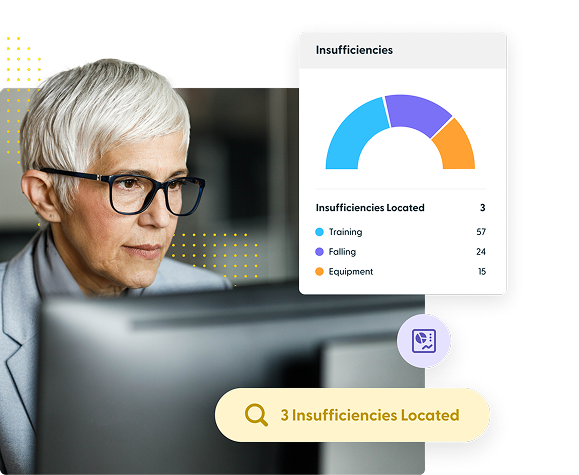
HealthStream Quality Manager helps you automate facility assessments, manage mock surveys, and track QAPI initiatives in one centralized system. It takes the guesswork out of regulatory compliance.
.svg)
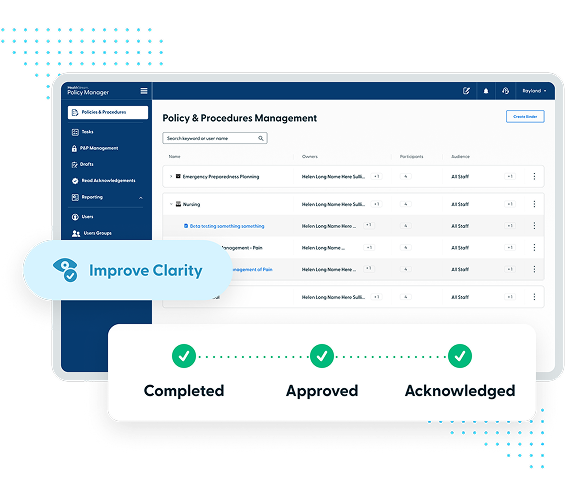
Ensure your staff always has access to the latest procedures with Policy Manager. It aligns your documents with regulations and tracks attestation automatically.
.svg)
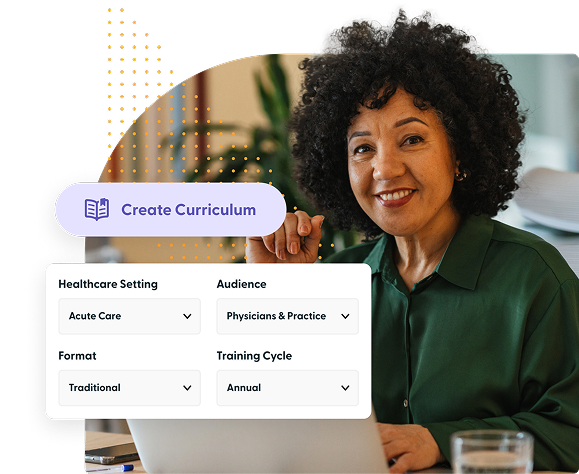
Support your improvement initiatives with targeted training for Safety & Compliance, ensuring your workforce understands the "why" behind the "what."

The purpose of CQI in healthcare is to create a culture of ongoing improvement by identifying inefficiencies, enhancing patient care, and ensuring compliance with regulatory standards. It focuses on proactive changes to improve outcomes for patients, staff, and organizations.
CQI benefits SNFs by improving care quality, enhancing operational efficiency, reducing compliance risks, and fostering a culture of accountability. It helps facilities stay audit-ready and deliver better outcomes for residents.
The key steps in implementing CQI include:
CQI improves patient care and safety by identifying trends, reducing medical errors, and implementing evidence-based practices. It ensures that care processes are continuously evaluated and optimized for better outcomes.
Traditional quality assurance focuses on detecting and correcting errors after they occur, while CQI is a proactive approach that emphasizes ongoing improvement and prevention of issues before they arise.
Data is essential in CQI because it provides measurable insights into performance, identifies trends, and helps track the effectiveness of improvement initiatives. Data-driven decisions lead to more targeted and impactful changes.
Leadership is critical in CQI as it sets the tone for a culture of improvement. Leaders guide teams, allocate resources, and ensure that CQI initiatives align with organizational goals. Strong leadership fosters staff engagement and accountability.
CQI helps organizations stay compliant by continuously monitoring processes, identifying deficiencies, and implementing corrective actions. This proactive approach ensures readiness for audits and adherence to evolving regulations.
Common tools in CQI include:
These tools help organizations identify issues and implement effective solutions.
CQI fosters a positive work environment by engaging staff in improvement efforts, reducing inefficiencies, and promoting collaboration. When employees see the impact of their contributions, it boosts morale, job satisfaction, and retention.
Don't wait for the next survey to look at your quality processes. Equip your team with the tools they need to drive safer, more efficient care.

.avif)