Explore expert insights from HealthStream on healthcare compliance, credentialing, clinical education, scheduling, and leadership. Find practical guidance to help healthcare organizations train, retain, and support their workforce.
Practical insights on healthcare compliance, workforce development, and clinical education from the experts at HealthStream.

Discover how customized training can support physician well-being and combat burnout. Find out more about innovative solutions designed for healthcare.
Nearly one in four health care professionals feel the impact of professional burnout on their mental health (26%) or say they are burned out professionally (23%), according to a 2024 survey by market researcher InCrowd. With May honoring Mental Health Awareness, there is no better time to bring attention to burnout and put measures into place to help combat this workplace problem. Physician burnout has emerged as a critical issue within the healthcare sector, markedly impacting both the well-being of doctors and the quality of patient care.
According to the American Medical Association, researchers are starting to quantify another burden that can contribute to physician burnout: mandatory training modules. The AMA study found that physicians undertook the training during off-hours or on the weekend in 32% of the mandatory modules. These programs, although designed to update and broaden the knowledge base of healthcare professionals, often add an additional layer of stress and time burden on an already overextended schedule.
In addressing the critical issue of physician burnout, innovative solutions like the implementation of HealthStream's ComplyQ and SafetyQ offer a promising pathway forward. Unlike the one-size-fits-all model of compliance training, these solutions allow healthcare professionals to demonstrate their existing competencies and "test out" of courses, eliminating the need to sit through familiar material. Additionally, modules not required to meet regulations are voluntary, which allows providers to acknowledge the varied expertise within the medical field and personalize the learning process. As a result, physicians spend their time only on areas where they truly need development.
When training is necessary, ComplyQ and SafetyQ employ micro-learning techniques, focusing on concise, impactful information delivery in multiple modalities, such as podcasts for on-the-go training. Physicians can personalize this to add links to topics if they want to dig deeper or expand the timeline for completion if there are concerns with meeting the deadline.
This thoughtful approach to mandatory training represents a significant step towards balancing the continuous education of healthcare providers with the preservation of their mental and emotional well-being. By offering solutions that respect the time and expertise of healthcare providers, there is a substantial opportunity to improve the working conditions for physicians and, by extension, the quality of care provided to patients.
Click here to learn more about HealthStream's innovative solutions for reducing the burden of training.

Check out the newest features of myClinicalExchange designed to elevate user experience and streamline clinical rotations. Join our tour today.
In a recent webinar, HealthStream's myClinicalExchange team shared some exciting updates and enhancements to this solution as part of their quarterly update to customers. The webinar was moderated by HealthStream's Daniel Pawlus and featured:
Scott McQuigg kicked off the fourth webinar of 2024 with the hope that the updates and enhancements will allow users to get even more out of myClinicalExchange. He also shared that through the first quarter of this year, HealthStream customers had placed nearly 121,000 students in clinical rotations and served more than 70,000 students. Nearly 600 clinical sites are hosting those rotations in partnership with more than 1,300 academic partners.
Shanti Gangadharan introduced some new features that will serve as building blocks for this and future releases of myClinicalExchange along with their functions. She shared that the creation of the hStreamID will be foundational for students and clinical sites alike. Students will be able to create that ID as they are setting up their myClinicalExchange accounts. Over the next several quarters, HealthStream will be introducing new reports that will allow clinical sites to identify future employees. It will also give customers access to an improved dashboard and better integration into HealthStream with improved access to learning and the myClinicalExchange workflow.
Gangadhara also shared that customers will appreciate improved user management which will allow them more self-sufficiency in managing their accounts by enabling them to manage their own users and link an unlimited number of people to their account. Clinical sites and academic partners are now able to activate and deactivate users and invite students to training without relying on support. A growing number of hospital and academic users are establishing super users to optimize the user management process.
Bintee Karia shared that new features in Release 2.4 were developed based on customer feedback from surveys and from analysis of support tickets. Observations from those two sources led the team to focus on optimizing the student onboarding process. She shared that this version will make it easier for hospitals and academic users by eliminating many of the account creation and login questions from students.
She shared updates on the following features and enhancements:
Half of all reported defects are closed by the HealthStream team within 7 days and 75% are closed in under 30 days, (this represents an 25% improvement in the speed at which defects are being closed). Davis shared that efforts to continue to improve the speed at which defects are closed are still underway with the goal of closing all tickets in 30 days or less.
Recent enhancements include improved email communications for hospitals and campus users when activating their accounts. The emails now include more detailed information about staff member roles, instructions on how to activate their accounts, and get started in myClinicalExchange creating a smoother start to their myClinicalExchange experience.
Jon Weber urged users to take advantage of the ability to have Super Users which will enable customers to distribute user management tasks to those Super Users, an approach that is not only more efficient, but can reduce the need for customer service interventions. He encouraged users to head to the myClinicalExchange Community site for supporting documents and other topics that users will find helpful when developing their Super Users. The myClinicalExchange Community is where users will also be able to access Tuesday Tips. The Customer Success Team, acting on feedback from the support and product teams, will create a weekly tip based on current hot topics.
Weber also shared that the newly-created Support Portal will eventually replace email as a means of opening new cases and will serve as the foundation for future support enhancements. In addition, the summer version of The Readiness Guide is now available and can be found on the Community site. As always, it will include helpful information on updating training, reviewing affiliation agreements, evaluating processes and information about upcoming workshops.
A full schedule of workshops based on seasonal topics is being offered between May and July. This list will be updated in August. Additionally, Gangadharan shared that the workshops would be recorded and that these recordings would be available in the myClinicalExchange Community. You can also watch the entire webinar here.

Learn about successful strategies for MedTech training partnerships that boost retention and simplify implementation. See how we can assist.
A recent HealthStream webinar provided insights on how the MedTech community can leverage HealthStream's network of learning resources and technology to improve medical product training and enhance retention. The webinar was moderated by HealthStream's Daniel Pawlus and featured presenters:
Gangadharan acknowledged that education plays a vital role in enhancing patient outcomes. In addition, many MedTech organizations have a need to distribute their training and education to a network of their end users. "HealthStream is a differentiator in that we have the largest network of professionals accessing a single platform for all types of education and training," said Gangadharan.
AvaSure is a leader in providing virtual monitoring technology that is capable of keeping both patients and nurses safe. It lowers the cost of care, while freeing staff to provide additional care. AvaSure recognizes the importance of a strong implementation and go live for new technology resources. They need safe and efficient processes for training their end users. In addition, they found that the improved, streamlined training resulted in improved retention amongst their own clinical educators.
Votruba shared insights into what was important to AvaSure as they looked to develop a relationship with a training partner. AvaSure provides the technology and devices that are used for patient monitoring and that includes the software and infrastructure that supports that technology. The hospital has its own staff that uses the technology so AvaSure needs a strong partnership to work through the change management process when the new technology is introduced.
Prior to their partnership with HealthStream, Votruba admitted that they had a user manual and procedures for providing education to healthcare organizations, but it required a lot of resources - from both AvaSure and their healthcare partners. They had a week that was dedicated to the go live portion of the implementation and that followed a 10-week implementation process. They had to rely on their healthcare partners to download the software, find sufficient space for training rooms, schedule staff for hands-on training and provide a sufficient number of software licenses. In short, it was cumbersome and inefficient for AvaSure and for their partners.
Streamlining the process to provide the implementation virtually saved time, provided a better learning experience for their users, and used fewer traveling educators. In short, HealthStream and AvaSure partnered to provide a solution that was more efficient, more effective and less costly.
Votruba went on to address the impact of the relationship with HealthStream. She described the now 8-year-old partnership as smooth from the beginning. AvaSure's hospital partners were happy that they were being relieved of the burden of preparing and executing the training. Healthcare organizations were already familiar with and confident in HealthStream and AvaSure found that offering learning modules as part of their service to their clients helped to set them apart in the marketplace. It also reduced the number of traveling educators required as the learning modules could more efficiently and effectively address the training required during the implementation and beyond.
AvaSure's products are nurse driven so it is essential that they understand the "why" behind the technology. "They need to see the value and we need to get their buy-in," said Popma-Breen. The sooner that buy-in is achieved, the sooner the partner will begin to see a return on their investment.
AvaSure and their healthcare partners begin by building awareness of the new technology. The learning modules are then uploaded to their system right away. There are a total of 6 interactive eLearning modules that are offered pre - and post-launch. Partners are able to monitor how many staff have taken the modules. When hospitals have strong participation in advance, the onsite portion of the education is more effective as onsite educators can spend less time on the basics which have already been covered allowing them to focus more on policy, processes, and workflow to advance the implementation.
If course completions are any indication, AvaSure and their healthcare partners are finding the modules helpful. "So many individuals know about AvaSure because of the eLearning modules," said Popma-Green. Reporting on course completions by hospital and across all AvaSure customers is available and reports can be filtered by time period as well. Popma-Breen shared that there has been a substantial amount of growth year after year in the number of people completing the courses. For example, nearly 345,000 students have taken the introductory course through the end of 2023.
Votruba shared her thoughts when asked what advice she would give to MedTech companies that may be considering using HealthStream for their training and educational content. She urged MedTech companies to remember that even though they may have a technology that sounds like the perfect solution and works well, it still needs customer adoption in order to be successful. This will likely require education that will support change management while changing attitudes and behaviors.
She also encouraged MedTech companies to be sensitive to the significant workforce issues currently facing healthcare organizations. Their customers will likely need ways in which to effectively onboard new employees throughout the year. In addition, she pointed out the importance of being nimble. During the pandemic, it was difficult to add new use cases and users, but by partnering with HealthStream, they were able to create an eLearning module that was more of an elbow tool. It was shorter and more adaptable to the learner's needs.

Learn proactive strategies to tackle burnout and enhance the well-being of healthcare staff. Transform your workplace culture for better results.
Healthcare staffing issues are fairly acute and are likely to remain a priority for healthcare leaders for the foreseeable future, making it essential to deal with any barriers to full staff engagement, retention, and satisfaction. Staff burnout is potentially one of the biggest challenges faced by leaders trying to manage the healthcare staffing crisis. A recent HealthStream webinar addressed the complexities of burnout and offered strategies to successfully combat it.
The webinar was moderated by HealthStream's Dan Pawlus and featured presenters Susan Tournie, Vice President, Psych Hub and Andrea Zalewski, Clinical Program Manager, HealthStream.
Tournie began by defining the scope of the problem and acknowledging that burnout is a natural result of the pressures and expectations of being a healthcare worker today. The pandemic further complicated the issue, compounded the stress, and heightened expectations placed on healthcare workers.
"The statistics are really staggering," said Tournie. Fifty percent of all mental health professionals report experiencing moderate to high levels of burnout. Seventy-six percent of healthcare workers report exhaustion and burnout and 69% of those reporting burnout report that they do not feel valued. Tournie went on to say that the escaping burnout in healthcare was becoming increasingly difficult.
Personal and professional challenges impact the way in which we care for ourselves and others and can result in caregivers neglecting their own well-being. Recognizing the pillars of well-being can be the first step in reducing burnout. Tournie stressed that these pillars are not about creating additional items for a to-do list which will only add to burnout. The four key pillars are:
Healthcare workers describe burnout in a number of ways, but there are some common themes. Emotional exhaustion is often an indicator of burnout. Feeling emotionally drained and lacking in the emotional resources required for the job is often a sign of burnout. Tournie also shared that depersonalization or a negative or detached response to others may be another symptom. These feelings are often accompanied by a low a poor evaluation of one's own performance, competence and accomplishments.
Tournie urged leaders to be aware of what burnout looks like as that awareness is the first step in addressing burnout and restoring well-being.
Typically, burnout blames the individual rather than the situation that has created burnout. Tournie encouraged leaders to reframe burnout by putting the blame where it belongs - on the situations that cause burnout and not on the individual. "Improving our well-being is unlikely to happen if we continue to blame ourselves," said Tournie.
In addition, she suggested healthcare leaders consider these key strategies:
Tournie recommended that leaders prepare foundational systems that will facilitate a better response to burnout. Advocating for employees is an important step and it is best done proactively. Talking to staff about what is troubling them before they become burnt out can mean less burn out overall. Take time to be sure that you can recognize stress in your team and that they can do the same for you. Next, it is important to be open and honest about challenges. Acknowledging that everyone has their struggles is an important first step in being honest with each other. Thirdly, Tournie recommends that leaders create the kind of environment where everyone's needs are acknowledged and valued.

Healthcare organizations are facing an increase in ransomware attacks. Learn proactive strategies and expert training to defend against the Black Basta threat.
In the face of the rising cybersecurity threats, it's crucial now more than ever for healthcare organizations to fortify their defenses, especially in light of the recent advisory by a coalition of top security institutions including the FBI, CISA, HHS, and MS-ISAC. This advisory centers around the alarming activities of Black Basta, a formidable ransomware-as-a-service variant that has not only targeted but also successfully disrupted the operations of healthcare organizations, including a notable attack on Ascension which continues to impact clinical operations.
With Black Basta's track record of extorting over $100 million from its victims and conducting more than 500 ransomware attacks globally, the message is clear: healthcare entities are at significant risk and must be vigilant. The advisory urges healthcare providers to adopt and enforce cybersecurity best practices diligently, focusing on mitigation strategies against common attack vectors to safeguard against such threats.
Furthermore, the significance of comprehensive end-user training cannot be overstated. Empowering healthcare personnel with the knowledge to identify, avoid, and report phishing efforts is a critical step in enhancing an organization's cybersecurity posture. In alignment with this, ELC Information Security's Phishing Awareness Gamified course for Healthcare comes highly recommended. This gamified approach not only makes the learning process engaging but also reinforces the importance of alertness and vigilance against cyber threats.
It's a challenging time for healthcare cybersecurity, but by taking proactive steps, employing best practices, and investing in workforce training, organizations can significantly bolster their defenses against these evolving cyber threats.
Read more about Security Awareness and how HealthStream can help you protect your organization against security risks.

Uncover the importance of aligning leadership education with your organization's goals to enhance patient care and stimulate innovation.
In the rapidly evolving landscape of healthcare, the alignment of leadership education pathways with organizational initiatives stands as a critical element for success. It may seem like an intuitive part of any strategic plan, and therefore not a necessary focus, but there are some compelling reasons why this is not the case. Here are the top four reasons why this alignment is indispensable:
Aligning leadership education with organizational initiatives in healthcare is not just about enhancing leadership skills. It's about creating a cohesive strategy that advances organizational goals, promotes a culture of continuous improvement, and ultimately leads to better patient care. Invest in your leaders and prepare your rising talent with HealthStream's Leadership Development.
Learn how addressing social determinants can promote health equity. Begin your journey toward meaningful change today.
Addressing social determinants of health and educating healthcare staff makes direct progress toward health equity, a world where every person has the opportunity to attain their highest level of health and care. Social determinants of health have a lasting impact on society, creating inequities in access to housing, education, wealth, and employment. All of this puts people at higher risk of poor health.
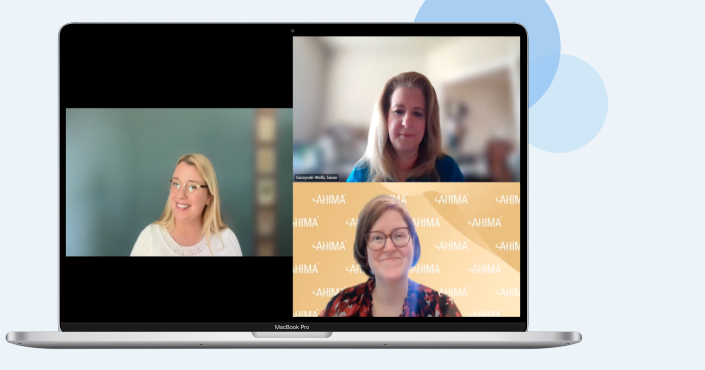
The CDC released four public health actions that can positively affect social determinants of health: convene, integrate, influence, and contribute to big changes. In this special 11-minute conversation, we discuss how taking bold steps towards addressing social determinants of health can make long-lasting change. To do so, organizations must be honest about SDoH concerns and directly address challenges with the power of education. But, where do we start?
Speakers:
Lauren Riplinger, JD
Chief Public Policy and Impact Officer
American Health Information Management Association (AHIMA)
Lauren currently serves as AHIMA's Chief Public Policy and Impact Officer. In this capacity, she is responsible for providing strategic and operational oversight over AHIMA's advocacy and programmatic strategy to demonstrate mission impact. Prior to that, Lauren served as Vice President of Policy & Government Affairs at AHIMA, overseeing the organization's policy and advocacy before Congress and various federal agencies. With two decades of healthcare policy experience, Lauren previously worked on Capitol Hill where she was actively involved in almost every aspect of a congressional office, including serving as Chief of Staff—a position that requires the ability to quickly synthesize multiple issues and adapt to constantly shifting priorities. Lauren received her JD from American University Washington College of Law and a Bachelor of Arts from Vanderbilt University. She is admitted to practice law in New York.
Susan Gurzynski-Wells, MS, RHIA
Director, Product Management
HealthStream
Susan Gurzynski-Wells is our Director of Product Marketing for Quality and Compliance here at HealthStream. She oversees our revenue cycle management portfolio, as well as our culture portfolio.
For more than 25 years, Susan has worked with healthcare organizations to ensure data integrity during periods of transition. She is a subject matter expert in the areas of ICD-10 coding, Evaluation and Management, CPT coding, Patient Access and Revenue Cycle Management at HealthStream. She regularly works with clients to align revenue cycle solutions with both clinical and business objectives.
She has a Masters of Science Degree in Health Information and Informatics Management; as well as Graduate Certificates in Electronic Health Records and Health Information Technology. She also has extensive experience with multiple EHR systems and is certified as a Registered Health Information Administrator.
Conversation hosted by Caroline Acree - Director, Product Marketing, Quality & Compliance - HealthStream
Are you creating a culture of health equity and belonging? Learn more about HealthStream's culture and leadership development programs, as well as elevating your staff's competence with innovative education for CDI, EHR, HIPAA and more.

Read key takeaways from the 2024 credentialing forum on innovation, provider verification and enhancing the experience.
Lisa Rothmuller and Tawna Knight
We're back from the National Credentialing Forum (NCF), and what an informative event it was! In case you aren't familiar, the NCF is an annual event that brings together organizations and individuals who contribute to the credentialing and verification processes. Attendees share information over two days each February and discuss strategies and initiatives to improve the credentials verification process. This year's event saw the participation of esteemed organizations like the American Board of Medical Specialties (ABMS), American Medical Association (AMA), Det Norske Veritas (DNV), The Joint Commission (TJC), and many others. HealthStream was honored to be included among the invitees.
Many discussions during the event focused on the topic of Artificial Intelligence (AI), including AI integration, standards development, and utilizing AI to improve efficiency in credentialing processes. Additionally, there was a notable emphasis on fostering provider well-being through application adjustments and wellness initiatives.
Here is a quick roundup of the updates provided by various organizations that attended the event:
Summary
Each organization that presented and participated in this year's NCF represents a piece of the credentialing puzzle for credentialed and privileged providers. Their forward-thinking approaches around topics like AI and workforce wellness will ultimately help improve the quality of healthcare. Our industry's commitment to the provider experience, process improvement and patient care is inspiring, and we at HealthStream fully embrace it.
We look forward to continuing to work with these industry leaders and participating in the National Credentialing Forum in 2025. Have questions? Get in touch.

Learn about the latest changes to 42 CFR Part 2 and their implications for patient confidentiality and care coordination. Ensure compliance with these updates.
In the ever-evolving landscape of healthcare regulations, staying informed is crucial to an effective compliance program. Among recent updates, the modifications to the confidentiality regulations concerning Substance Use Disorder (SUD) Patient Records under 42 CFR Part 2 stand out as a significant development. Let's delve into what these changes entail and how they impact both patients and providers.
The Care's Act has brought about substantial modifications to the 42 CFR Part 2 regulations, primarily aimed at aligning the confidentiality standards for SUD patient records with the provisions of HIPAA (45 CFR) rules and HITECH. This alignment is pivotal in ensuring a more cohesive and integrated approach to healthcare delivery, particularly concerning patients with substance use disorders.
So, what precisely has changed with the implementation of the Care's Act?
Strengthened Confidentiality Protections: One of the primary objectives of the modifications is to enhance confidentiality protections for individuals seeking treatment for substance use disorders. By aligning with HIPAA standards, the Care's Act ensures that SUD patient records receive similar levels of protection as other medical records. This reassures patients that their sensitive information is safeguarded and encourages them to seek the care they need without fear of stigma or discrimination.
Improved Care Coordination: While confidentiality is paramount, seamless care coordination is equally crucial for ensuring patients receive comprehensive and effective treatment. The changes introduced by the Care's Act strike a balance between protecting patient privacy and facilitating better communication between healthcare providers. By aligning 42 CFR Part 2 with HIPAA and HITECH, the Act enables authorized healthcare professionals to share relevant patient information securely, leading to improved care coordination and better health outcomes.
Enhanced Access to Treatment: By streamlining the confidentiality regulations, the Care's Act aims to remove barriers to treatment for individuals struggling with substance use disorders. Patients can now benefit from more integrated and coordinated care, as their providers can exchange information more effectively within the bounds of confidentiality regulations. This not only improves access to treatment but also enhances the quality and continuity of care for patients throughout their recovery journey.
For healthcare providers, understanding and adhering to these updated regulations are essential to ensure compliance and provide optimal care to patients. The alignment of 42 CFR Part 2 with HIPAA and HITECH simplifies compliance efforts and promotes consistency in data privacy and security practices across different healthcare settings.
The modifications to the Health and Human Services: 42 CFR Part 2 - Care's Act represent a significant step forward in enhancing confidentiality protections for individuals seeking treatment for substance use disorders. By aligning with HIPAA and HITECH rules, these changes promote better care coordination, improved access to treatment, and ultimately, better health outcomes for patients. It's imperative for both patients and providers to stay informed about these developments to navigate the healthcare landscape effectively and ensure that confidentiality and care coordination remain at the forefront of the treatment process.
Beyond staying informed, it is more important than ever to ensure your compliance education is up-to-date with the most recent regulatory updates. Researching regulatory updates and then coordinating the implementation of those updates into your compliance education is a tireless effort that eats up compliance resources. How confident are you that the compliance education being delivered to your workforce is current? HealthStream's dedicated team can take this off your plate with ComplyQ and SafetyQ, providing you with the confidence required to ensure your compliance program is effective.
For further information, you can refer to the official fact sheet provided by the Health and Human Services: Fact Sheet - 42 CFR Part 2 Final Rule. Stay informed, stay compliant, and prioritize patient care above all else.

Understand how healthcare leaders can adapt to new trends and technologies for success. Get your organization ready for the future.
The healthcare industry is constantly evolving, and with each year comes an array of challenges and opportunities. For leaders in healthcare, the key to not only surviving but thriving lies in anticipation and strategic planning. As we look forward, healthcare executives are already laying the groundwork for 2025 budgets, adapting to market trends, and reshaping their skill set to lead effectively.
One of the most significant factors shaping healthcare budgeting is market trends. From digital health expansion, policy changes, and the consumerization of healthcare to the rise of personalized medicine, healthcare executives must keep a pulse on the trends that could impact their organization's financial health.
The ingress of technology companies into healthcare has catalyzed a digital transformation, leading to an increasing share of budgets being allocated to IT infrastructure, cybersecurity, and telehealth services. Leaders are also starting to plan for the integration of artificial intelligence and machine learning applications that promise to streamline operations and improve patient outcomes.
With these changes comes the need for healthcare leadership to adapt. Traditional skills are foundational, but in an industry quickly being redefined by innovation and consumer demands, executives need to think like technologists, strategists, and futurists.
Healthcare leaders today must understand data analytics to foresee patient trends and manage resources effectively. They have to be well-versed in regulatory compliance, adaptable to changes in healthcare laws, and proficient in risk assessment to safeguard their organizations and patients.
In its 2023 Workplace Learning Trends Report, Udemy Business offers this advice based on current trends: "Given the difficulty of hiring qualified leaders, organizations will do well to develop them from within. When leaders rise through the ranks, it can also help create the cohesive culture and sense of belonging that talented workers are seeking" (Udemy Business, 2023, p. 4).
HealthStream's Leadership Development supports rising leader development and allows you to standardize leadership training across your organization. Our courses and curriculum are aligned to critical leadership competencies in the healthcare setting and improve retention rates and employee satisfaction.
As healthcare leaders plan for 2025 and beyond, they recognize the importance of adopting a forward-thinking mindset. The successful healthcare executive of the future is not just a financial steward but a multi-disciplined visionary, equipped with a vast array of skills to manage an industry in the throes of transformation.
Healthcare organizations that wish to excel will do so by building a solid foundation of expertly crafted budgets that consider upcoming market trends, emerging technologies, and the evolving role of healthcare leadership. The path to 2025 may be riddled with uncertainty, but by preparing now, healthcare leaders can chart a course that ensures resilience, adaptability, and sustained patient care excellence. Click here to learn more about HealthStream's innovative solutions for enhancing education and leadership development.

Transformational nurse leadership needs strong educational support. Learn how to empower nurse leaders to lead with confidence, from this webinar recap.
What can healthcare organizations do right now to ensure that nurse leaders are truly empowered to lead? In a recent HealthStream webinar entitled "Building for Success: Empowering Tomorrow's Leaders" the topic was how to support and develop future leaders. There are some foundational skills required by nursing leaders to ensure that they are able to navigate the changing clinical and business landscape in healthcare. Along with leading through change, nurse leaders need patient advocacy skills, real strategies for leadership development, and succession planning education.
The webinar was moderated by Daniel Pawlus and featured Sarah E. Gray, DNP, RN, CEN, FAEN, Chief Nursing Officer, Sigma.
Dr. Gray began with a history and overview of SIGMA. Founded in 1922 with just 6 nursing students from the Indianna University School of Nursing, Sigma is now a global organization with more than 100,000 members from over 600 chapters in more than 100 countries around the world. She shared that the Sigma's vision is to connect and empower nurse leaders thereby transforming global healthcare.
During the presentation Dr. Gray shared key insights about the skills needed for successful professional development and the best ways to equip nurses to grow into the empowered leaders needed in today's healthcare environment. In turn, this can create a positive and efficient healthcare workforce while fostering an environment that is ripe for learning and development.
Dr. Gray shared that there are three key elements that organizations will find essential to maintaining an appropriate focus on an environment that supports development. First, she encouraged leaders to identify the significance of education in empowering nurses to assume leadership roles. She also pointed out that educational resources to support this journey were abundant. In addition, she stressed the importance of having strategies (in addition to the resources required) that will support leaders in their roles.
Creating confidence in nurses, whether they be new nurses or nurses in the throes of burnout, requires an understanding of conflict. Dr. Gray cited the work of Adam Grant, a writer who has focused on how to foster innovation, growth and progress by changing how we think about conflict and disagreement. He once famously said that, "the absence of conflict is not harmony, it's apathy."
Avoiding conflict simply does not lead to authentic team harmony. Rather, it likely represents a lack of engagement. According to Grant, true harmony occurs when individuals feel comfortable expressing diverse perspectives, can engage in healthy debate, and are willing to collaborate on solutions. This approach leads to stronger relationships, and ultimately, to better decision making.
Dr. Gray challenged leaders to think about where to focus when developing leadership knowledge and skills. She addressed three of the many areas that leaders may choose to address. Sigma and HealthStream have partnered to provide professional development courseware for nurses that covers a wide variety of leadership topics. In this webinar, Dr. Gray focused on three.
The program is 4.7 hours and covers the various stages of advocacy beginning with awakening - the realization that policies impact both nurses and patients. The second stage involves engaging with coalitions both inside and outside of the organization that can improve patient advocacy. Stage three is organizational engagement and the last is addressing the global impact by taking advantage of the broader advocacy networks that can bring leaders together.

Discover key leadership principles and resources tailored for nursing professionals. Begin your journey towards impactful nursing leadership today.
As healthcare organizations continue to struggle with staffing shortages and retention issues, creating a pipeline of future leaders remains critically important. In a recent webinar, HealthStream introduced courseware that outlines the core principles of nursing leadership and provides insights and tools to guide nurses on the path to professional development while helping other nurses on their journeys. The webinar was moderated by HealthStream's Daniel Pawlus and featured Sarah E. Gray, DNP, RN, CEN, FAEN, Chief Nursing Officer, Sigma.
Dr. Gray began with an overview of Sigma - a global organization with more than 100,000 members from over 600 chapters in more than 100 countries around the world. She shared that the Sigma's vision is to connect and empower nurse leaders thereby transforming global healthcare.
During the presentation Dr. Gray shared key insights about the skills needed for successful professional development and introduced tools that will empower nurses and create a pipeline for tomorrow's nursing leadership.
A 2021 survey conducted by the American Organization for Nursing Leadership (AONL) found that 75% of nurse managers reported that their number one priority was emotional health and well-being. When frontline staff were surveyed, 61% felt that the key issue was surge staffing along with training and staff retention. Further, 92% of nurse leaders reported concerns about safety, infection risks, stress, fear, anxiety, and workloads.
"Nursing is tough," acknowledged Dr. Gray. Additionally, professional stresses are often compounded by personal concerns over childcare issues, fatigue, and a lack of psychological support. All of these factors can combine to create nurses that may feel isolated, burnt out, and disengaged.
Dr. Gray referred to Maslow's familiar hierarchy of needs which helps us understand how to build a support system for nurses beginning with the most foundational needs as identified by Maslow.
Leaders should be prepared to support nurses. That support might take a variety of forms, but can be a very satisfying part of a leader's role. That support might take the form of advocacy, facilitation, and a focus on creating a healthy workplace for nurses. Sigma's training is useful for supporting leaders at every level from frontline leadership to nurse manager to director and executive roles.
The webinar poll participants reported that they believed that the frontline manager role was among the most difficult to support. These managers represent the largest percentage of leaders and typically they have little training and that training tends to be quite inconsistent. Sigma's Learner Development Plan helps frontline managers to identify goals, determine how they will evaluate success, determine the actions that they will need to take in order to reach those goals, and make practical decisions about how to implement what they have learned.
Role clarity is essential to both new and existing nurse leaders. Dr. Gray encouraged nurse leaders to answer the "why" questions. This may be of particular importance for younger generations who may be somewhat more likely to feel a need to understand the background of any given situation. They may also wish to have a deeper understanding of other factors that may be influencing the care that is provided.
Creating leaders that are great coaches is also essential to healthcare. It is important to patient care and important to maintaining a pipeline of future leaders. Dr. Gray encouraged leaders to act as their own coaches by focusing on mastering their own skills, improving productivity, developing professional competence, and improving their conflict management skills. Sigma's Coaching in Nursing course can provide skills and knowledge that will facilitate collaboration and communication while also encouraging the professional development that can drive retention and satisfaction.
In addition to courseware aimed at developing frontline managers, Sigma and HealthStream are offering a Nurse Manager Certificate course. The web-based program uses the very latest evidence-based content. At the completion of the program, nurses will earn 76 CNEs. There are 16 courses within the Nurse Manager Program covering topics as varied as strategic planning, team management, patient satisfaction, staff development, ethics and work-life balance. The courses address theory and include learning activities and knowledge checks to help ensure understanding and the ability to apply what has been learned.





