


Your trusted source for healthcare compliance
Keeping up with ever-changing regulations while proving real-world program effectiveness is harder than ever. That's why healthcare organizations have trusted HealthStream for over 30 years. We help organizations turn complex regulatory requirements into legally defensible training for built-in visibility and audit readiness.
A trusted leader in compliance & safety
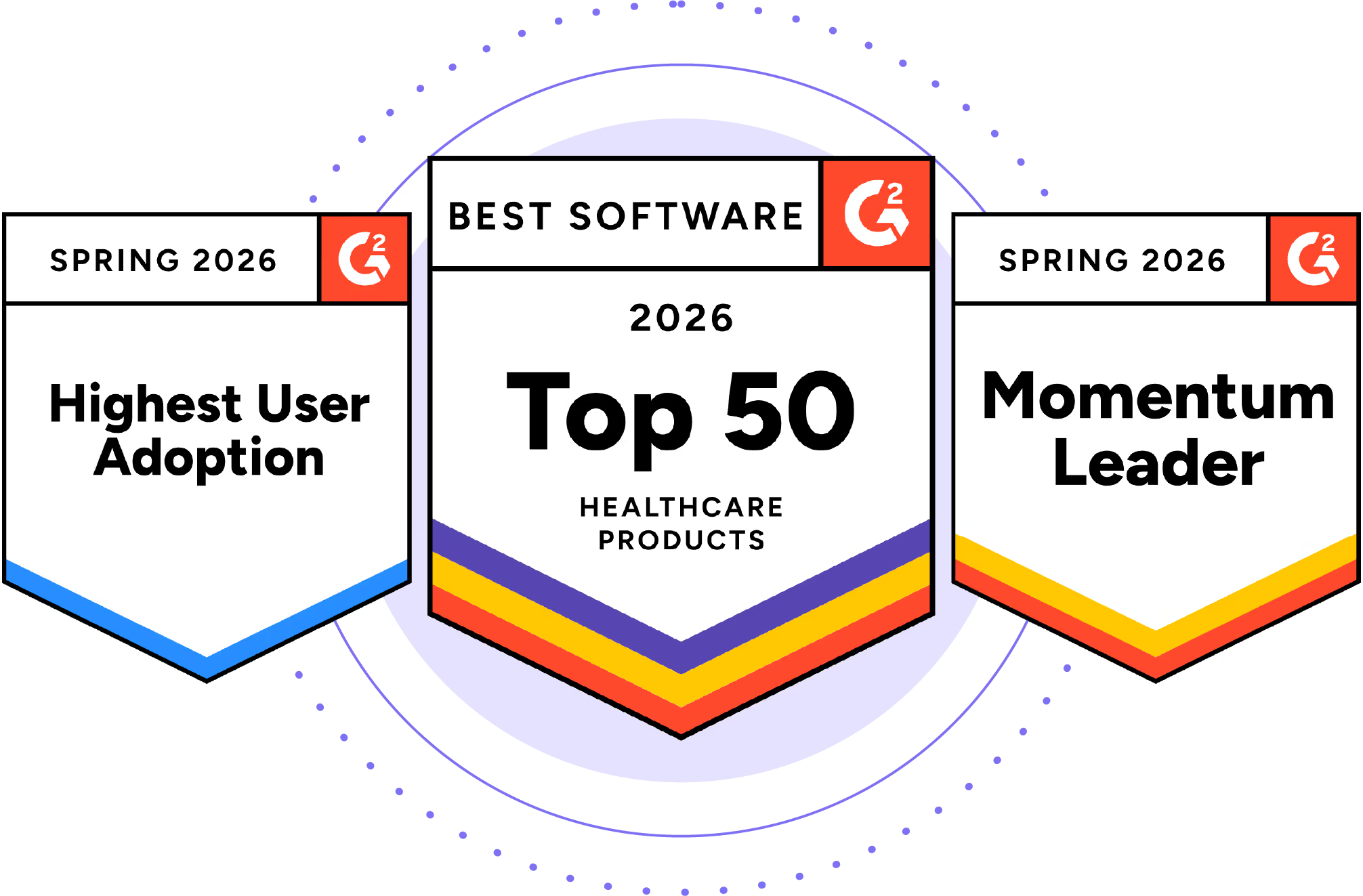
HealthStream's ComplyQ and SafetyQ were ranked among the 50 Best Healthcare Software Products by G2 in early 2026 - recognized out of nearly 5,000 contenders for the second consecutive year.
Healthcare compliance requires more than just education.
Effective compliance starts with modern education that reduces risk, improves healthcare staff competency, and controls costs.
%20(1).svg)
.svg)
%20(1).svg)
Demonstrate effectiveness of your healthcare compliance program
At HealthStream, we’re not just simplifying compliance or increasing protection — we’re helping you build an effective compliance program that drives staff readiness.

Ensures compliance with 24/7 regulatory tracking, expert-guided updates, and quarterly communications to keep your team informed about federal and state requirements.
.png)
.png)
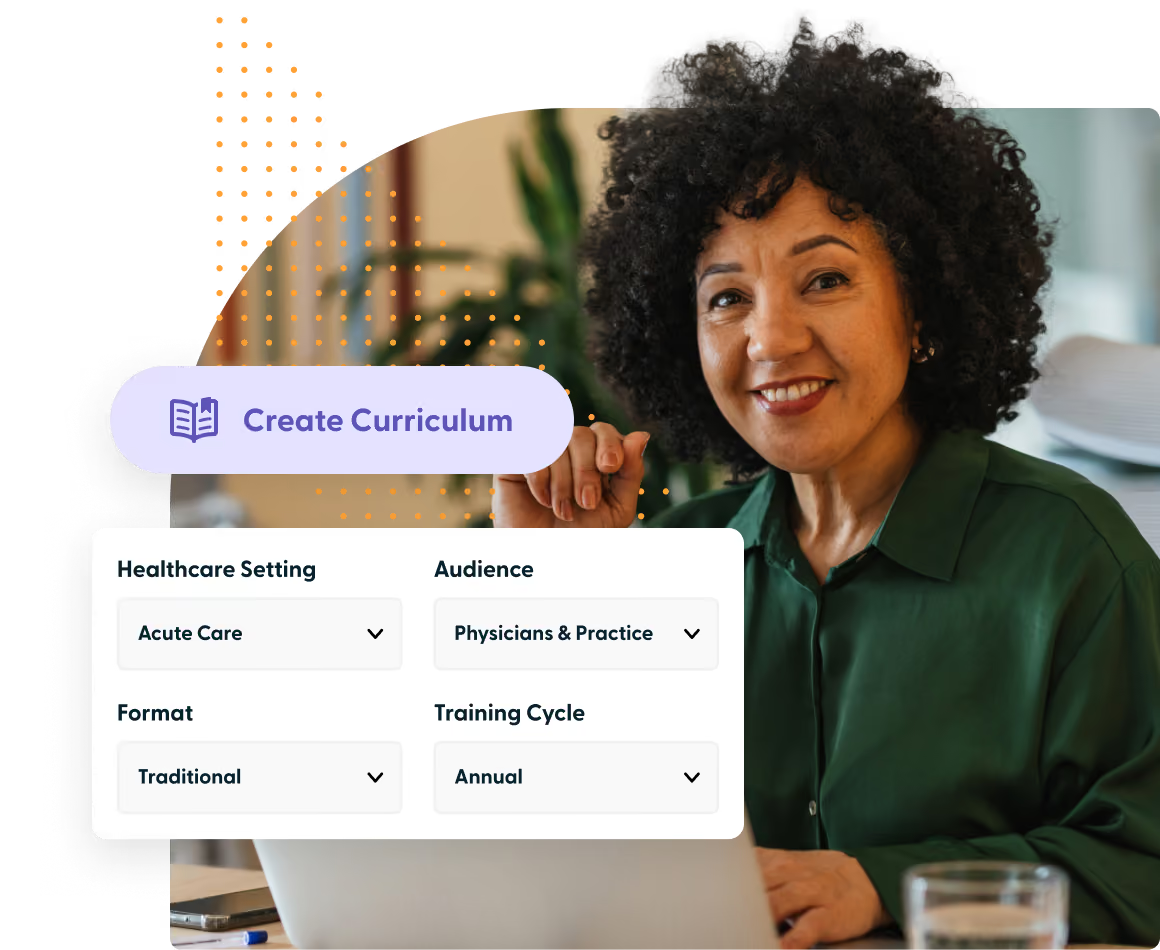
Legally defensible content, intelligently packaged and tailored for role and setting, mapped and ready in minutes.
.png)
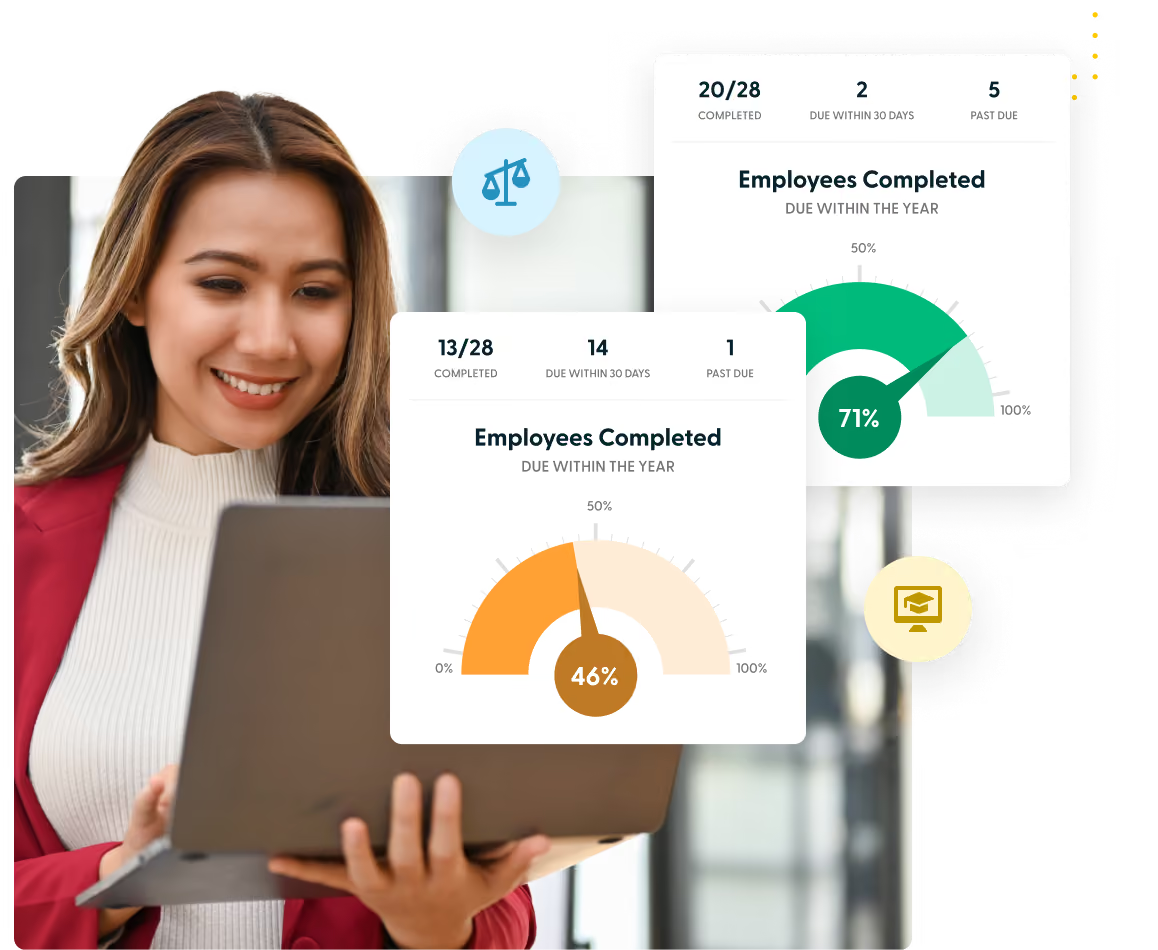
Enhance role-based accountability and transparency, empowering managers with the confidence to track progress and drive results.
.png)
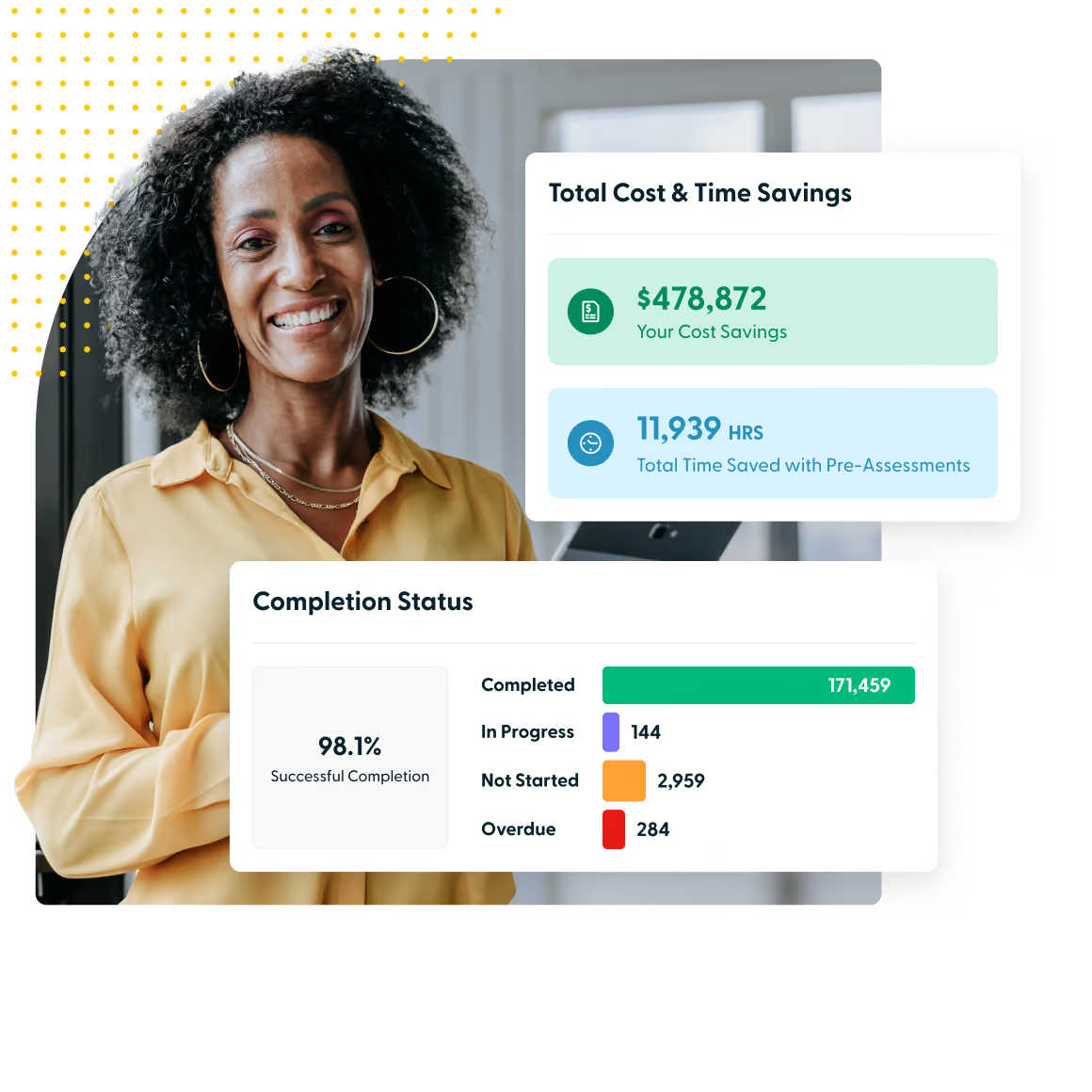
Gain confidence with detailed safety and compliance reports, plus the enterprise-wide outcomes dashboard—offering C-level leaders clear insights into ROI, compliance rates, and actionable next steps to ensure program success.
19b8843fe08c465782c1ed7a37fe1a31.png)
Links your policies and integrates org-specific resources like contacts, videos, documents and internal procedures – embedded directly into courses to reinforce your brand and mission.
.avif)

Identifies knowledge gaps, streamlines individualized training plans, and allows staff to test out of topics they’ve already mastered.
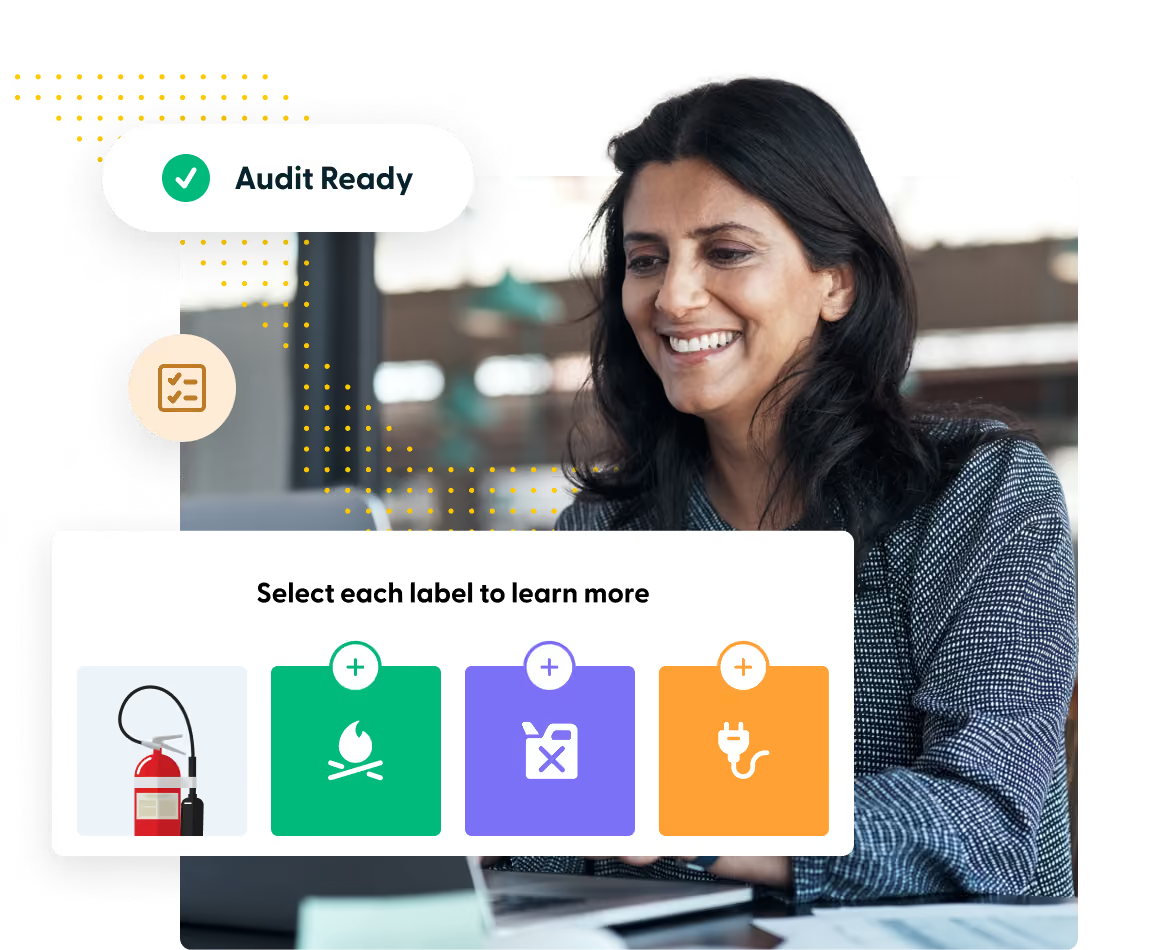

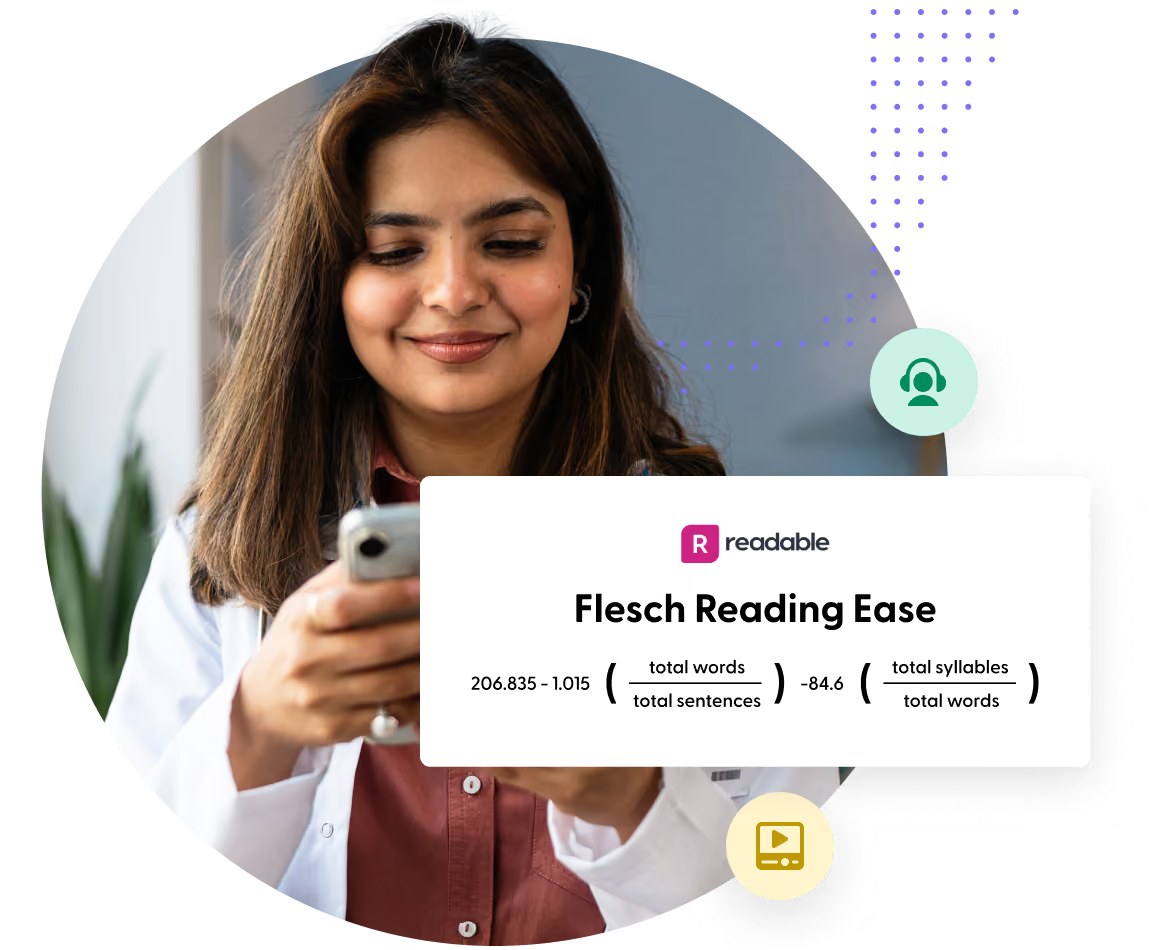
Reduce cognitive load with engaging Grade 5-level content, 1,100+ micro-learnings, podcasts, infographics, and Spanish versions – all compliant with federal and state requirements.


Who uses ComplyQ?
All healthcare professionals focused on safe, compliant behaviors.

Compliance
Strengthen compliance and reduce organizational risk
.png)
Clinical / Medical
Deliver safe, high-quality patient care
.png)
Human Resources
Develop a compliant, engaged workforce

Executives & Boards
Maintain trust and promote a culture of compliance.
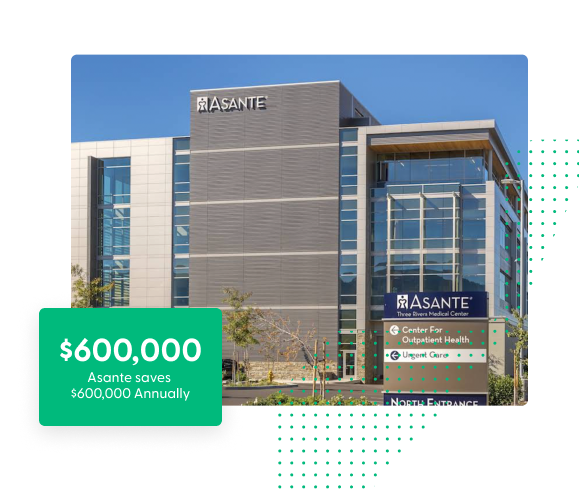
Asante saves $600,000 annually with ComplyQ & SafetyQ programs
"HealthStream has improved our organization’s ability to present our staff with high quality training that is engaging and evidence-based. It has improved competencies in all areas of our organization, from clinical care to compliance."
We’re here every step of the way
Our goal is to provide an unparalleled experience for our customers. From dedicated onboarding teams to ongoing support and product updates, we’re committed to your success.

Customer Support
HealthStream offers Customer Service Support 877-301-HSTM(4786) or customer.service@healthstream.com from 7 a.m. – 7 p.m. CST (holidays excluded).
.svg)
HealthStream User Groups (HUGs)
As the platform trusted by more than 70% of U.S. healthcare organizations, our quarterly HUGs connect you with your peers
afdd5111e95c42209bec88fbf4c80115.svg)
HealthStream Community
The award-winning HealthStream Community provides unprecedented access to product documentation, live webinars, and peer support
.svg)
By opting in, you’ll receive a detailed monthly update with helpful tips and new information
.svg)
We’re here for you, with specialized, product-specific support from a HealthStream Success Manager to help guide your journey to adoption
Regulatory alignment you can defend.
Available with HealthStream compliance and safety solutions, our Regulatory Wizard™ tool maps requirements directly to training by role, settings, and state with clear traceability for audits and surveys.
Increase your impact
Experience compounding benefits with additional tailored solutions.

.tmb-0.png)
.tmb-0.png)

Compliance—powered by hStream
Bring it all together with seamless access to the largest healthcare content marketplace, exclusive applications, specialized tools, and significant subscriber discounts.
Frequently Asked Questions
Why does compliance training matter more than ever in healthcare?
Compliance training matters more than ever in healthcare because the regulatory environment is increasingly complex, constantly evolving, and closely tied to patient safety, reimbursement, and organizational risk. Standards from bodies such as Centers for Medicare & Medicaid Services, Health Insurance Portability and Accountability Act, HHS, and state agencies continue to expand in scope, requiring healthcare organizations to demonstrate not only that training has been assigned, but that it is effective, role-specific, and audit-ready. Traditional “check-the-box” education models are no longer sufficient in environments where survey readiness, documentation accuracy, and workforce behavior directly impact compliance status and financial performance.
Modern healthcare compliance software and compliance training platforms address this gap by turning regulatory requirements into structured, defensible education that is mapped by role, setting, and risk area. Solutions like AI-driven compliance technology help organizations reduce administrative burden, close training gaps faster, and maintain continuous visibility into workforce readiness across all care settings—from acute care hospitals to long-term care and behavioral health. By leveraging adaptive healthcare compliance training, organizations can improve competency, reduce unnecessary training time, and generate audit-ready reporting that demonstrates true program effectiveness. This shift from static education to intelligent compliance systems is what enables organizations to move from reactive risk management to proactive, measurable compliance outcomes.
What compliance topics are included in healthcare training programs?
Healthcare compliance training programs are designed to cover the core regulatory, ethical, and operational requirements that healthcare organizations must meet to remain compliant and reduce risk. Common compliance topics include HIPAA Privacy and Security, Fraud, Waste and Abuse (FWA) Prevention, Anti-Kickback and Stark Law compliance, EMTALA requirements, billing and documentation standards, Code of Conduct and ethical decision-making, and anti-discrimination and harassment prevention. Many programs also include resident and patient rights, corporate compliance fundamentals, and state-specific regulatory requirements to ensure alignment with both federal and local mandates from organizations such as Centers for Medicare & Medicaid Services and Health Insurance Portability and Accountability Act.
Modern healthcare compliance software and compliance training platforms expand beyond static course catalogs by organizing these topics into role-based, adaptive learning paths that reflect real-world responsibilities across care settings. This includes training for acute care hospitals, ambulatory surgery centers, behavioral health, long-term care, home health, and physician groups—ensuring every staff member receives relevant, defensible education. Advanced healthcare compliance education solutions also incorporate pre-assessments, ongoing regulatory updates, and audit-ready reporting, helping organizations maintain continuous compliance while reducing training fatigue and improving workforce readiness.
How is AI transforming healthcare compliance technology and training?
AI is transforming healthcare compliance technology and training by shifting organizations away from static, manual processes toward intelligent, continuously updated compliance systems. Instead of relying on periodic course updates and manual assignment building, AI-driven healthcare compliance software can interpret complex regulatory requirements from bodies such as Centers for Medicare & Medicaid Services and translate them into structured, role-based training plans. This improves accuracy, reduces administrative burden, and ensures compliance education stays aligned with rapidly changing federal, state, and industry standards such as HIPAA, EMTALA, and fraud, waste, and abuse regulations.
In modern healthcare compliance platforms, AI also enhances training effectiveness by identifying knowledge gaps, personalizing learning paths, and streamlining education through pre-assessments and adaptive learning models. This means staff can test out of content they already understand while focusing on high-risk or unfamiliar areas, improving engagement and reducing unnecessary training time. At the organizational level, AI-powered dashboards and analytics provide real-time visibility into compliance readiness, audit preparedness, and program effectiveness—enabling leaders to move from reactive compliance management to proactive risk prevention and measurable outcomes across all care settings.
Are compliance training programs applicable to all staff and healthcare settings?
Yes—modern healthcare compliance training programs are designed to be applicable to all staff and all healthcare settings because regulatory requirements extend across every role that impacts patient care, operations, billing, and safety. Whether in acute care hospitals, ambulatory surgery centers, behavioral health, long-term care, home health and hospice, skilled nursing facilities, or physician groups, organizations must ensure that every employee receives role-appropriate education aligned with federal and state regulations. Standards from agencies such as Centers for Medicare & Medicaid Services and laws like Health Insurance Portability and Accountability Act require consistent, defensible training across the entire workforce—not just clinical staff.
Modern healthcare compliance software and compliance training platforms are specifically built to support this breadth by mapping training to role, department, and care environment. This ensures that frontline caregivers, administrative teams, billing staff, and leadership all receive the appropriate compliance education for their responsibilities, from HIPAA privacy and fraud prevention to patient rights and documentation standards. AI-driven compliance technology further strengthens this approach by tailoring training assignments, identifying gaps across settings, and maintaining audit-ready visibility—helping organizations demonstrate enterprise-wide compliance with confidence and consistency.
What is the #1 healthcare compliance software?
The “#1 healthcare compliance software” depends on how organizations define leadership—whether by breadth of regulatory coverage, depth of healthcare-specific functionality, or ability to demonstrate audit-ready outcomes across complex care environments. In today’s market, leading healthcare compliance solutions go beyond basic course assignment tools and instead function as full compliance platforms that connect regulatory requirements, training, reporting, and workforce readiness in a single system. Organizations evaluating top healthcare compliance technology typically look for capabilities like AI-driven regulatory mapping, role-based training automation, defensible reporting, and enterprise-wide visibility across all care settings and staff roles.
Advanced solutions such as HealthStream ComplyQ are recognized in the industry for combining these capabilities into a unified healthcare compliance software solution that supports CMS-aligned requirements from Centers for Medicare & Medicaid Services and regulatory frameworks such as Health Insurance Portability and Accountability Act. Instead of focusing solely on training completion, these platforms emphasize measurable compliance outcomes—helping organizations reduce administrative burden, improve audit readiness, and maintain continuous regulatory alignment across hospitals, health systems, and post-acute care environments
Can I customize the courses to my organization's needs?
Yes. Modern healthcare compliance training software should be flexible enough to reflect each organization’s unique policies, workflows, and regulatory obligations. While core requirements tied to standards such as HIPAA, CMS regulations, fraud, waste, and abuse prevention, and other federal and state mandates remain consistent, effective compliance education must also adapt to how care is actually delivered within each setting. That’s why leading healthcare compliance platforms are designed to support customization without compromising the integrity or defensibility of required training.
With HealthStream ComplyQ, organizations can tailor healthcare compliance education using tools like Smart Notes, which allow administrators to embed organization-specific policies, procedures, and resources directly into courses. This includes adding internal protocols, videos, documents, and links that reinforce key topics such as patient safety, documentation standards, and regulatory workflows across healthcare compliance training programs. Combined with configurable read acknowledgments and structured compliance training management software capabilities, this ensures learners not only complete required education but also engage with content that reflects real-world expectations—supporting stronger retention, accountability, and audit-ready documentation.
What if we make some of our courses in-house?
Many healthcare organizations take a blended approach to compliance education, combining in-house developed content with externally validated healthcare compliance training software to ensure programs remain current, consistent, and aligned with evolving regulatory expectations. This is especially important given the ongoing changes in standards such as HIPAA requirements, CMS regulatory guidance, fraud, waste, and abuse prevention expectations, and other federal and state mandates. While internal courses are valuable for reinforcing organization-specific policies and workflows, they still need to be supported by a reliable healthcare compliance platform that ensures regulatory accuracy, consistency, and audit readiness.
HealthStream ComplyQ is designed to support both internally created and vendor-provided content within a single healthcare compliance management system. Organizations can distribute custom policies alongside standardized, defensible training for topics such as patient safety, documentation practices, and regulatory compliance requirements across all care settings. With capabilities that streamline deployment, tracking, and reporting, the platform helps reduce administrative burden while maintaining flexibility and control. This blended model ensures that in-house content enhances—not replaces—core compliance training infrastructure, supporting consistent education, stronger accountability, and enterprise-wide visibility into workforce readiness.
Are courses updated when regulations change?
Yes. With HealthStream ComplyQ, courses are continuously maintained and updated as healthcare regulations evolve to ensure organizations remain compliant, current, and audit-ready. Compliance requirements from bodies such as Centers for Medicare & Medicaid Services, along with laws like Health Insurance Portability and Accountability Act and other federal and state mandates, change frequently—making it essential that healthcare compliance training software reflects the most up-to-date guidance without placing additional burden on internal teams.
ComplyQ addresses this through AI-driven regulatory tracking and expert-guided updates that translate regulatory changes into validated, defensible training plans. When regulations shift, impacted content is updated and aligned across role-based learning paths, ensuring consistency across all care settings and staff roles. Organizations benefit from automated alignment between regulatory changes and assigned training, enterprise-wide visibility through compliance dashboards, and audit-ready reporting that demonstrates timely adoption of updated requirements. This approach ensures healthcare compliance education remains accurate, defensible, and continuously aligned with evolving CMS, HIPAA, and state-level expectations.
What grade level are your courses written at?
Courses in HealthStream ComplyQ are intentionally designed to be accessible, engaging, and easy to understand across all roles and care settings. Content is written at approximately a 5th-grade reading level to reduce cognitive load and ensure that complex regulatory topics—such as HIPAA, CMS requirements, fraud, waste and abuse prevention, and other core healthcare compliance standards—are clearly understood by the broad healthcare workforce, including clinical, administrative, and support staff.
This approach to healthcare compliance training helps ensure consistency in comprehension while improving engagement and retention across diverse learner populations. ComplyQ also enhances accessibility through a range of modern learning formats, including micro-learnings, podcasts, infographics, and Spanish-language versions, so organizations can deliver effective healthcare compliance education at scale. By simplifying complex regulatory content without compromising accuracy or defensibility, the platform supports stronger workforce readiness and more effective compliance outcomes across all care settings.
What features should healthcare compliance software include?
Effective healthcare compliance software should function as a centralized healthcare compliance management platform that connects regulatory requirements, training delivery, workforce accountability, and audit readiness in a single system. At a foundational level, it should include AI-driven regulatory tracking, role- and setting-based training assignments, automated updates as regulations change, and audit-ready reporting that demonstrates compliance with standards from agencies such as Centers for Medicare & Medicaid Services and laws like Health Insurance Portability and Accountability Act. These capabilities help healthcare organizations reduce administrative burden while ensuring consistent, defensible compliance across all staff and care environments.
Beyond core functionality, modern healthcare compliance technology should also include features that improve engagement, accuracy, and operational insight. This includes adaptive learning tools such as pre-assessments to reduce unnecessary training time, structured compliance dashboards that provide real-time visibility into risk and readiness, and configurable content tools that allow organizations to align training with internal policies and procedures. Additional features like multilingual accessibility, microlearning formats, and detailed analytics for compliance rates and ROI help organizations strengthen healthcare compliance training programs, improve workforce competency, and maintain continuous readiness across complex regulatory environments.


The Role of Education in Reducing HIPAA Compliance Gaps
Comprehensive policies and tools matter, but without continuous, role-specific education, even well-designed safeguards fail at the point of care. HIPAA training does check the regulatory checkbox, but it also helps to reduce compliance gaps, improve audit readiness, and lower breach risk across complex hospital environments.
The Cost of Non-Compliance in Healthcare
The cost of compliance in the healthcare industry is a necessary investment to avoid the far-reaching consequences of non-compliance. While it might be tempting to create in-house training content to save costs, the risks often outweigh the benefits. \n\nProfessional compliance training solutions offer the expertise, consistency, and efficiency needed to ensure comprehensive and up-to-date compliance education. In the end, a proactive approach to compliance not only safeguards the organization from financial penalties but also upholds the trust and safety of the patients they serve. \n\nHealthStream’s ComplyQ and SafetyQ solutions offer the best of both worlds for compliance training and patient safety education, helping organizations reach competence and reduce risk.
Navigating HIPAA Compliance: Recent and Upcoming Changes in 2024
The recent and anticipated changes to HIPAA regulations in 2024 represent a significant shift towards enhanced privacy, security, and patient empowerment. Healthcare organizations need strategies to stay informed and proactive while implementing these changes to maintain compliance and continue providing high-quality care. Learn about how HealthStream’s ComplyQ can help your organization stay compliant with ever-changing regulations.
Combating Physician Burnout with Innovative Training Solutions
With May honoring Mental Health Awareness, there is no better time to bring attention to burnout and put measures into place to help combat this workplace problem. Physician burnout has emerged as a critical issue within the healthcare sector, markedly impacting both the well-being of doctors and the quality of patient care.
Preparing for the OIG’s General Program Compliance Updates
HealthStream can help support your compliance program with innovative technology, adaptive learning, and organizational management tools. The compliance education tools can identify any gaps in compliance and assign a personalized employee learning program to address the gaps with engaging content. HealthStream also provides reporting on course completions and proficiency. Contact HealthStream today to learn more about the tools that can help your organization build a culture of compliance.
Ready for effective compliance –
from regulation to assignment?
Effective compliance starts with modern education that reduces risk, improves staff competency, and controls costs.
HealthStream is here to help you turn complex regulatory requirements into legally defensible training for built-in visibility and audit readiness:
- Map requirements directly to training by role, settings, and state with clear traceability for audits and surveys.
- Replace manual search and assignment building with guided, system-driven recommendations.
- See where you’re compliant, where gaps exist, and take action before risks become incidents.