Explore expert insights from HealthStream on healthcare compliance, credentialing, clinical education, scheduling, and leadership. Find practical guidance to help healthcare organizations train, retain, and support their workforce.
Practical insights on healthcare compliance, workforce development, and clinical education from the experts at HealthStream.

Nurse residency programs bridge school and practice but have trade-offs. Compare the pros and cons for new nurses and providers.
Many new nurses are taking part in nurse residency programs, and no wonder. They are a great way to bridge the gap between school and full-time nursing career. So do an increasing number of healthcare providers who are creating programs with an eye toward not just a smooth onboarding, but also higher job satisfaction and retention. This blog post focuses on nurse residency program pros and cons.
First, realize that the idea of nurse residency isn't new. These programs are the latest iteration of what went before in terms of internships, externships, preceptorships, new-hire classes, and other mechanisms to transition student nurses more easily to the challenges of practice. And like their predecessors, not all programs are the same. They may have different lengths of engagement —anywhere from six weeks to a year — alongside various methods to test of skill sets, a certain type of cohort and mentor structure and other differentiators. What they do all have in common is three chief goals:
Improve critical competencies: New nurses are getting used to hands-on patient care, and also navigating facility policies and procedures. A residency program provides learning opportunities to help them enhance evidence-based decision making so that they grow a variety of critical skills simultaneously.
Reduce turnover: Hiring and onboarding nurses is expensive and can lead to gaps in patient care and other negative business outcomes. The first-year turnover range for new nurses ranges anywhere from 17 percent to 25 percent, and most say that their departure was stress related. A residency program has the safety valves to help lower that anxiety, as well as provide opportunities for in-the-moment teaching and mentoring that will improve outcomes and job satisfaction.
Better patient care: New nurses are eager to be at the bedside. They're also new nurses, and so are nervous. A residency program, with its focus on mentoring and cohort learning, provides the opportunity for safe, effective careto be modeled and adopted. Measurable goals alongside attention to quality metrics and improvement methods means better-supported new nurses as well as happier patients and the corresponding outcomes.
As an example, look at the work being done at CHRISTUS Southeast Texas - St. Elizabeth. Their Nurse Residency Pathway, on which they partnered with HealthStream, utilized online learning courses to enhance learning in a flexible manner for residents as well as stretch a limited education budget. That, paired alongside with an effort to increase new nurse's confidence in their ability to provide quality patient care, paid strong dividends for the facility. Here is some input from the first cohort:
Another major befit for residents and management alike is a program's focus on hands-on, face-to-face learning. That, in tandem with online coursework, has meant a reduction in manuals and worksheets that can be misplaced, damaged or lost.
This is not to say that a nurse residency program is for everyone. Many if not most require participants to enter into a contractual arrangement with the employer. That makes it hard to quit if the fit's not right. The pay can sometimes be lower than what a new nurse might otherwise obtain, because the program is seen as a valuable benefit and thus a part of compensation. (The flip side of that is that after completing the program, there can be a significant bump in both pay grade and title.) Programs also have size caps, and so competition to get into one can be stressful.
There's also a lot of evolution within the residency-program ranks in terms of coursework and content, meaning participants will likely be facing new challenges frequently. Still, a nurse residency program must be a work in progress in order to be relevant. Changing patient-care processes, evolving technology and a host of other variables mean that a program must be nimble and ready to change quickly — just as is expected of its participants. When you look at nurse residency program pros and cons, the positives far outweigh the negatives, especially when it comes to patient outcomes.
As Shirley Sampson DNP, MA, RN, RN-BC, NEA-BC, Coordinator of the Nurse Residency Program at Stanford Health Care, puts it in a HealthStream Q&A, "The reality of the workplace is light years apart from what new nurses experience in school. The learning gained in nursing school doesn't always prepare these new nurses for practicing and for handling a large number of patients. Challenges include having the emotional intelligence to care for the complex patient that we face nowadays, time management, and possessing the right clinical skills, just to name a few."
At HealthStream we spend a lot of time focused on developing the nursing workforce. HealthStream's jane™ is The World's First Digital Mentor for Nurses. Jane harnesses the power of artificial intelligence (AI) to create a system that personalizes competency development at scale, quickly identifies risk and opportunity, and improves quality outcomes by focusing on critical thinking. Leveraging decades of research and with over 4 million assessments completed, Jane was designed to power lifelong, professional growth of clinical professionals. JaneTM is an important component of HealthStream's suite of clinical development solutions.

Learn how to get and give the most from hourly rounding, the intentional, regular patient check-ins that improve safety and care experience.
Hourly rounding is the process of intentionally checking on patients on a very regular basis, as a means of addressing patient needs, as well as improving their safety and overall care experience. The rationale for what has been relatively standard practice since the mid-1970s is "When patients are unable to comprehend nursing workflow and cannot predict when a nurse will be available for physical and emotional assistance, they worry that no one will be available to respond to immediate needs (i.e., they experience "help uncertainty"), anxiety levels rise, and inappropriate coping mechanisms may come into play (e.g., getting up to go to the bathroom alone shortly after receiving a pain medication). By taking the initiative to address basic needs such as use of the bathroom ("potty"), positioning, pain control, and proximity of personal items using a structured format, nurses can decrease patient anxiety and minimize help uncertainty" (Mitchell et al, 2014).
Whereas purposeful rounding was a mechanical process in its early days, typically relying on rigid requirements and a strict set of questions, nurses have recently become more practical and flexible in achieving it. A Cleveland Clinic article discusses efforts to improve the process, offering that "utilizing data and anecdotal evidence from caregivers, med-surg nurses began to consider what hourly rounding should look like and how to remove barriers. ‘No matter what, every single hour, 24 hours a day, someone should be rounding,' says [Nurse Manager Katie] Galvan. ‘That doesn't mean we're going to use the same language, ask the same questions or wake people up. Nurses now are empowered to round using the ‘observe vs. ask' guidelines'" (Cleveland Clinic, 2018). The process was able to incorporate patient circumstances more effectively and get past some of the barriers that had prevented effective rounding in the past.
Despite its intention, hourly rounding may not always achieve its goals. A King's College London study found that hourly rounding may unintentionally "focus on completion of the rounding documentation rather than on the relational aspects of care delivery" (Townsend, 2019). Here are some situations where intentional rounding can be customized to the patient condition and preferences:

Tackle billing pain points, protect revenue and improve patient financial communication with practical recommendations.
Whether it is a bill from a medical office practice, a freestanding surgery center, or a regular acute care hospital, there are some common medical billing issues that can impact revenue as well as patient perceptions of their experience. What are those issues and what is the best way to address them?
There are four issues that have consistently remained problematic in medical billing. They are:
1. Patient education -- Many of a patient's medical expenses remain "invisible" to them. Healthcare pricing is typically a bit less than transparent, and patients (particularly those that are newly-insured) might assume that having insurance is all they need to completely cover costs associated with office and hospital visits. When Obamacare resulted in coverage for millions of people, many of them had high-deductible plans and did not understand that a significant medical event could leave them with up to $10,000 in medical bills for which they were responsible. A communication plan to help patients understand their financial responsibilities is an essential element in healthcare finance.
2. Coding errors - These mistakes remain a significant issue even as hospitals have become more experienced in applying ICD-10 codes. Incorrect coding of a medical service will usually result in a denial of a claim. Frequent communication between clinicians and billing staff, along with regular medical billing training and education to update staff on coding requirements, are essential to eliminating these errors.
Whether it is a bill from a medical office practice, a freestanding surgery center, or a regular acute care hospital, there are some common medical billing issues that can impact revenue as well as patient perceptions of their experience. What are those issues and what is the best way to address them?
3. Incomplete Patient Information- Failing to capture relevant patient information is still a very common barrier to full and timely reimbursement. Scheduling and registration staff are essential to this effort. Medical billing training and education to help staff understand the information that they need to collect along with the importance of this information is essential.
4. Manual Claims Processes - While many claims processes are now automated, there are still practices that rely on cumbersome and error-ridden manual processes and suffer the reimbursement consequences.
Even if our processes to educate patients and bill them correctly work well, medical debt remains a significant issue for consumers. In fact, it is medical debt and not poor or
irresponsible spending habits, which is the number one contributing factor in personal bankruptcies. So what is behind an increasing load of consumer medical debt?
A higher number of insured patients may not necessarily result in an improved accounts receivable sheet. Some patients may be unaware that their insurance plan requires them to be responsible for up to 20% of their medical expenses and carries a deductible of up to $10,000 in some cases.
Patients are delaying medical care. Financial concerns may play a part in a patient's initial decision to delay medical care, but often does little to improve their financial situation as those delays can sometimes result in lengthier and costlier treatment. That more costly treatment can result in increasing medical debt for some consumers. Snowballing medical debt has far-reaching effects—bankruptcies and drained savings accounts can be the result of large or unexpected medical bills.
The Healthcare Financial Management Association's (HFMA) Patient Friendly Billing Project has the tools to help healthcare organizations work with patients towards a less-punishing process. The initiative is based on HFMA's research showing that patients want financial information that is clear, concise, correct, and patient-friendly.
In addition to establishing these parameters for patient financial communication, HFMA also has published best practices in patient financial communication with unique strategies to address financial communication for each healthcare setting. Medical billing training is essential for staff connecting with patients about financial matters.
Because deductibles are likely to remain relatively large and insurance and healthcare expenses will also remain significant line-items in many household budgets, it will be important to embrace best practices in patient financial communication to keep patients informed, comfortable with their understanding of their financial responsibilities and to protect revenue cycles. It is also important to provide staff with regular training to address the need for accurate coding and full and accurate patient billing information.
All staff with patient access must perform effectively to ensure the success of the revenue cycle in its entirety. With the shift toward high-deductible health plans and the growth in newly insured individuals, Patient Access is faced with communicating and collecting increasingly larger amounts for which patients are financially responsible. In addition to patient communications, these employees must fully understand insurance plans, coordination of benefits, medical necessity and ABNS, and the importance of the demographic and insurance information they collect and record. Learn about HealthStream solutions for training general Revenue Cycle and specific Patient Access staff.
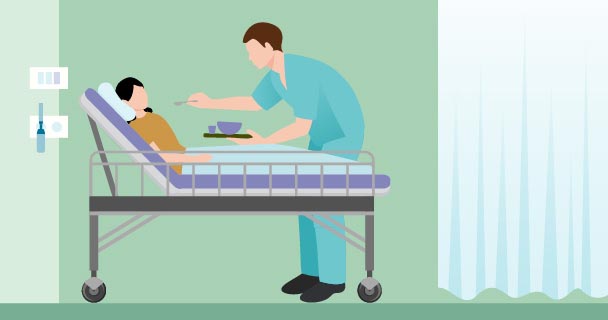
Learn five systematic steps for teaching each clinical judgment competency to nursing students and new nurses, from the fourth post in our series.
This blog post is the fourth in a series about improving clinical judgment in newly hired nurses.
Teaching a clinical judgment competency for nursing students and new nurses is far more effective if you use an overall process that is systematic and formalized. Just such a method was shared during a recent HealthStream webinar, Improving Clinical Judgment in New Nurse Hires to Improve Patient Outcomes. The presenters for this webinar were Dr. Linda Caputi, a nursing education consultant, and Elease Caracci, Senior Product Manager at HealthStream. Caputi has over 30 years of teaching experience at all levels of nursing education. She is a certified nurse educator and a fellow in the NLN's Academy of Nursing Education. Having published numerous books, articles, and book chapters, Caputi's latest work is Think like a Nurse: A Handbook, published in 2018. Elease Caracci joined HealthStream in 2016 with our acquisition of NurseCompetency and is now a senior product manager. Caracci's background in healthcare staffing, educational planning, and curriculum development, along with her management expertise, have made her a multi-faceted performer within the healthcare industry.
Three Assumptions about Teaching Clinical Judgment Competencies
Caputi has some guidance and advice for anyone considering teaching clinical judgment competencies:
Five Steps for Teaching a Clinical Judgment Competency for Nursing
Caputi offers these steps as a way to teach individual clinical judgment competencies:
Social media security risks keep changing for hospitals. Learn four risks, including inappropriate sharing of organizational data, from a MediaPRO expert.
Social media involves constantly changing security risks that hospitals need to be aware of, according to Tom Pendergast, Ph.D., Chief Strategist at MediaPRO, an e-learning development company.
1. Inappropriate Sharing of Organizational Information
The primary security risk is when an employee inappropriately releases any form of company information. "That could be releasing intellectual property, trade secrets, or patient information," says Pendergast.
2. Damage to Organization Reputation
At the same time, inappropriate use of social media that damages an organization's reputation is also a security issue. For example, per Pendergast, an employee may mention a new product release that the marketing department wasn't ready to announce. "It isn't a crime, but they've just compromised their company's competitive advantage by doing that," he notes.
3. Security Issues When Sharing Personal Life Events Include Inadvertent Disclosures
Certain social networks create security risk hotspots, such as Facebook and LinkedIn. LinkedIn encourages employees to talk about what's happening in their professional lives and thus can create a challenge for hospitals. According to Pendergast, "An employee might upset co-workers by posting a promotion they received when that promotion hasn't been announced."
4. Phishing Risks
Workers in industries such as healthcare are at risk for targeted phishing attacks via social media. [NOTE: "Phishing" is defined as requesting confidential information over the Internet under false pretenses in order to fraudulently obtain credit card numbers, passwords, or other personal data.] "They might seek people on LinkedIn or Facebook who work at a specific hospital and send that person malware," says Pendergast. This includes email messages and web links that can release viruses. "It's important to teach employees to exercise a lot of skepticism and view with suspicion any unfamiliar attempt to direct you to a website or to solicit information from you," offers Pendergast.
Solutions
Ways to mitigate risk include asking employees to create complex passwords and conducting phishing campaigns that send out a fake email to staff to determine who is more prone to fall victim to these attacks. In the end, shares Pendergast, "Because there are so many ways criminals use social engineering to gain access to an individual and an organization, we try to teach people to be more paranoid."
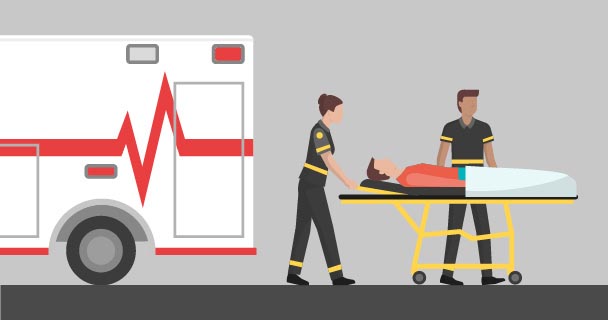
Learn the four core elements of a CMS Emergency Preparedness Program, including risk assessment, from a Yale New Haven Health System emergency expert.
This blog post is based on a recent Webinar with James Paturas, Director of the Yale New Haven Health System Center for Emergency Preparedness and Disaster Response (YNHHS-CEPDR).
Every organization participating in Medicare and Medicaid Programs should already have an Emergency Preparedness Plan in place and be awaiting a CMS site visit. CMS's Final Emergency Preparedness Rule was published on September 16, 2016 and participating Medicare and Medicaid providers and suppliers had until November 15, 2017 to ensure that their plans were compliant with the new regulations.
Explaining the final rule, James Paturas breaks down the four required core elements that must be included in every organization's plan and be reviewed and updated annually.
Risk Assessment and Planning
When developing an emergency plan, organizations must complete an evaluation of the potential risks they could face and create plans to address them. Paturas suggests completing either a vulnerability analysis or a traditional risk assessment that covers as many areas as possible. "The results of the assessments should be incorporated into the plans," Paturas explains. "The regulators will want to see the results of the risk assessment and what you have done about it."
The risk assessment results can help organizations identify essential components that can be integrated into the emergency plan, update existing plans, design new training programs, and enhance exercises. Paturas adds, "Assessments should focus on capabilities and capacities—these will be slightly different for each organization and need to be specific to either an emergency disaster or something that could affect the facility."
Paturas adds that federal agencies are looking for partnerships to be clearly included in the plans. "So often writing plans is done in isolation. I believe what CMS and the Joint Commission are looking for is that organizations are working in collaboration with their partners."
Policies and Procedures
"In healthcare organizations we live and die by our policies and procedures," Paturas says. "The key here is that these must be very specific to the emergency preparedness initiatives."
Paturas adds that new policies and procedures need to go hand-in-hand with the plans and should be based off of the risk assessments results. CMS requires that the policies and procedures address subsistence needs, evacuation plans, procedures for sheltering in place, and tracking patients and staff during an emergency.
Communication Plan
"Communication continues to be one of the biggest issues that impacts how well we respond to real events," Paturas says. CMS requires organizations to develop a communication plan that complies with federal and state laws as a part of their emergency plan. It must include contact information for staff, other hospitals, volunteers, and state and local officials, primary and alternative means of communicating with staff and other agencies, and a method to share patient information.
When asked if an organization needs its own plan or if it can be part of an existing emergency operations plan, Paturas responds, "We are taking the approach that it can be embedded within an existing plan as long as you can highlight, if a regulator were to ask, where all of the required elements of communication exist."
Paturas adds, "In terms of crisis communications, look at the critical issues going on—resource needs and allocation needs versus risk communications. Are there things you need to be telling staff, patients, visitors, or partners that could minimize or mitigate their risk?"
Training and Testing
Paturas observes that most organizations are concerned with how training, testing, and exercises are carried out. He adds, "Testing and conducting exercises is a critical part of training. Those organizations that have participated in or facilitated an exercise know that it is not an easy task. I strongly suggest reaching out to your hospital partners to see if there are exercises that are currently being planned at a local or state level that you could be a part of."
CMS requires two testing exercises annually. Paturas explains that CMS will allow a tabletop exercise to be accepted as one required exercise, while the second needs to be a community-based, full-scale exercise. Paturas says, "Work with your local community to identify two or three overarching issues based on the risk assessment results. Select one to be completed as a tabletop exercise and another as a full-scale exercise. CMS has left this requirement fairly open, which gives participants some flexibility."
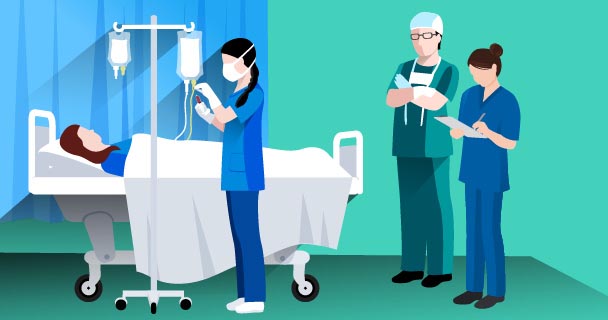
Leader rounds need a purpose, not just protocol. Learn how to collect actionable information from patients and staff and promote a people-centered culture.
Leader rounds should not be done merely as a way to follow protocol; they should be done with a purpose. Leaders should perform rounds to collect actionable information from patients and staff and to promote a "people-centered" culture across the organization. While several strategies can make rounds more purposeful, a key driver is effective communication.
A Model for Leader Rounding
This is where our model for leader rounding and communication, RELATE, can become a useful tool for providers. While this model is commonly used to guide interactions between care providers and patients, it is just as important during interactions between hospital staff. When used during leader rounds, the RELATE model is a simple way to obtain and share actionable information.
Reassure - This step distinguishes our model from others in the industry. 96% of patients report having fears when going into the hospital. Leaders must make a proactive effort to reduce fears by being present and empathetic during rounds. Specifically, they should make a connection with patients, introduce themselves and their function, and tell the patient how long they've been with the organization. A similar approach should be taken for employee-centered rounds to help ease any anxiety or fears among staff.
Explain - Leaders should narrate care, explaining what rounding is and why it occurs without using any technical, medical jargon. Employees should understand that rounding is a way for leaders to evaluate their own performances and those of other employees to ultimately improve care delivery.
Listen - Communication is a two-way street. Leaders should encourage staff to express concerns, ask questions, and be mindful of not judging anything that is said. Since many patients and staff have fears that keep them from speaking up, reading body language and other nonverbal expressions is an essential part of "listening."
Answers - During rounds, leaders should validate any questions that are asked and clearly restate information. Through paraphrasing or teach-back activities, leaders can ensure that staff and care providers understand what is being explained or asked.
Take Action - After gathering feedback during rounds, leaders should address any concerns that come up and start to build a well-informed action plan. The focus here should first be on managing staff expectations, and then on taking proactive steps to exceed them.
Express Appreciation - At the end of their interaction, it is important that leaders thank employees, explain how they will be following up, and reiterate how nice it was to get to know them and understand their concerns.
Common Challenges to Purposeful Leader Rounding - A Six Step Solution
Six steps - sounds easy enough, right? Unfortunately, while this model assists during the actual rounding process, there are many challenges before the process even begins. First, leaders will not prioritize rounding if they fail to see the value that it brings to hospital performance. It is important that clinically validated findings, such as those of Johns Hopkins, are voiced throughout the hospital to demonstrate the link between leader rounding and high-quality patient care.
Perhaps the most obvious constraint to purposeful leader rounding is time. With the countless tasks that hospital leaders manage behind the scenes to improve care services, it can be challenging to find the time for frontline activities. For this reason, patient care must be thoughtful and effective without being overly time-consuming. Our suggestion, and a growing trend in the healthcare industry, is to replace traditional pen-and-paper documentation with a digital rounding tool to streamline the process.

Learn how Cooper University Health Care revitalized compliance education through engaging online training with HealthStream. Start improving compliance today.
Cooper University Health Care is the clinical campus for Cooper Medical School of Rowan University and a leading provider of health services to southern New Jersey. Currently, it serves more than half a million patients a year. With ambulatory offices spread throughout New Jersey and Pennsylvania, Cooper employs 700 physicians in more than 75 specialties and a total of 6,000 staff.
An Archaic, Cumbersome Compliance Education System
Until recently, Cooper kept its clinicians and employees updated on healthcare regulatory changes with paper-based or in-person compliance training programs. New employees typically received handouts and returned a signed acknowledgement at the end of the introductory training day. Likewise, existing employees would receive similar sheets of compliance updates with a short assessment and attestation form at the end. Constantly evolving regulations, combined with a rapidly growing organization and conflicting employee schedules soon made this type of training impractical. Moreover, the compliance team had no effective system to track whether education was completed or to ensure employees understood the training. By its nature, the compliance program had to focus more on "documentation" than education.
The Office of Inspector General stipulates that education is one of the seven elements of an effective compliance program, so regulatory compliance training was a top priority for the organization. In selecting a system, it was considered essential that content was regularly updated and available via their learning management system (LMS). Faced with these challenges, Cooper's compliance director, Robert Kay, advocated for the organization to move to a comprehensive online training system. This program would not only track employee progress, but would also provide interactive, engaging content that was updated on a regular basis.
.Our solutions help meet regulatory requirements, address health equity, and ensure patient privacy and safety amidst ever-changing healthcare compliance laws and regulations. If that sounds helpful, let's talk.
The Decision to Adopt HealthStream Compliance Education Training Content
After a thorough vetting process, Cooper determined that HealthStream offered the ideal compliance content for its needs. "HealthStream content is delivered to learners in an engaging, interactive style," Kay explains. Other vendors delivered courses in a manner similar to ordinary PowerPoint presentations, lacking the interactive and creative approach that appeals to adult learners. Furthermore, the regulatory compliance content from other vendors was lacking because they failed to fully consider the perspective of an integrated healthcare organization. Despite the often dry and complex issues involved in compliance, HealthStream's training modules engaged employees in a variety of job roles. In addition to the Professional Compliance course, Cooper also acquired HealthStream courses for Corporate Compliance, HIPAA Compliance, the Deficit Reduction Act, and Identity Theft Prevention.
How the System Was Implemented
The HealthStream training courses were integrated into the organization's Learning Management System and were rolled out to senior management first, to encourage top-down acceptance. After senior management was trained, nursing staff was next, followed by other clinicians and then the rest of the hospital staff. The organization then trained all staff members at their ambulatory clinics. Cooper employees responded positively. Completing training when it fits in their schedules and having courses available from any computer are major benefits. Employee feedback indicates they enjoy and learn from the engaging multimedia courses with full-motion video and interactive features. "Compliance training is never a favorite part of anyone's job, but most employees tell us they learn something new and it's meaningful," Kay says. "Supervisors and compliance staff appreciate being able to easily track which employees have completed training and assessments, as well as the simple reporting functions."
Achieving a New Standard of Compliance Education
Compliance staff at Cooper continues to be pleased with the HealthStream courses, and the HR department recently added sexual harassment prevention training to its array of learning modules. Kay has been impressed with HealthStream's client service, which included a call from the company president to ensure Cooper's satisfaction. "HealthStream has always worked well with us on any issue or question we've had since adoption," Kay notes. "They've gone the extra mile to make sure we're happy." Apart from the wide array of courses addressing professional and corporate compliance, the greatest benefit for Cooper is that training is now tracked, monitored and documented, mitigating any compliance violation risk for the organization. That piece of mind allows clinicians and staff to concentrate on their core competencies: world class patient-centered care, education and research—all resulting in a healthier community. "HealthStream has helped us propel our compliance training and other online education programs into the 21st century," Kay says. "I've seen enough of the other courses to know that if you do compliance training online, HealthStream does it better than anyone else."

Turnover and retention challenges are growing across the continuum of care. Learn how hiring the right people supports employee engagement in healthcare.
This blog post continues a 3-part series focused on employee engagement in healthcare, a vital component of every complete workforce development initiative. Here we are excerpting an article in the current issue of PX Alert, HealthStream's quarterly magazine devoted to the wide range of challenges, situations, and issues that have an impact on the patient experience.
Turnover and retention are a growing problem for organizations across the continuum of care. Increased volume demands on our healthcare system mean that organizations cannot afford to waste time hiring the wrong people. Two of our partners, Assess Systems and NurseCompetency, help care organizations improve their hiring processes and identify and assess better potential candidates. The excerpted Q&As below explain how human resources professionals can make better hiring choices using tools from two of our partners.
Hiring Healthcare Workers Who Are a Better Fit: A Q&A with Olivia Salas, Director, Talent Solutions, Assess Systems
Can you tell us about your company and its expertise with healthcare talent management practices?
Assess Systems provides talent selection and people development solutions to organizations worldwide. For more than 25 years, it has assessed millions of people in a broad spectrum of industries and positions spanning 42 countries and supporting 16 languages. Assess Systems partnered with HealthStream to help customers make better hiring, placement, and promotion decisions by using behavior-based, non-clinical assessments designed for the healthcare industry: Select for Healthcare™ and Assess for Healthcare™. With HealthStream, we have an important, unifying purpose—to help our customers improve healthcare.
What are some of the big challenges you help care organizations address?
Assess Systems is changing the patient experience through improved hiring. We help organizations reduce unwanted turnover and hire those with the best fit, driving productivity, improving hiring efficiencies, and standardizing and enhancing the decision-making process. We also improve interviews by providing dynamic interview guides with behaviorally-based interview questions and candidate-specific probes based on the assessment results. Assessment reports also provide development suggestions to support the new hire's on-boarding and development.
Focusing on a candidate's innate personality characteristics and natural abilities, the assessment platform can save hospitals time and money by providing a tool that evaluates the candidate's natural fit with the competencies most important for job success and provide additional insight into the factors that may help or hinder the display of desired competencies and behaviors.
Our product allows organizations to hire patient contact employees who have a service orientation toward patients, remain composed under pressure, are energetic and productive, and who adapt to change and work cooperatively with other staff members. It will also help identify those applicants with low integrity and who are poorly suited for caregiver positions.
Can you share any specific stories about customer achievements using your solution?
A leading healthcare organization/university requested assistance to create a customized pre-employment assessment to help identify top candidates for their high volume, patient-facing Clinic Assistant role. A criterion-based, predictive validation was conducted to identify the traits which distinguished top performers.
Outcomes
Results from the study showed the assessment clearly predicted which employees were the most successful on the job:
Use NurseCompetency to Identify Candidates with the Right Clinical Skills: A Q&A with Elease Caracci, EVP, NurseCompetency
Can you tell us about your company and its expertise with healthcare talent management practices?
NurseCompetency is on a mission to create a safer healthcare environment for patients and healthcare workers through the use of current, clinically relevant education, assessments, and technology. The core values that guide everything that we do include:
What are some of the big challenges you help care organizations address?
As a market leader in healthcare competency testing and technology, we are distinguished by our commitment to healthcare workplace safety and optimal patient outcomes. All of our materials are compliant with industry and government standards (OSHA/HIPAA/TJC) and help our customers ensure that in turn, they are always operating in compliance with these same standards—resulting in a safer environment for both patients and the healthcare workers who serve them.
In addition, as many healthcare organizations struggle to find and retain qualified clinical staff, we provide an EEOC compliant way to be more effective in hiring practices and staff retention. Effective pre-hire testing can allow organizations to identify clinicians who are qualified, and then provide a means for the on-going evaluation and professional growth of those employees, once hired. All of these factors can help to increase employee engagement, productivity, and reduce the rate of turnover.
Can you share any specific stories about customer achievements using your solution?
We'll let one of our customers speak on behalf of our solutions: Kellie Hodge RN, BSN, Director of Nursing at Omega Hospital, has said that,
"The clinical exams from NurseCompetency play a key role in our talent management program—as they are used to measure and ensure that our clinical personnel are knowledgeable and competent to perform the tasks associated with their respective positions. The high level of authority among the subject matter experts consulted and the rigor in exam development both contribute to make NurseCompetency's clinical exams among the best available anywhere for assessing competencies."

Use sample peer-interview questions to learn about a nurse candidate's mindset, skills and fit for your team and specialty.
Not all aspects of nursing, and certainly not all nurses, are the same. A diversifying field, both in terms of specialized types of care and advancement opportunities, means that nurses have more career paths and options than ever before. It also means that, when conducting nursing peer interviews, their potential future colleagues must be able to zero in on problem areas as well as those of excellence and expertise.
Peer interview nursing questions can be the doorway into assessing many different areas: mental preparedness, emotional state and physical well-being. Because the sessions are peer-led, they can be less formal than annual performance reviews, or even a walking check-in with a supervisor. But of them to work, the questions have to be on point. Here are some areas to explore:
A good nursing peer interview question set will look at performance obstacles as well as competency. This way, the review team can identify roadblocks that are stifling growth and creating barriers to patient care. Consider these peer interview questions nursing candidates can be asked:
Exploring a nurse's emotional range is a tougher nut to crack. By nature, caregivers are empathetic, and can wear their heart on their sleeve. Still, the process of going through peer interview nursing questions can identify strengths and weaknesses here as well:
Nursing is a demanding job. Hours on your feet, moving heavy equipment, lifting patients — it can create significant health conditions. The goal for the nursing peer review team is to empathize and not make it appear that someone is being assessed purely on their ability to perform a specific task or set of tasks:
The nationwide nursing shortage continues. Hiring the best staff is vital to success for healthcare providers, and retention also plays a huge role. Using a series of challenging, thoughtful questions is essential at hiring, and also will play a role in successful peer interview nursing processes. Creating a dialogue provides the opportunity to not only assess competencies and strengths, it also allows the review team to learn a great deal about the person they are considering bringing onboard. And that, in turn, helps to develop a friendly and collegial environment from the very start.
Previously, HealthStream published a series of blog posts that included an even more exhaustive list of example peer interview questions nursing candidates can be asked, broken out by subject:
At HealthStream we spend a lot of time focused on developing the nursing workforce. HealthStream's jane™ is The World's First Digital Mentor for Nurses. Jane harnesses the power of artificial intelligence (AI) to create a system that personalizes competency development at scale, quickly identifies risk and opportunity, and improves quality outcomes by focusing on critical thinking. Leveraging decades of research and with over 4 million assessments completed, Jane was designed to power lifelong, professional growth of clinical professionals. jane™ is an important component of HealthStream's suite of clinical development solutions.
Explore the key qualities of effective nursing leaders and how they positively influence team morale and patient care. Discover more!
The key to any organization's success is strong leadership; this is especially true for nursing, whose leaders set the tone for how staff approach their work. Leaders can easily inspire others to strive for the best; however, they can also discourage and negatively affect morale.
In my nursing career, I have encountered many leaders with varying characteristics. I have worked with leaders who seemed to have a positive effect wherever they went, inspiring and encouraging others to work their hardest and do their best. Unfortunately, I have also worked with those in leadership positions who did not possess the characteristics that make a good leader.
Leadership is a Matter of Skill and Character
Good leaders in any profession require certain skills and characteristics. Strong communication, critical thinking, and organizational skills are common characteristics expected of any leader. In addition, a positive attitude, honesty, loyalty, and passion for their work all defines a good leader. Good nurse leaders must possess all the qualities that make a leader, but it is their ability to demonstrate these characteristics that define them as exemplary leaders.
Good Nursing Leaders Influence and Inspire Others
A good nursing leader has the ability to positively influence others because they lead by example. The standards and expectations set for their staff are the same they have set for themselves. There is an ongoing commitment to and passion for excellence. Good nursing leaders take initiative. In any field we are asked to do more with less, nurse leaders think outside the box to ensure that nursing staff have the tools needed to safely and effectively care for their patients.
Stepping in to Fill the Gap
Stepping in and being able to perform the job expected of staff is another skill that effective leaders demonstrate. Situations occur where a staff member has called in sick and a replacement cannot be found, or more patients arrive to the unit that was expected. In these challenging situations, good nurse leaders step in and actively assist in any way possible.
I have worked with nurse leaders who do something as simple as pass out patient meal trays. I have also worked with leaders who came in during a night shift to serve as the code responder when staffing is a challenge. Simple actions like these are what prove to staff that their leader is there for them and is willing to do anything necessary for their staff.
About the Author
Nicole Kraut is a nurse working in Chicago, Illinois, who writes for us regularly about her experiences as an early-to-mid career nurse. She has been a RN for over five years.
Nicole graduated with her Bachelor of Science in Nursing from Loyola University Chicago and recently obtained a Master of Science in Nursing with an Emphasis in Nursing Education from Grand Canyon University. She "was inspired to become a nurse because I wanted to work in a career field in which I could make a difference in people's lives on a daily basis. I feel nursing is my vocation and am passionate about sharing my knowledge and experience in order to positively influence others."

See how complex annual required training can be, using one respiratory therapist in Tennessee as a healthcare compliance case study.
To illustrate the difficulty that a typical healthcare provider may encounter when planning annual required training, we offer the example of just one role in a single state—a respiratory therapist in Tennessee. To begin, there are multiple government websites to check: CMS, OIG, eCFR, HHS, NIH, RCR, DOJ, EEOC, NRC, Homeland Security, DOT, and OSHA, plus the state board website for respiratory therapists in Tennessee, and possibly the Tennessee State Legislature website. If the organization also operates across multiple states, that adds a further degree of complexity to the situation, requiring a similar search for regulations applicable in the additional states. Add other care settings and you'll have even more variables to track. It's not hard to imagine a scenario where important regulations are overlooked, especially when the approach to knowing them all is relatively and unavoidably piecemeal.
Once training requirements are identified for each discipline, care setting, and state (including federal requirements), the next big challenge is finding or building appropriate content to match the requirement's training scope and minimum seat time.
The ultimate lesson here is the importance of having a comprehensive approach to identifying all training requirements for healthcare staff and properly assigning them, so that nothing falls through the cracks and causes a problem later during an audit or investigation. Finding the regulations isn't easy, when a healthcare organization must search several sections of the federal register, other agency websites, and any state-level sources that are applicable. Building, licensing, and properly assigning the content is yet another challenge.
Some questions to consider during this stage include:
This blog post excerpts the HealthStream article, The Challenge of Translating Healthcare Regulations into Training Curricula, by Ben Diamond, Vice President of Compliance Solutions, and Debbie Newsholme, Senior Director of Content Development and Compliance Solutions, at HCCS, A HealthStream Company. The article also includes:





