


Your trusted source for safety education
Keeping up with ever-changing regulations while proving real-world program effectiveness is only getting harder. That's why healthcare organizations have trusted HealthStream for over 30 years. We help organizations deliver practical safety training that builds awareness, reinforces safe behaviors, and reduces risk.
A trusted leader in compliance & safety
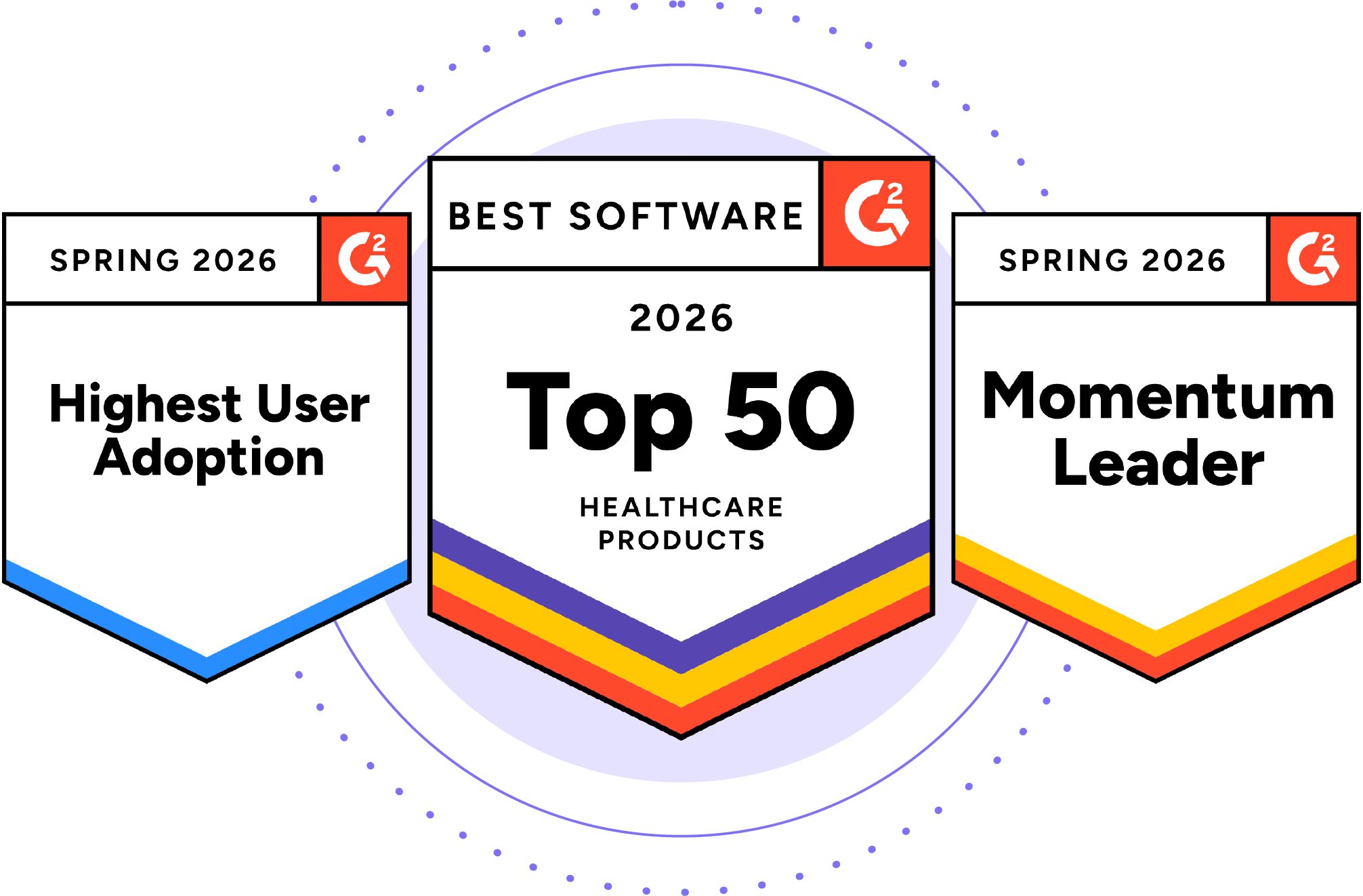
HealthStream's ComplyQ and SafetyQ were ranked among the 50 Best Healthcare Software Products by G2 in early 2026 - recognized out of nearly 5,000 contenders for the second consecutive year.
Healthcare safety requires more than just education.
The safety of your community and staff starts with modern patient safety education that reduces risk and improves competency.
%20(1).svg)
.svg)
%20(1).svg)
Build a workforce that knows how to act in real situations
At HealthStream, we’re not just simplifying safety or increasing protection — we’re helping you deliver training that reflects real-world scenarios and improves day-to-day decision making.
.png)
Ensures compliance with 24/7 regulatory tracking, expert-guided updates, and quarterly communications to keep your team informed about federal and state requirements.
.png)
.png)
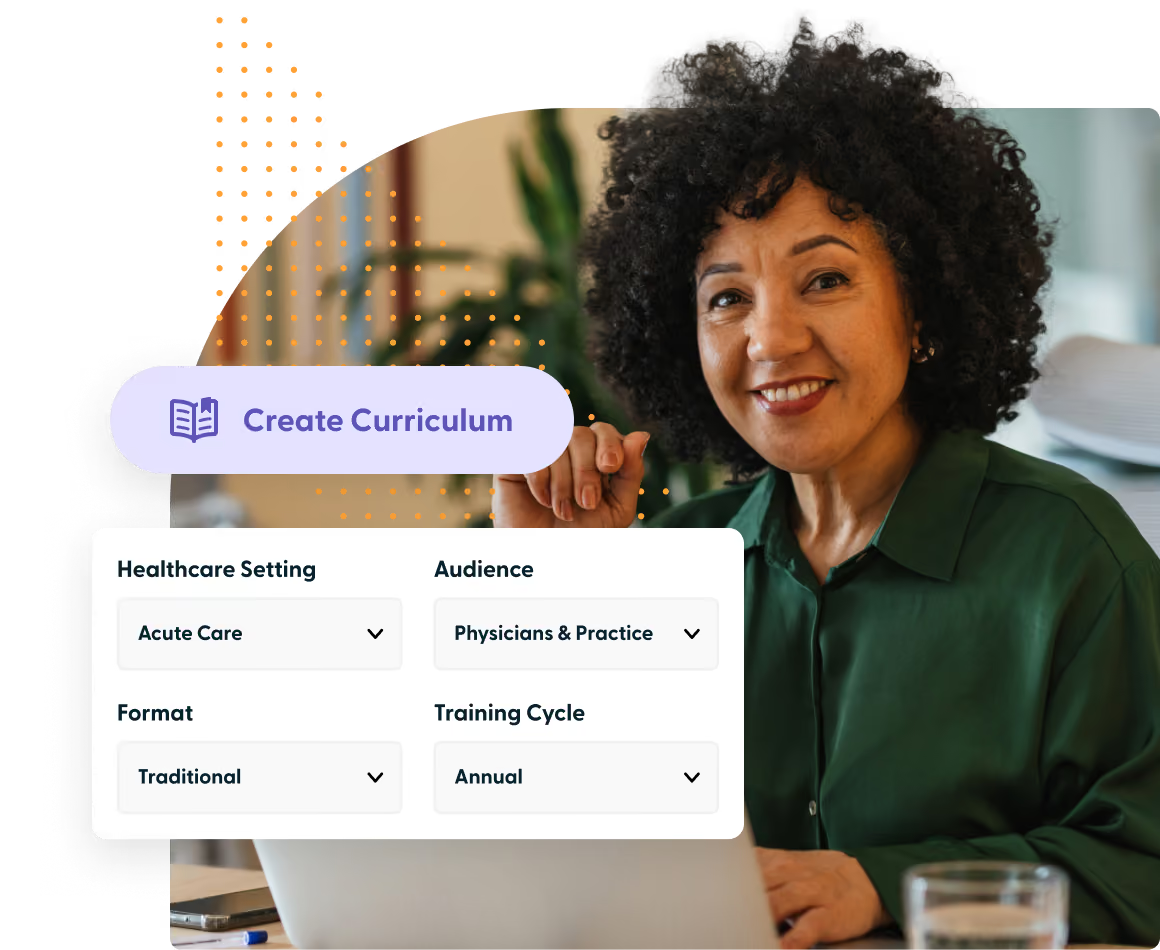
Legally defensible content, intelligently packaged and tailored for role and setting, mapped and ready in minutes.
.png)
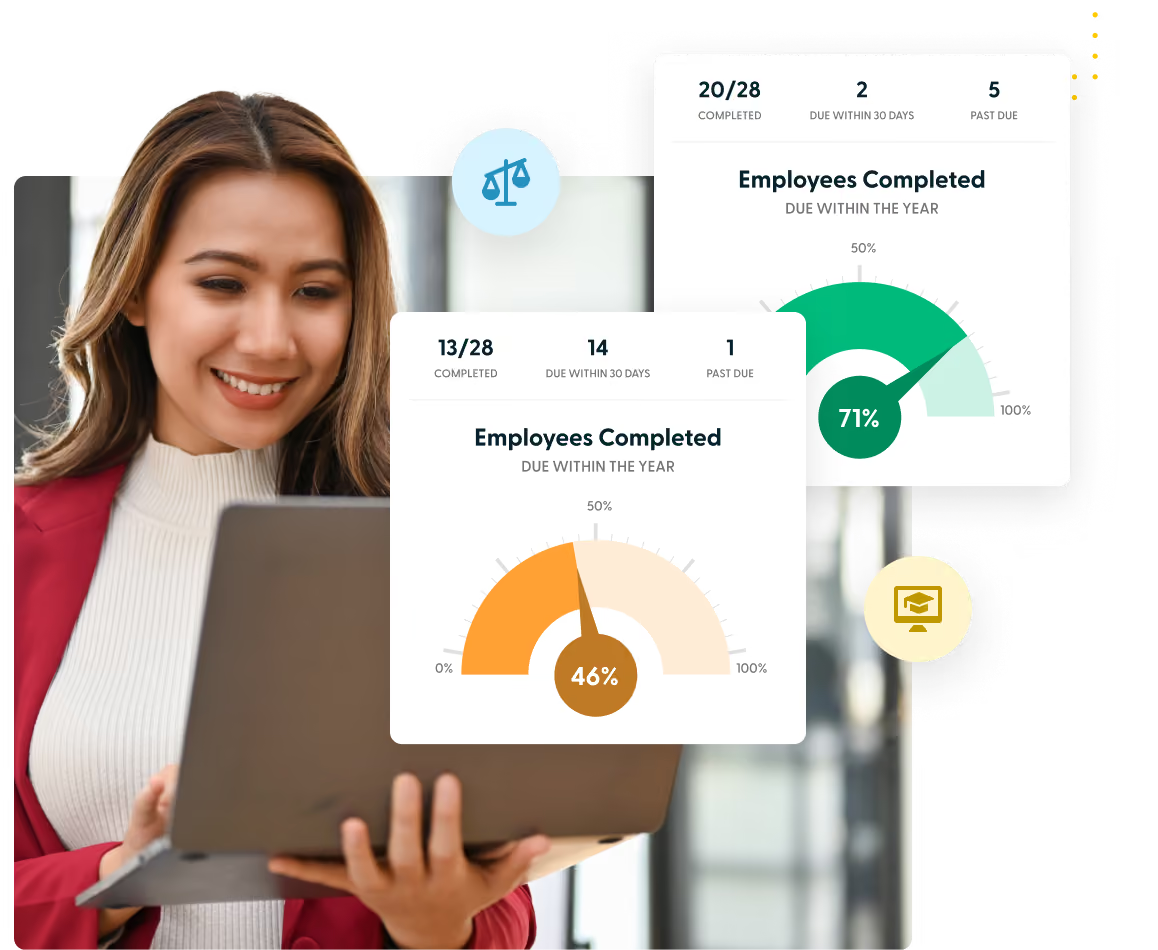
Enhance role-based accountability and transparency, empowering managers with the confidence to track progress and drive results.
.png)
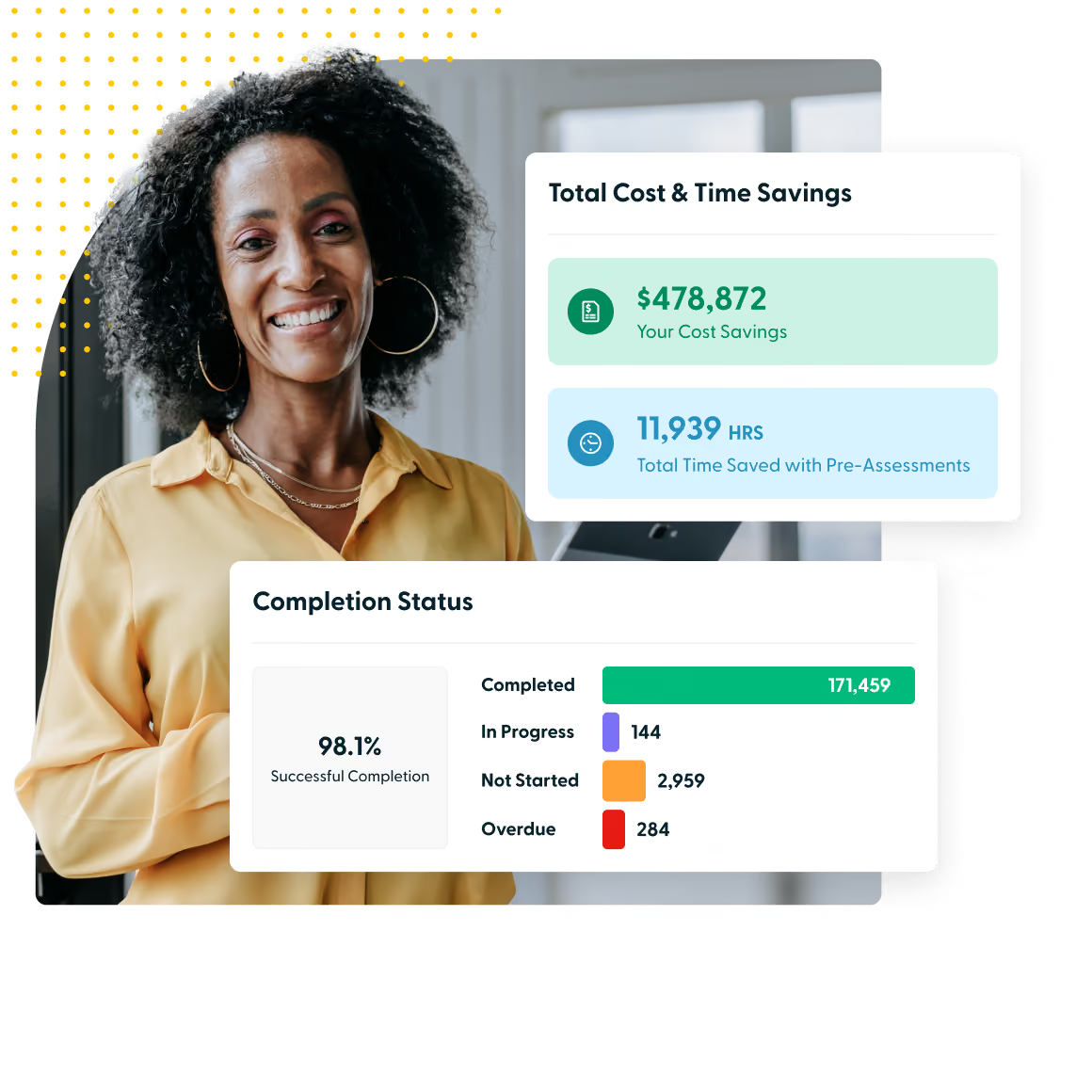
Gain confidence with detailed safety and compliance reports, plus the enterprise-wide outcomes dashboard—offering C-level leaders clear insights into ROI, compliance rates, and actionable next steps to ensure program success.
19b8843fe08c465782c1ed7a37fe1a31.png)
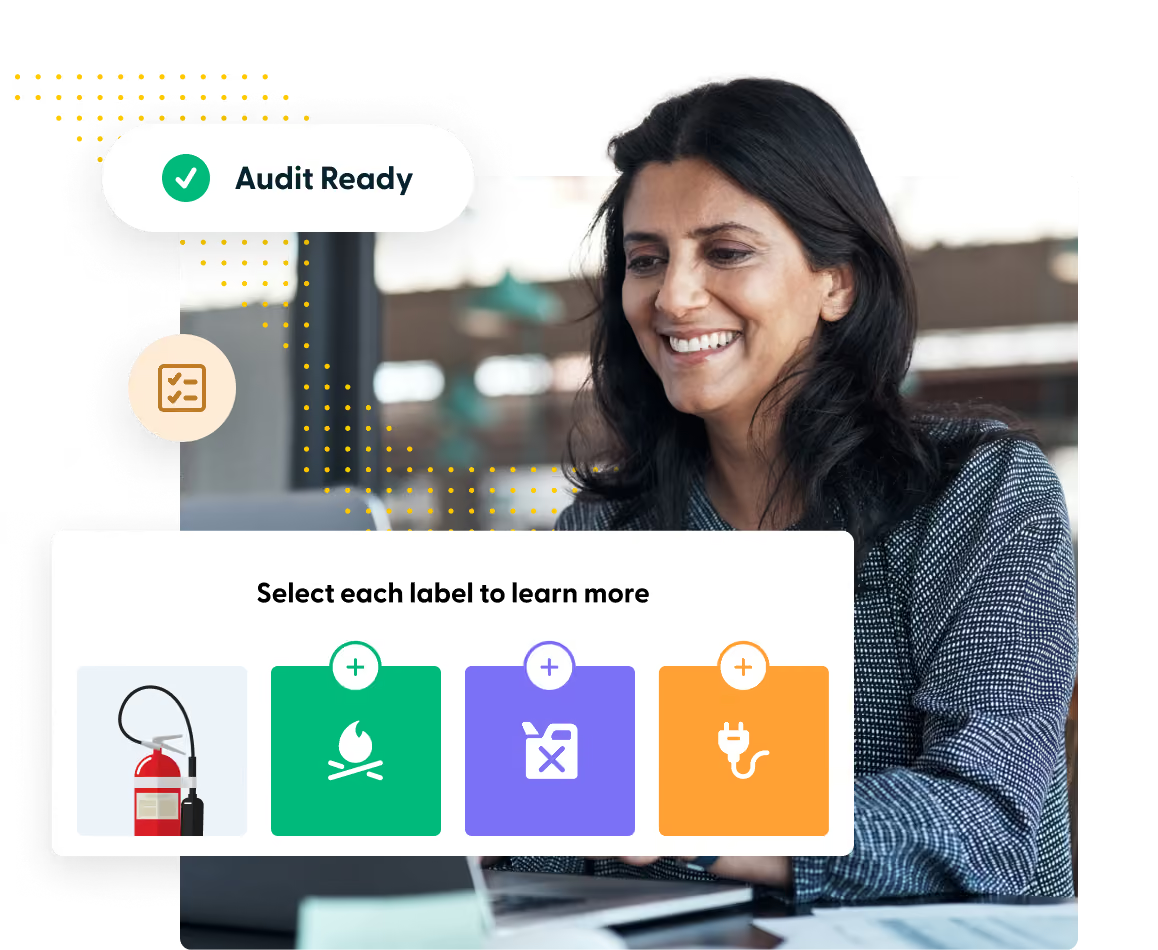
Links your policies and integrates org-specific resources like contacts, videos, documents and internal procedures – embedded directly into courses to reinforce your brand and mission.
.avif)
.svg)
Identifies knowledge gaps, streamlines individualized training plans, and allows staff to test out of topics they’ve already mastered.

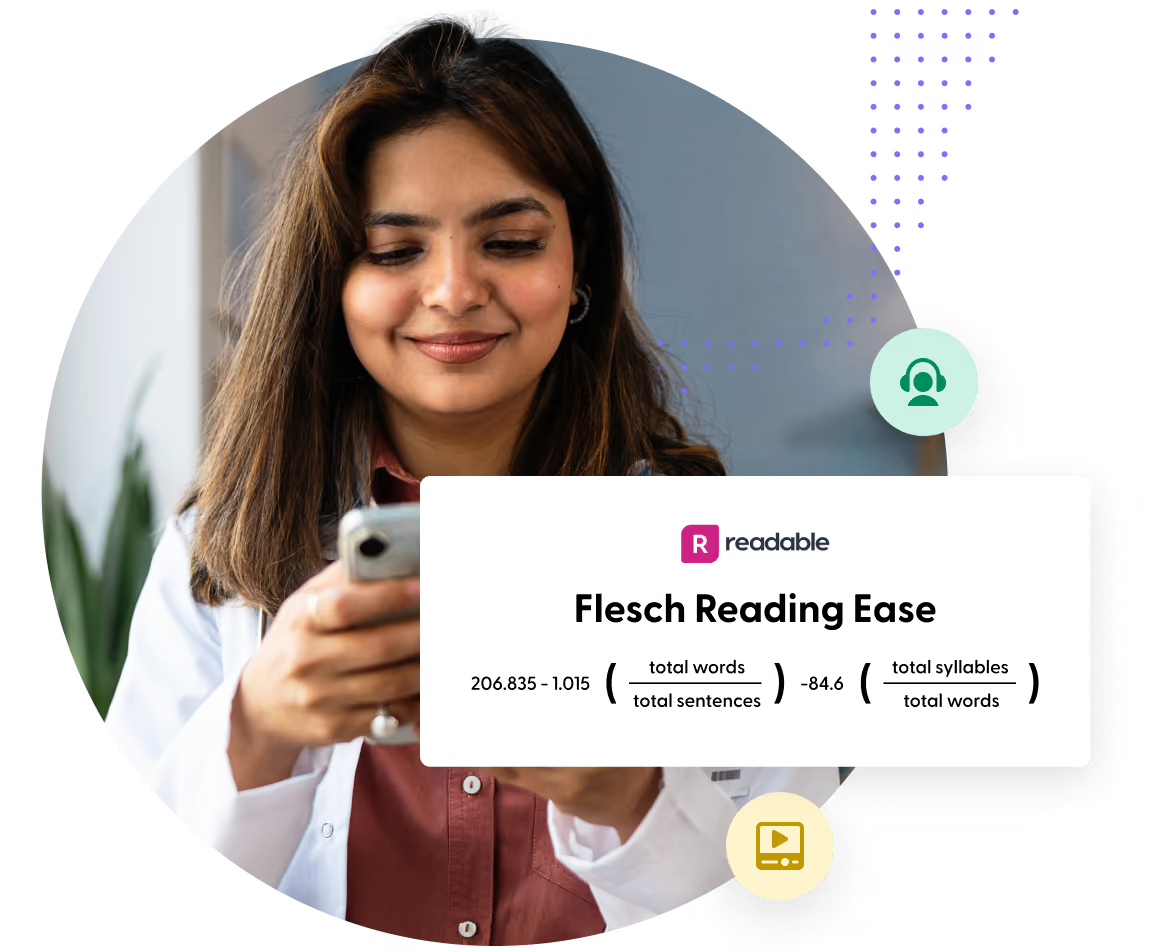
Reduce cognitive load with engaging Grade 5-level content, 2,200+ micro-learnings, podcasts, infographics, and Spanish versions – all compliant with federal and state requirements.
What customers are saying


Who uses SafetyQ?
Applicable for all healthcare professionals and providers focused on safe, compliant behaviors and quality improvement.
-(1).png)
Non-Clinical, Non-Patient Facing
Builds support, safety and accountability
-(1).png)
Non-Clinical, Patient-Facing
Empowers communication, trust and safety
.png)
Clinical
Protects patients and builds trust
.png)
$875,000 cost reduction & 300 hours saved for annual training
North Mississippi Health Services provides care across 24 counties in north Mississippi and northwest Alabama.
We’re here every step of the way
Our goal is to provide an unparalleled experience for our customers. From dedicated onboarding teams to ongoing support and product updates, we’re committed to your success.

Customer Support
HealthStream offers Customer Service Support 877-301-HSTM(4786) or customer.service@healthstream.com from 7 a.m. – 7 p.m. CST (holidays excluded).
.svg)
HealthStream User Groups (HUGs)
As the platform trusted by more than 70% of U.S. healthcare organizations, our quarterly HUGs connect you with your peers
afdd5111e95c42209bec88fbf4c80115.svg)
HealthStream Community
The award-winning HealthStream Community provides unprecedented access to product documentation, live webinars, and peer support
.svg)
By opting in, you’ll receive a detailed monthly update with helpful tips and new information
.svg)
We’re here for you, with specialized, product-specific support from a HealthStream Success Manager to help guide your journey to adoption
Regulatory alignment for stronger safety behaviors
Available with HealthStream safety and compliance solutions, our Regulatory Wizard™ tool maps requirements directly to training by role, settings, and state with clear traceability for audits and surveys.
Increase your impact
Experience compounding benefits with additional tailored solutions.

.tmb-0.png)
.tmb-0.png)

Safety—powered by hStream
Bring it all together with seamless access to the largest healthcare content marketplace, exclusive applications, specialized tools, and significant subscriber discounts.
Frequently Asked Questions
Why does safety training matter more than ever in healthcare?
Annual patient safety training matters more than ever because healthcare regulations, risks, and care delivery models are constantly evolving. What was considered compliant or “safe” last year may no longer meet updated expectations from organizations like Centers for Medicare & Medicaid Services, The Joint Commission, and OSHA standards. At the same time, healthcare environments are more complex—staff are managing higher-acuity patients, increased behavioral health needs, and greater workforce turnover. Annual training ensures every employee is consistently aligned with current safety compliance requirements, reducing variability in practice and helping prevent avoidable incidents before they occur.
Modern healthcare safety compliance software and training platforms go beyond simple annual check-the-box education by reinforcing real-world behaviors that directly impact patient and staff outcomes. Adaptive, scenario-based learning helps organizations strengthen decision-making, close competency gaps, and maintain audit-ready readiness across all care settings. When delivered through a healthcare compliance training platform, annual safety education becomes a proactive risk-reduction strategy—improving regulatory compliance, strengthening organizational safety culture, and ensuring staff are prepared to act safely in real situations, not just pass training requirements.
What safety topics should be included in healthcare training programs?
Healthcare safety compliance training programs typically cover a broad range of topics designed to reduce risk, protect patients and staff, and ensure alignment with regulatory standards. Core areas include patient and resident safety, infection prevention and control, medication safety, safe patient handling and mobility, workplace violence prevention and de-escalation, emergency preparedness, life and fire safety, and abuse and neglect prevention. Many healthcare safety training software platforms also include guidance on care for vulnerable populations, clinical competency foundations, and state-specific requirements to ensure coverage across diverse care settings and roles.
Modern healthcare safety compliance education is also increasingly focused on real-world readiness and behavior-based learning, not just policy awareness. This means training is often aligned with expectations from organizations such as Centers for Medicare & Medicaid Services, The Joint Commission, and OSHA, ensuring organizations can maintain audit-ready compliance while improving day-to-day safety performance. Advanced healthcare compliance training platforms and software solutions use adaptive learning, scenario-based education, and role-specific pathways to help staff apply safety principles consistently—strengthening both regulatory compliance and overall patient safety outcomes.
How is AI transforming healthcare safety technology and training?
AI is transforming healthcare patient safety technology and training by shifting organizations from static, one-size-fits-all education to continuously updated, intelligent, and adaptive systems. Instead of relying solely on annual or manual updates, AI-driven healthcare safety compliance software can monitor regulatory changes in real time, helping organizations stay aligned with evolving expectations from bodies such as Centers for Medicare & Medicaid Services, The Joint Commission, and OSHA. This reduces administrative burden while improving accuracy and consistency in compliance, ensuring training content always reflects current safety standards and clinical best practices.
At the same time, AI is improving how healthcare compliance training platforms deliver education and measure readiness. Adaptive learning paths, pre-assessments, and role-based recommendations help tailor training to each employee’s actual knowledge gaps, reducing unnecessary repetition and improving retention. AI-powered dashboards and analytics also give leaders real-time visibility into safety compliance trends, risk areas, and training effectiveness across departments and facilities. The result is a more proactive healthcare patient safety training ecosystem—one that not only supports audit readiness, but actively helps reduce risk and strengthen safe behaviors in real clinical environments.
Are safety training programs applicable to all staff and healthcare settings?
Yes—effective healthcare safety training programs are designed to be applicable across all staff roles and all healthcare settings because patient safety risk exists wherever care is delivered. From clinical teams to administrative staff, environmental services, and leadership, everyone plays a role in maintaining safe operations and meeting healthcare safety compliance requirements. Modern healthcare compliance training software is built to support diverse environments, including acute care hospitals, ambulatory surgery centers, behavioral health facilities, long-term care, skilled nursing, home health, hospice, and physician groups—ensuring consistent safety standards across the continuum of care.
Advanced healthcare safety compliance platforms make this possible by delivering role-based, setting-specific learning paths that align with regulatory expectations from organizations such as Centers for Medicare & Medicaid Services, The Joint Commission, and OSHA. Rather than offering generic training, these systems adapt content to each employee’s responsibilities while maintaining enterprise-wide consistency in safety expectations. This ensures healthcare organizations can scale compliance training effectively, reduce variability in practice, and build a unified culture of safety across every department and facility.
Can I customize the courses to my organization's needs?
Yes—healthcare organizations can customize safety training courses to align with their specific policies, workflows, and regulatory requirements. Healthcare safety compliance is not a one-size-fits-all model, so modern healthcare compliance training software is designed to allow organizations to tailor learning experiences while still maintaining alignment with standards from organizations such as Centers for Medicare & Medicaid Services, The Joint Commission, and OSHA. This ensures that while core safety competencies remain consistent, each organization can reinforce its own procedures, documentation standards, and internal expectations.
With HealthStream SafetyQ, customization is built directly into the learning experience through Smart Notes, which allows organizations to embed their own policies, procedures, contacts, videos, documents, and links directly within courses. This helps connect standardized healthcare safety training content to real-world workflows staff use every day, improving retention and practical application. Organizations can also enable optional read acknowledgments to ensure learners confirm review of critical safety information before progressing. Combined with role-based training paths and regulatory mapping, this creates a highly flexible healthcare patient safety training platform that supports both enterprise-wide compliance and local operational needs without sacrificing consistency or audit readiness.
What if we make some of our courses in-house?
Yes—many healthcare organizations develop some of their own in-house training content to address local policies, workflows, and facility-specific procedures. Healthcare safety compliance training works best when it combines trusted, up-to-date core education with organization-specific materials that reflect how care is actually delivered on the ground. A modern healthcare compliance training platform is designed to support this blended approach, helping organizations reduce duplication, maintain consistency with regulatory standards, and ensure all training still aligns with requirements from organizations such as Centers for Medicare & Medicaid Services, The Joint Commission, and OSHA.
HealthStream SafetyQ is built to integrate seamlessly with in-house content so organizations can scale their own expertise without sacrificing compliance rigor or training quality. Through features like Smart Notes, organizations can embed internally developed policies, procedures, and resources directly into standardized safety courses—ensuring employees see the most relevant, up-to-date guidance within the flow of learning. This approach allows healthcare safety training programs to remain both flexible and defensible: standardized where it matters for audit readiness and regulatory compliance, while still fully customizable to reflect each organization’s unique safety priorities and care environment.
Are courses updated when regulations change?
Yes. With HealthStream ComplyQ, courses are continuously maintained and updated as healthcare regulations evolve to ensure organizations remain compliant, current, and audit-ready. Compliance requirements from bodies such as Centers for Medicare & Medicaid Services, along with laws like Health Insurance Portability and Accountability Act and other federal and state mandates, change frequently—making it essential that healthcare compliance training software reflects the most up-to-date guidance without placing additional burden on internal teams.
ComplyQ addresses this through AI-driven regulatory tracking and expert-guided updates that translate regulatory changes into validated, defensible training plans. When regulations shift, impacted content is updated and aligned across role-based learning paths, ensuring consistency across all care settings and staff roles. Organizations benefit from automated alignment between regulatory changes and assigned training, enterprise-wide visibility through compliance dashboards, and audit-ready reporting that demonstrates timely adoption of updated requirements. This approach ensures healthcare compliance education remains accurate, defensible, and continuously aligned with evolving CMS, HIPAA, and state-level expectations.
What grade level are your courses written at?
Healthcare safety training courses are designed to be accessible, easy to understand, and effective for a wide range of clinical and non-clinical staff. That’s why they are written using the Flesch-Kincaid readability model at approximately a 5th grade reading level—ensuring clarity without sacrificing accuracy or compliance rigor. In high-stakes healthcare environments, this approach helps reduce cognitive load, improve retention, and ensure that essential patient safety concepts are understood quickly and consistently across diverse roles, departments, and care settings.
This level of readability is especially important in healthcare safety compliance training software and education platforms where staff must absorb complex regulatory and clinical information—often during busy shifts or mandatory training windows. By simplifying language while maintaining alignment with standards from organizations such as Centers for Medicare & Medicaid Services, The Joint Commission, and OSHA, healthcare compliance training programs ensure that learning is not only compliant, but also practical and actionable. The result is a more inclusive and effective healthcare safety training experience that supports better decision-making and safer care delivery at every level of the organization.
What features should healthcare safety education & compliance solution include?
A modern healthcare safety education and compliance solution should go far beyond basic course delivery—it should actively help organizations reduce risk, stay ahead of regulatory change, and ensure staff are prepared to act safely in real-world situations. At a minimum, healthcare safety compliance software should include AI-driven regulatory tracking to keep training aligned with evolving requirements from organizations such as Centers for Medicare & Medicaid Services, The Joint Commission, and OSHA, along with validated, role-specific training plans that can be deployed quickly across all care settings. Strong platforms also provide adaptive learning paths, pre-assessments to identify knowledge gaps, and audit-ready reporting to support both day-to-day safety operations and formal survey readiness.
Beyond compliance, the most effective healthcare safety training platforms focus on usability, engagement, and measurable outcomes. This includes scenario-based learning that reinforces real-world decision-making, enterprise dashboards that provide visibility into safety compliance performance, and role-based accountability tools that empower managers to act on risk areas before they escalate. Features like customizable content integration, microlearning formats, and multilingual accessibility further ensure training is relevant and accessible to all staff. When combined, these capabilities transform healthcare compliance training from a reactive requirement into a proactive safety system that improves behavior, strengthens organizational culture, and reduces preventable harm across every care environment.


Creating a Culture of Compliance in Healthcare: Meeting CMS and OSHA Requirements
Creating a culture of compliance has significant benefits for healthcare organizations. Meeting regulation requirements from the Centers for Medicare and Medicaid (CMS) and the Occupational Safety and Health Administration (OSHA) is key.
The Cost of Non-Compliance in Healthcare
The cost of compliance in the healthcare industry is a necessary investment to avoid the far-reaching consequences of non-compliance. While it might be tempting to create in-house training content to save costs, the risks often outweigh the benefits. \n\nProfessional compliance training solutions offer the expertise, consistency, and efficiency needed to ensure comprehensive and up-to-date compliance education. In the end, a proactive approach to compliance not only safeguards the organization from financial penalties but also upholds the trust and safety of the patients they serve. \n\nHealthStream’s ComplyQ and SafetyQ solutions offer the best of both worlds for compliance training and patient safety education, helping organizations reach competence and reduce risk.
Combating Physician Burnout with Innovative Training Solutions
With May honoring Mental Health Awareness, there is no better time to bring attention to burnout and put measures into place to help combat this workplace problem. Physician burnout has emerged as a critical issue within the healthcare sector, markedly impacting both the well-being of doctors and the quality of patient care.
The Power of Education: Fostering Employee Happiness and Enhancing Business Performance
Continuing education and professional development directly impact employees’ knowledge, confidence, and job satisfaction, improving their performance. It may also be the key to creating a happier staff, given its significance to employee competence and confidence. If educational opportunities help improve employees’ happiness, it makes sense that such offerings would be beneficial to the company and its employees. Here, we take a look at a few ways in which this investment is worthwhile.
Improving Efficiency in Education - Help Offset Labor Shortages and Rising Costs
Administrative burden represents a large amount of time for front-line caregivers. Mandatory education is only a small piece of that burden, but can still cause significant impact on the efficiency of staff. HealthStream’s SafetyQ incorporates both micro-learning courses as well as adaptive-learning paths that can help reduce seat time and increase the efficiency of front-line staff while still helping to ensure that your organization is compliant with federal requirements and able to incorporate industry best practices. In addition, users will find SafetyQ available in a wide range of patient care settings. Reach out to HealthStream for a SafetyQ demo today.
Ready for safer behaviors and consistent coverage?
The safety of your community and staff starts with modern education that reduces risk and improves competency.
HealthStream is here to help you provide practical safety training that builds awareness, reinforces safe behaviors, and reduces risk.
- Deliver training that reflects real-world scenarios and improves day-to-day decision making.
- Provide adaptive learning to reduce training time while maintaining knowledge retention.
- Ensure safety topics are assigned appropriately across roles and facilities, supported by regulatory guidance where required.