Explore expert insights from HealthStream on healthcare compliance, credentialing, clinical education, scheduling, and leadership. Find practical guidance to help healthcare organizations train, retain, and support their workforce.
Practical insights on healthcare compliance, workforce development, and clinical education from the experts at HealthStream.

NREMT's removal of restrictions on distributive learning can make EMS training faster and more accessible. Learn what it means for EMS providers.
Pre-hospital providers have an enormous impact on patient outcomes, so they deserve and need education that will address not just basic science, but a complete set of courses that will address the full scope of their practice.
Recently the National Registry of Emergency Medical Technicians (NREMT) announced that they were permanently waiving restrictions on distributive learning. The resolution applies to continuing education, recertification, state licensure, refresher and re-entry training. The removal of these limits became effective on September 30th. Limiting access to distributive forms of continuing education creates barriers that may hinder re-certifications. The new ruling is good news for pre-hospital providers as it removes those barriers to asynchronous distributive learning and creates better access to education for the nation's emergency medical service providers.
While all professional training can be challenging, EMS training has a unique set of challenges. Firstly, there is simply a huge amount of information. Providers need to be taught assessment and clinical skills, critical thinking skills as well as the state and federal requirements for their profession. In addition, upon completion of their educational program, they will be expected to demonstrate those skills in situations that are typically stressful, chaotic and sometimes dangerous. Another significant challenge is that the training period is typically fairly brief given the large amount of information that must be learned. In addition, as with many healthcare jobs, EMS instructors are in relatively short supply making in-person training even more of a challenge.
While restrictions on how training is delivered have been removed, providers still need to be sure that they are getting training that will lead to competency while meeting Commission on Accreditation for Prehospital Continuing Education (CAPCE) requirements while also meeting the NREMT's annual recertification requirements.
HealthStream's EMS Program is a solution that offers flexible training solutions for EMS providers and is an affordable option that can help your organization attract and retain top talent. The program can be used to help fulfill your organization's emergency training and re-certification requirements.
The comprehensive EMS Program covers each of the five NREMT categories:
The program includes more than 70 hours of CAPCE-approved courses and includes an option for uploading your own courses so that you can address the unique needs of your community and department. Upon completion of the courses, students can complete an assessment to ensure that the material has been understood.
The courses within HealthStream's EMS Program exceed the minimum number of hours required by the NREMT allowing organizations to use the program to fulfill all of their EMS continuing education needs and beyond.
The NREMT has eliminated the distributive education limits on EMS training, but EMS leaders still need a solution that will work for EMS providers. HealthStream's EMS Program offers providers access to CAPCE and NREMT courses on a platform that users will find engaging and easy to navigate. In addition, the virtual format is a cost-effective means of education.
Users will find the platform easy to access using the device of their choice at a time and place that is convenient for them - an important message for retention and recruiting purposes. Leaders can also use the platform to monitor individual and department progress on training and recertification goals - eliminating less-reliable paper-based methods for tracking.

Learn how MSPs use credentialing and privileging to keep patients safe. Get back to basics on physician privileges in our Privileging 101 series.
As a Medical Services Professional (MSP), your main job is to keep patients safe. To protect patients, you must adhere to complex and lengthy credentialing and privileging processes to screen providers, verify their ability to practice, and determine which procedures and services they're competent to deliver. This is a complicated and involved process that cannot be phoned in; HealthStream understands and wants to help. That's why we created our webinar series, Privileging 101, which provides all the information you need to become a privileging pro.
In this series, we cover it all, from basic education on the history and fundamentals of clinical privileging to how to navigate all the regulatory and legal aspects involved. It's an ideal fit for MSPs new to the field of privileging and any pros looking to gain additional knowledge of privileging processes.
In part one of the series, Privileging 101 - Introduction to Privileges: Back to Basics - Physicians, we explain why privileging exists and provide an overview of the journey physicians must complete before they can apply for privileges. Read on for the highlights of this session.
Privileging is here for protection. It functions to protect patients, the organization, and the provider. It also helps MSPs meet regulatory requirements for accreditation standards. Privileging is the most effective mechanism for ensuring quality delivery of excellent care treatment within an organization, which is why it is such a vital component of what MSPs do. That is also why it is so critical that MSPs are able to effectively privilege providers as it has an effect on the entire medical system.
Privileging involves four basic steps:
There's a whole lot of training that needs to happen before someone can become a physician. Once a person completes pre-med and graduates from medical school, they can apply for a residency in a particular specialty, and depending on the specialty, it can take anywhere between three to seven years to complete.
Physicians can train to be various kinds of doctors, some examples include:
If a physician completes their residency and decides to further their education, that's called a fellowship. There are a variety of fellowship programs with different areas of focus, like pediatric and vascular surgery, surgical critical care, and complex general surgical oncology. Once physicians have their training in place, licensure is necessary.
Once a physician has completed their residency, they must obtain a medical license before they can practice. Licenses are specific to the respective state or territory they will be practicing in. Every state has specific requirements for when a resident position may begin the application process to obtain their state license. To obtain licensure, all physicians must have:
There's a lot more to the process, but those three steps outline the basic timeline of events as required by the Federation of State Medical boards or FSMB. They represent the state medical and osteopathic regulatory boards, commonly referred to as state medical boards within the United States, its territories, and the District of Columbia. They support the USA's state medical boards in licensing, disciplining, and regulating physicians and other healthcare professionals.
Board certifications are interesting as they are not mandatory, but they are definitely considered an essential component in determining a physician's expertise and experience in a particular field of medicine. Board certification indicates advanced knowledge, training, and skills and helps patients identify qualified specialists. There are five steps required of a physician to obtain board certification:
There are some specialty boards that may vary on these specific requirements, but these are a good starter list to work off of. You can find more in-depth information on their individual board websites. In fact, you'll also find specific guidelines for recertification, much of which will be helpful when it comes to developing the criteria and qualifications expected for granting privileges.
There are three organizations that serve as the trusted authority for board certification for physicians:
There are three different kinds of board certifications a physician can obtain:
Core competency represents a provider's ability to do a particular activity to a prescribed standard or with a desired outcome based on knowledge, education, training, traits, skills, and abilities. It is a principle of professional practice, identifying the ability of a provider to administer safe and reliable care on a consistent basis.
As of July 2022, the Accreditation Council for Graduate Medical Education (ACGME) instructed all residency programs to require their residents to demonstrate competency in six core areas:
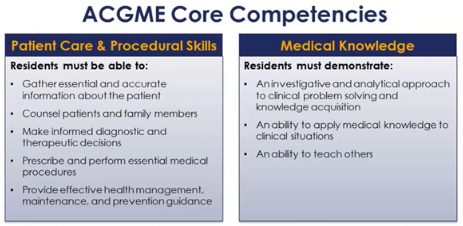
Each of the six core competencies has specific assessment methods, most of which are included in the privileging process whether through peer reference simulation labs, case logs, observation or physician feedback. The overarching goal is to produce physicians that can be entrusted to provide the highest level of quality care for the benefit of the public.
Specialty societies serve to promote, advance, and educate their members through the development and publication of evidence-based clinical practice guidelines, position papers, medical consensus documents, journals or publications, as well as conferences or seminars. Simply put, they support physicians by continuously contributing to quality improvement efforts primarily through education via a variety of outreach efforts. This is one way that physicians can come together to create shared common standards for different treatments.
When it comes to medical staff structure, the governing board is always at the top. They are the highest level of governance in an organization, accountable for the quality and safety of care delivered by the organization.
In a multi-hospital system with a unified staff, the governing board delegates responsibility and accountability to the medical staff and administration for the quality of care provided by providers who have been granted privileges within the organization. They will monitor processes and procedures including credentialing, privileging, and peer review.
In a multi-hospital system with individual medical staff, there will be a system governing board at the very top, to which each of the individual hospitals' governing board reports. This happens when hospitals have their own separate CMS, Medicare, or CCN number. In terms of CMS requirements, only the hospital's governing body has the authority to grant practitioners privileges to provide care in the hospital.
That's a lot of info, isn't it? And this is just an overview of the first session, Privileging 101 - Introduction to Privileges: Back to Basics - Physicians, in our extensive series on privileging. If you found this helpful, then we definitely recommend you check out the entire Privileging 101 series for yourself, and as always, feel free to reach out with any questions.
A strong onboarding process improves patient care and retention. Learn how healthcare leaders can speed up onboarding and keep new hires engaged.
Retention, recruitment, and strong onboarding programs have been on the radar screens of healthcare leaders for decades. The pandemic and the "great resignation" have done little to ease concerns around these issues and healthcare leaders are having to re-think onboarding, recruitment, and retention strategies. They are also evaluating ways in which to refine tactics to ensure that they have processes that will engage their new hires while fully evaluating competency and identifying opportunities to build competence.
In addition, they need tactics for doing this rapidly in order to keep pace with the growing need for nurses and the ever-changing landscape of clinical best practices. How good is your organization at this important first impression? Are you using tools that can help your organization to rapidly assimilate new nurses into your organization? Is your process as efficient and effective as it could be?
What happens during onboarding matters. It can impact patient care, exposure to risk and nurse retention. It can help your newly hired nurses to feel comfortable in their new roles and with their new employer, or it can negatively impact their impressions of your organization. Typically, onboarding brings to mind a cumbersome, paperwork-intensive experience that new hires are not likely to be looking forward to and may not be recalled so fondly by existing staff. Technology can change that impression, but more importantly, it can help you improve patient outcomes and nurse retention.
Typically, the onboarding experience has been the same for everyone, but now technology can help customize the experience for literally every nurse coming in to your organization. Nurses will show up for their first day of work with various levels of experience and competence. If your organization is still pushing out blocks of training to your clinicians without regard to their current skill set, it is time to re-think that tactic and evaluate the tools that your organization is currently using for onboarding.
Onboarding with Jane® measures a clinician's ability to consistently and safely apply clinical knowledge and judgment through the use of valid and reliable assessments. The assessments are designed to assist healthcare organizations to ensure that clinicians meet or exceed expectations for competent performance.
Onboarding with Jane accomplishes this through the use of Artificial Intelligence (AI) to create a personalized education plan for each user. Onboarding with Jane first assesses competency across a variety of clinical judgement domains and then develops an education plan that is unique to each nurse, making it more likely that nurses will stay engaged with learning because it is specifically designed to meet their needs.
Investing in individualized education provides a higher rate of return on your onboarding investment. Leaders need to feel confident that clinicians can consistently and safely apply clinical judgement and knowledge. Onboarding with Jane will build the right learning plan for each nurse so that leaders can be sure that every minute of seat time will really matter.
Onboarding with Jane can be an important part of your organization's strategy to build a culture of lifelong learning.

Learn when and how case logs, also called procedure logs, can document provider competency and support medical staff privileging decisions.
Documenting the competency of providers is one of the main tasks that medical staff is responsible for, and one way to accomplish this is through the collection and review of case logs, otherwise known as procedure logs. In fact, many organizations have incorporated requirements for the review of case/procedure logs into their credentialing policies and privileging criteria. And while the collection of case logs is not always a requirement, some hospitals and health systems require documentation of a certain number of admissions or consultations prior to granting privileges. So, when and how should case logs be used to document competency? Let's dig in.
Case logs are a list detailing the number of patients treated and/or procedures performed by a provider. They include information on patient load, the type of case, as well as the number of cases. This can cover a specific period of time or may cover the entire practice of the provider. Case logs can be obtained from a variety of sources, like a training program, a healthcare facility, or personal data collection by the provider.
In many cases, hospitals require at least 4 months of case logs for new applicants. In other cases, an organization's medical staff will determine a minimum number of procedures necessary to maintain competency for surgical and other procedures, which is why the collection of these logs is essential. These requirements are not arbitrarily selected, but rather are established after much deliberation and discussion by the medical staff, including the decision of how many procedures are necessary to both obtain and maintain competency.
Logs can come from the provider's training program, a healthcare facility, or personal data collection by the provider.
As is the case with most accreditation and regulatory agencies, there are varied requirements depending on the institution. The Accreditation Commission for Health Care (ACHC) requires that hospitals collect clinical activity, including procedure logs with outcomes, to support privilege requests for procedures not attested to in postgraduate references. The ACHC is the only hospital accreditor with this specific requirement.
The Centers for Medicare and Medicaid Services (CMS) sets regulations and interpretive guidelines for hospitals. Hospitals are required to be in compliance with the federal requirements set forth in the Medicare Conditions of Participation (CoPs) in order to receive Medicare/Medicaid payment. According to the CMS, the medical staff's appraisal procedure must evaluate each individual provider's qualifications and demonstrated competencies to perform each task or activity for which they have been granted privileges, including an evaluation of current work practice. The CMS also requires documented experience to examine credentials.
All hospital accreditors include similar language in their accreditation standards. This is why proper documentation of procedure logs is critical to helping providers meet requirements to demonstrate competency.
As more of our world moves into the digital so grows the concern for sharing data in a secure fashion. The Health Insurance Portability and Accountability Act of 1996 (HIPAA) is a federal law created to protect sensitive patient health information from being disclosed without the patient's consent or knowledge. HIPAA's main goal is to ensure that an individual's health information is properly protected while allowing the flow of health information needed to provide high-quality health care. Its main function is to ensure that patient-specific information is properly protected. This is why patient-identifying data should not be included in any case/procedure logs.
Most hospitals and health systems have a process in place when it comes to sharing procedural and patient data with other facilities in the same health system. Regardless of the policy put in place, they should be developed with the help of an attorney so that appropriate language is included in your consent and release forms, in addition to medical staff bylaws. This will allow for sharing between facilities without needing the consent and release form each time information needs to be shared.
When a provider cannot document the required number of procedures necessary in order to request or maintain privileges, the medical staff has a few options to choose from. They are:
Some hospitals require a specific number of patient encounters in order to maintain a particular staff category or to remain on the medical staff. If you have a provider that has a low volume due to working only in an office clinic associated with the hospital, there is no way of documenting hospital patient contacts or procedures. In this case, consider moving the provider to another staff status that does not require inpatient treatment or giving them medical staff appointments without clinical privileges.
Patient safety will almost always be the impetus for documentation. It's essential to verify a provider has the skills needed to provide the best in care. Some hospitals or health care systems request case logs for procedures completed in the past year to show that a provider has the least minimum required experience in a specialty or within specific procedures or types of cases. This helps demonstrate the provider's qualifications for the position being considered, supporting the decision to grant privileges. These logs are especially important for hospitals that have a set minimum number of procedures to maintain competency.
This also helps hospitals remain compliant with different organizations, like The Accreditation Commission for Health Care (ACHC). They require that hospitals collect case logs to support privilege requests for procedures not attested to in postgraduate references. And while CMS doesn't have language specifically requiring case logs, hospitals are required to be in compliance with the federal requirements set forth in the Medicare Conditions of Participation (CoP) in order to receive Medicare/Medicaid payment.
Privileges granted to a provider should be based upon approved criteria. This typically includes the completion of a specific type of training and documented experience. These criteria often include documentation of a specific number of procedures that must be performed within a determined time period in order to request and maintain privileges. It's important for organizations that are considering establishing or revising requirements for minimum numbers of procedures necessary to request/maintain privileges to consider any recommendations of specialty organizations to ensure compliance.
CredentialStream includes everything you need to request, gather, and validate information about a provider. CredentialStream makes it easy to document competency with several features that facilitate the gathering of case logs.

Binders and paper records are a poor way to standardize and validate skills. See how HealthStream's digital checklists improve compliance and workflows.
This blog is from a recent HealthStream webinar titled "Goodbye, Binders! The Better Checklist Experience." The webinar was moderated by HealthStream's Jill Terry, Product Marketing Manager, Clinical Staff Development and featured Karen Sutton, Senior Solution Executive, Clinical Staff Development.
Supporting nurses and other staff with organizational processes is important. It is an essential step to building confidence in clinical quality and skills and can help eliminate variations in practice. However, actually executing on that support can be challenging. HealthStream has combined technology and automation in a solution that can help by eliminating paper-based systems such as binders and help your organization move to a system in which staff and leaders can have real confidence.
Over the past 30 years, HealthStream has been able to offer solutions in a variety of areas including resuscitation, quality and compliance, and clinical development. Recently, HealthStream has expanded their services to be able to offer scheduling and capacity management through the acquisition of organizations such as Nurse Grid, SkillSoft and Shift Wizard. These solutions offer organizations the benefit of reducing administrative work, as well as costs in addition to offering easy access to data.
The process for documenting the professional journey from novice to expert for clinicians is complex, and it can quickly become unmanageable for those organizations that are choosing to use paper and binders for this purpose. Preparing for a survey typically means hours of time spent updating and photo-copying employee records. The process is costly and cumbersome, but even more worrisome - the process is error-prone. In addition, paper can be damaged or become lost, making audits a nerve-wracking experience.
Sutton emphasized that "HealthStream's Checklist can help organizations standardize the entire writing and updating process while minimizing risk by having up-to-date information for every employee and every process." Sutton also shared that because the system is customizable, organizations can literally do anything that they had previously been doing on paper.
HealthStream's Checklist can help your organization to:
"Checklist also supports the validation of competency measures, which makes validation and documentation for regulatory agencies easier and much more efficient," said Sutton.
The process for standardizing and documenting complex processes in a healthcare organization is essential, but an accurate and efficient means of accomplishing this has been elusive. Checklist can improve outcomes by ensuring standardized processes, which results in consistent, high-quality care for patients.
Sutton shared that Kettering Health Network, an Ohio non-profit network of 8 acute care hospitals and 120 outpatient facilities, had experienced an increasing number of central line-associated bloodstream infections (CLABSIs). The number had actually doubled in one year resulting in the formation of a task force and numerous performance-improvement activities. "The task force was able to leverage Checklist and the HealthStream Learning Center to educate staff and ensure consistent practice across thousands of clinicians and multiple locations," said Sutton. She went on to share that they were able to use Checklist to standardize nursing care and validate competency through the easy-to-use mobile app. These activities resulted in a dramatic 90% decrease in CLABSIs over a 16-month period.
Shoulder dystocia is a rare, high-risk obstetrical emergency. Learn the risks, how to recognize it, and how to prepare your team to improve maternal outcomes.
Preparing for low-incidence, high-risk obstetrical emergencies is difficult, but should be an important part of your organization's strategy to improve maternal child health outcomes. Shoulder dystocia is one of rarest of obstetrical complications, occurring in somewhere between 1% and 3% of all pregnancies. However, when it does occur, healthcare providers have mere minutes in which to respond.
Shoulder Dystocia is an obstetrical emergency that occurs when one or both of a baby's shoulders becomes stuck inside a laboring women's pelvis. It is a low-incidence complication that can cause death or injury to both mother and baby. Further complicating matters is the fact that it is difficult to predict, which in turn, makes it hard to prevent. In most cases of shoulder dystocia, the baby is safely delivered and both mother and baby will recover fully from any problems associated with the birth, but this is not always the case.
While shoulder dystocia occurs infrequently, there are some risk factors that make it somewhat more likely. The March of Dimes identifies macrosomia (a baby weighing more than 8 pounds), pre-existing or gestational diabetes, and being pregnant with multiples as potential risk factors for shoulder dystocia. In addition to these risk factors, there are some aspects of labor and delivery that may make shoulder dystocia more likely. These factors include the use of oxytocin, the use of an epidural, a very short or a very long second stage of labor and having an assisted vaginal birth.
While a well-trained team of providers can usually safely deliver a baby when faced with shoulder dystocia, failure to do so can have serious consequences for both mother and baby. The baby may experience problems including arm and collarbone fractures, brachial plexus nerve damage and asphyxia. The mother may experience perineum tearing, post-partum hemorrhage and, in rare cases, uterine rupture.
A nursing staff that understands how to recognize the risks and signs of shoulder dystocia can mitigate these risks. So how should hospitals prepare their obstetrical teams to manage this type of emergency?
It is an understatement to say that U.S. maternal child health statistics continue to disappoint, but there are solutions that can help build both competence and confidence amongst your obstetrical staff. HealthStream's Quality OB Program can help your team with engaging content that can prepare them to respond to an obstetrical emergency - even those emergencies that happen extremely infrequently. Nothing is more important than a high-functioning team when there is an obstetrical emergency, and the Quality OB Program is data-driven education that will help your organization build a team that can respond appropriately to this and other kinds of obstetrical emergencies.
Your organization can use the Quality OB Program with confidence as HealthStream has partnered with the best organizations to provide high-quality, reliable content. The data-driven program targets six key competencies and uses virtual microsimulation and incremental, high-frequency learning to ensure safe, high-quality obstetrical care. In addition to the module on Shoulder Dystocia, the program also includes modules on Electronic Fetal Monitoring, Postpartum Hemorrhage, Hypertension in Pregnancy, Trial of Labor after Cesarean, and Effective Communication and Event Disclosure. Leaders can feel confident in the efficacy of the program with the use of pre- and post-assessments and tools that determine the variance between knowledge and the application of that knowledge.

Discover how HealthStream helps close gaps between experience and complexity to strengthen nursing practice and care.
For years healthcare and nursing leaders have been focused on an ongoing nursing shortage. Developing recruitment and retention strategies rightfully took center stage as healthcare organizations struggled to keep pace with the needs of patients and nursing vacancy rates that are typically 10% or greater.
Without question, healthcare organizations need a continued focus on recruitment and retention, but there is an emerging issue that further complicates the nursing shortage and should have an impact on strategies to address the issue and ensure patient safety and quality. The issue is the gap between your nursing staff's experience and the increasingly complex patient population. While the problem is not really new, it has been greatly exacerbated by the pandemic.
The gap between experience and complexity is created (and continues to grow) when large numbers of retiring nurses exit the workforce while the number of new nurses continues to grow. Further complicating the issue is a patient population that is older, more acutely ill and presenting with more chronic comorbidities. At the same time, acute and critical care has become progressively more complex further widening the gap.
Additionally, COVID-19 has served to widen the gap as critically ill COVID-19 patients further stretched healthcare resources and resulted in medically complex patients that required advanced interventions. While safe, high-quality care may be the most alarming casualty of the gap, the opportunity for novice nurses to experience an effective onboarding process and participate in ongoing educational opportunities has also been compromised by the pandemic. Nursing schools were forced to switch to remote learning and shortened or eliminated clinical rotations, while also scrambling to deliver nurse graduates to healthcare organizations who desperately needed staff, which resulted in novice nurses who were underprepared.
Many of the circumstances that have created the gap will likely persist, so how should healthcare leaders respond? The Advisory Board recently published a white paper that addressed the issue and recommended a three-pronged solution: education that teaches new nurses more efficiently and moves them more quickly from novice to competence, redistribution of experience across the organization to move existing nurses to where they are needed most, and differentiation of practice to allow the most competent of newer nurses access to the most experienced nurses to help them build confidence and competence in caring for the most critically-ill patients.
Whether there is an experience-complexity gap or not, nurses need the right tools to build confidence and competency in their practice. HealthStream's Clinical Development Solutions can be an essential part of your organization's strategy to close this gap. This solution includes:

The need to build resilience in healthcare workers will outlast the pandemic. Learn how to promote a culture of resilience and support your staff.
Lack of professional development, high patient to nurse ratios, changing payment trends, new COVID-19 variants, staffing shortages - if the last few years have taught us anything, it's that those who work in healthcare are more resilient than anyone has ever given them credit for. Your frontline staff and first responders have put the needs of the community you care for ahead of their own personal needs. How are you investing in your staff to ensure that they are supported and understand your commitment to promoting a culture of resilience and ensuring there's a plan in place for staff health and mental wellness?
Definitions of resilience can be quite varied, but there are some common elements. Characteristics of personal resilience include the ability to withstand, adapt to and recover from adversity and stressful situations. It is further defined by an ability to return to a normal level of functioning more quickly and the ability to not become overwhelmed by stressful or changing circumstances. A widely quoted study laid out the impact of a lack of resilience in healthcare workers. It can result in anxiety, depression, anger, confusion and sleeplessness.
Perhaps, in the past, not much thought has been given to helping healthcare workers develop resilience, but the recent years have changed healthcare requiring organizations to think about the resilience and wellness of their teams and that of the organization itself.
Healthcare organizations need strategies to help them build employee resilience. During the pandemic most have worked hard to build organizational resilience, but there is a risk to ignoring that trait at the employee-level. Burnout, long an issue for healthcare workers, is a likely outcome if those workers do not have a strategy for building personal resilience. Along with the risk of burnout is another risk that is highly associated with burnout - turnover. Building resilience in healthcare workers helps protect workers, but it also protects our healthcare delivery system's ability to continue to provide care for the communities it serves by improving retention.
Advice on this topic is abundant, but really operationalizing recommendations that promote resilience and good mental health can be a challenge. So, if healthcare organizations want to create a healthy and resilient workforce, where do they start?
Healthcare organizations must create an actionable plan to combat burnout and reduce turnover. An important first step is to understand what mental health is, possibly remove stigma if any is present and then understand how to support oneself during times of distress. Clinicians must recognize the early warning signs of mental health distress, to know when to apply remedial practices. Then practical solutions can be applied, such as mindfulness, meditation, and breathwork. Once these have been established, healthcare professions can continue building skills, not just to mitigate and manage distress, but to thrive in their environment.
HealthStream has tools that can help strengthen resilience in healthcare professionals by diving into these initiatives. HealthStream's program begins by helping healthcare leaders identify the signs of burnout and offers solutions on how to address those issues. It is an important tool now, but the nature of healthcare means that tools that help build resilience will remain important long after the pandemic is in our rear view mirror.
The Resilience in Healthcare will integrate seamlessly with the HealthStream learning platform and can help customers begin addressing resilience with employees very quickly. It helps by providing contemporary resilience education that can help employees develop the resilience that they need to deal with a pandemic as well as whatever the next major crisis happens to be.
It also gives leaders tools to help them gauge organizational resilience. The "Gauging Your Resilience to Burnout" survey aggregates non-identifiable employee data into a dashboard-style report that will help healthcare organizations assess organization-wide results and can help them build a plan for improving employee resilience.
In addition, HealthStream offers a product that provides the Mental Health Ally Certification Program by Psych Hub, the leading provider in behavioral health content. The library includes five micro-certification tracks that focus on a variety of critical mental health topics as well as exclusive access to a behavioral health resource center and supplemental provider and patient videos.
For more information, visit: https://www.healthstream.com/solution/learning-performance/leadership-upskilling/resilience-in-healthcare
Can non-clinical staff respond in a medical emergency? Learn how HealthStream's American Red Cross First Aid/CPR/AED program builds competence and confidence.
A medical emergency is a nightmare when it happens at home, on the street or at work. It can be no less of a nightmare if it happens in a healthcare facility where or when clinical staff are not already on the scene. Can your staff provide life saving measures should they come upon a medical emergency in the parking lot or witness an accident in the kitchen, shipping and receiving or some other part of the hospital where clinical staff are not readily available?
The Bureau of Labor Statistics has released 2020 data on workplace injuries and illnesses and the news appears to be generally good as there were decreases in the overall number of workplace injuries, perhaps due to the dramatic increase of telework during the emergence of the pandemic in 2020. Still, even though the numbers of injury cases declined, the actual number is still significant. There were 2.1 million non-fatal injuries in 2020. Unfortunately, and perhaps not surprisingly, the number of illnesses quadrupled during that same time to 544,600 cases.
There are ten occupations that account for more than 38% of those cases that resulted in days away from work and healthcare makes more than one appearance on the list. Not surprisingly, nursing assistants, registered nurses, licensed practical nurses and licensed vocational nurses all had notable increases in the incidence of days away from work. Other occupations on the top ten list that may work in healthcare settings are stock and material handlers, maintenance and repair workers and stockers. Perhaps what is surprising is that the number of non-fatal occupational injuries and illnesses that occur in healthcare and social assistance settings is actually somewhat higher than those reported in construction, manufacturing and mining.
Your organization likely already has policies that describe how employees should respond to mass casualty incidents, active shooters, fires and other hazards, but a sick or injured patient, family member or colleague can be just as stressful, particularly for non-clinical staff who may not have the education or confidence to respond to an emergency. Typically about half of a hospital's employees are non-clinical staff so it is somewhat likely that they will need to provide support during a medical emergency at some point in their working life.
Minutes can really matter when there is a medical emergency, so preparing non-clinical staff to respond and support the patient until clinical staff arrive on the scene is critical.
HealthStream's Red Cross First Aid/CPR/AED training can build employee confidence in their ability to respond effectively to an emergency and it can also help leaders feel confident that non-clinical staff can respond to emergencies that happen outside of a clinical setting. The program is flexible enough to meet the needs of all of your non-clinical staff. But, more importantly it focuses on evidence-based skills that can save lives even when your clinical staff is still on their way.
The program includes an engaging instructional design that offers online and blended simulation options as well as free streaming videos. Employees can access the education at a time and place that is convenient for them and can proceed at a pace that will help them feel confident that they have mastered the skills. In addition, they will have access to a digital certificate immediately upon successful completion of the program.
The right tools can build confidence in non-clinical employees who may not feel naturally confident when facing a medical emergency. Building employee confidence along with their competence is crucial. This program can also help your organization's leadership team feel confident that they have a well-prepared and trained team. In addition, the program will meet OSHA and other government and regulatory requirements.
U.S. maternal health statistics remain poor and the rate keeps rising. Learn why standardizing child and maternal education is key to better outcomes.
Maternal health statistics for the United States remain shockingly poor, particularly when compared with the rest of the world. To make matters worse, the rate in the U.S. continues to rise even as the global maternal morbidity ratio has been declining.
In addition, there are quite a few disparities in the U.S. maternal child health data that make addressing the issue even more complex. There are significant racial, ethnic, geographic and age disparities that can further complicate efforts to improve results. And lastly, there is an economic penalty for poor performance in the area of maternal and child health - 74% of obstetrical claims are related to a lack of clinical judgement.
Much has been written about the appalling statistics surrounding maternal health. National, state, and local governments, regulators, healthcare organizations and providers all have efforts underway to address these issues, but is there something much more fundamental that healthcare leaders should be considering?
The efforts that are currently underway will hopefully have an impact on the delivery of safe and effective maternal and child health care in the U.S., but is there a more logical way to address the problem? Does it make sense to start at the beginning with a systematic approach to education for maternal and child health providers? The pandemic has exacerbated issues around nurse preparedness as nursing schools scrambled to graduate desperately-needed nurses. However, there have always been some disparities in the preparedness of new nurse graduates and their education has typically been more focused on adult health issues than those of infants and children. Typically, uneven levels of preparedness have been addressed with preceptors and mentors and additional education, but even that has been somewhat uneven as educational programs, preceptors and mentors may also be subject to the kind of variations in education that result in meaningful and perhaps dangerous gaps in knowledge.
Ideally, nurses have an educational foundation in maternal and child health that is the same from one nursing program to the next, but we are currently nowhere near that ideal. So, what should healthcare leaders do to help prepare nurses and to ensure that their teams are prepared to deliver the kind of safe and effective care that can have a real impact on improving current maternal child health statistics in the U.S?
Standardizing education on maternal child health with an evidence-based approach is a strong first step in any strategy to improve outcomes in this patient population. HealthStream's maternal care education programs will prepare your nurses and OB providers with case-based training and ongoing education help blaze a new path towards a focus on improving preventable outcomes.
Most importantly, this is a proven solution. Clients who adopted HealthStream's Quality OB solution experienced a 22% decrease in negative events from the national average. In addition, numerous clients have reached the threshold of zero harm events after switching to this program.
HealthStream's Child and Maternal Health solution is a comprehensive one and includes content that addresses:
HealthStream is dedicated to providing standardized education that can transform maternal child health care, by supporting nurses who can practice in confidence knowing that they have been equipped with the best clinical information specific to this patient population.

Hear Susan Gurzynski-Wells on how personal and professional growth drives revenue cycle management and organizational growth, from a HealthLeaders podcast.
This blog post is taken from a recent HealthLeaders podcast moderated by HealthLeader's Revenue Cycle Editor, Amanda Norris. The podcast featured Susan Gurzynski-Wells, MS, RHIA, HealthStream's Director of Product Management, Leadership and Finance.
Revenue cycle growth and the personal and professional development of your staff might seem somewhat unrelated, but Gurzynski-Wells makes a compelling case that the two are actually highly related. In this podcast, she addresses the importance of investing in your employees and yourself in terms of continuing education as cultivating personal and professional growth is critical to revenue cycle success.
Norris led off with a tough question - how has the "great resignation" affected our leaders' ability to lead? Gurzynski-Wells acknowledged that the pandemic has changed nearly everything about our lives, but the changes are particularly profound in the workplace where large numbers of employees left jobs to find work that was more in alignment with their values. Gurzynski-Wells observed that "employees left to find meaningful work and that mental health and wellness took on a whole new importance to employees which created a new challenge for leaders."
Still, with many healthcare organizations facing significant financial difficulties in the wake of what is hopefully the worst of the pandemic, why should these organizations incur the cost of education? Gurzynski-Wells cited a Harvard Business Review study that found that 49% of employees who either changed roles or were promoted were under-performing 18 months into their new roles. So, what is the root cause for such a disappointing metric?
Researchers found that there was very little onboarding of these employees. The issue was compounded by the fact that so many employees were working from home while moving into their new roles. Therefore, they were removed not just from formal onboarding processes, but also the informal relationships that may have been valuable to them in their new roles.
"High turnover, changing resource pools, and the virtual environment have combined to decrease our levels of comfort in managing and training our staff," said Gurzynski-Wells. She went on to share that she believes education is critical to success in the current business environment. "We need to foster staff competencies, allow and encourage employee growth and development. Leaders also need to offer opportunities to learn, including opportunities to learn beyond current job responsibilities," said Gurzynski-Wells. She went on to point out that employees want to find meaningful work and that organizations need to provide support both collectively and individually in terms of growth and development.
Next, Norris asked about who can benefit from education. Gurzynski-Wells encouraged healthcare leaders to think beyond the clinical education that is critical in healthcare. Patient safety and great outcomes are important, but "we should also be looking for positive outcomes for our staff and leaders," said Gurzynski-Wells. She also pointed out that in many organizations revenue staff have been covering positions during staff shortages. Revenue staff likely also want to advance within the organization and encouraging revenue staff to cultivate their leadership skills is a great place to start.
While Gurzynski-Wells acknowledged the vast number of choices in revenue cycle management technology and the importance of that technology in revenue cycle management, she also encouraged leaders to remember that it is really the people that make that technology work for the organization. More importantly, the people make that technology work for patients. "They serve as an early warning system when there are problems with the technology and they are the ones that make patients feel comfortable and heard," said Gurzynski-Wells.
While investments in technology are essential to revenue cycle management and growth, there are some things that technology simply cannot do. It is unlikely that the organization's technology can truly understand consumerism in healthcare or the differing needs and expectations of patients. Technology also cannot deliver complex resolutions, participate in contract negotiations or understand the constantly-changing regulatory landscape in healthcare. However, people can do these things making the need for real investment in their education even more apparent.
"Business continuity is built on a well-trained and evolving workforce. Continuity develops from the sharing of institutional knowledge and internal networking which, in turn, cultivates a resilient team which builds connections and supports internal growth," said Gurzynski-Wells.
HealthStream has partnered with several leaders in the education industry to provide development and education across a wide spectrum of employees. "We have education plans for new, emerging and experienced leaders alike," said Gurzynski-Wells. The training is personalized and targeted. It is also engaging, using interactive games and engaging videos to help your organization optimize your revenue cycle management and growth.
Explore the essential roles and skills required in ambulatory nursing. Discover how to advance your career in this dynamic field.
Changes in how and where care is delivered to patients has resulted in the shift of many procedures to outpatient settings. Many surgeries can now be safely performed without an overnight hospital stay. Care can safely be provided in these settings, but it can also typically be provided more efficiently and at a lower cost. Ambulatory care now makes up a substantial part of the continuum of care.
The number and types of procedures that can be performed in an ambulatory care setting is and has been increasing rapidly as payors, physicians and patients become more accepting of this model, making ambulatory care one of the fastest-growing segments of healthcare. The growth in ambulatory care is predicted to continue and healthcare leaders will continue to deal with the challenges presented by industry growth.
To prepare for a nursing career in an ambulatory care area, the first step is to earn a bachelor or associate degree in nursing and pass the required exam(s) to become a nurse. Nurses may also elect to become board certified in ambulatory care nursing after gaining clinical experience in the setting.
Ambulatory care nurses will provide care across a wide range of life stages from infancy to the elderly. A good ambulatory nurse will need to have strong organizational skills as well as solid critical thinking skills to be able to work in the typically fast-paced ambulatory care areas. They will also need strong communication skills in order to provide the necessary education and discharge instructions for their patients.
Ambulatory nurses provide care for patients who are receiving diagnostic and treatment services that do not require an inpatient hospital stay. They may work in a variety of settings including ambulatory surgery centers (ASCs), outpatient offices or primary care offices and work under the supervision of a physician. They will be found in pre-operative, inter-operative and post-operative areas. In these settings they may be responsible for taking patient histories, performing physical exams, preparing patients for surgery, administering treatments such as immunizations, blood draws, beginning infusion treatments, changing wound dressings and monitoring patients in the PACU. They also have an important role in providing patient advocacy, education and discharge instructions. Increasingly, ambulatory care nurses may find themselves working in telehealth to do assessments, triage and patient education.
Nurses choosing to practice in this setting may find themselves working in the fast-paced environment of an ASC, but their options are by no means limited to ASCs. In addition, ambulatory care nurses may choose to become board certified in this specialty or they may choose to pursue leadership, administration or policy making positions that will help them have a different kind of impact on care delivery in this setting.
In addition to these roles, nurses may also choose to move into other ambulatory care areas such as physician office practices, Emergency Departments, specialty clinics such as infusion centers and urgent care clinics where strong organizational and communication skills along with the ability to work in a fast-paced environment are also essential. In addition, nurses may choose to move into inpatient care such as regular acute care hospitals, skilled nursing facilities and rehabilitation facilities.
As the shift to provide more procedures in an outpatient setting continues, it brings staffing shortages into sharper focus for these care settings. While the stability of schedules in ambulatory care areas can make working in these settings very attractive for nurses, it has not made this care setting immune from the challenges of an apparently perpetual nursing shortage. High turnover and shortages can impact a provider's ability to provide consistent, high-quality care for patients and it may also be a barrier to creating an environment where engaged and satisfied employees thrive.
HealthStream offers a number of solutions that can help your organization build and retain the skilled workforce that will be critical to meeting the service demands in these settings where continued growth is expected.





