Explore expert insights from HealthStream on healthcare compliance, credentialing, clinical education, scheduling, and leadership. Find practical guidance to help healthcare organizations train, retain, and support their workforce.
Practical insights on healthcare compliance, workforce development, and clinical education from the experts at HealthStream.
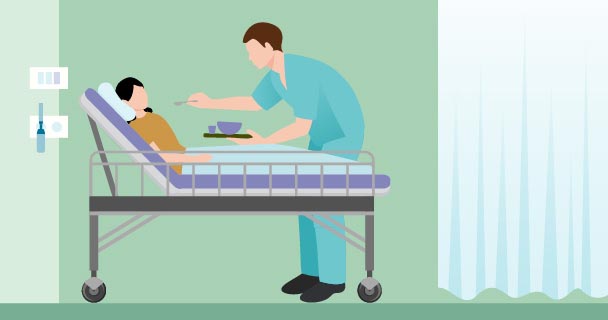
Continuing education supports lifelong learning, a key competency for healthcare staff. Learn why CE matters for nurses and everyone in healthcare.
Continuing education (CE) is often thought of as a contributor to lifelong learning and is defined by the Alliance for Continuing Education in Health Professions as "the process by which health professionals keep up to date with the latest knowledge and advances in health care. Substantial literature exists indicating that continuing education (CE) in the health professions is effective in improving healthcare, patient outcomes and population health." (ACEHP)
CE Contributes to Competency and Employee Development
In a 2010 Macy Foundation Report, experts urged an emphasis on the role of CE in:
Learning options like CE Need to Vary According to the Learner: Millennials A Good Example
In 2011, PwC published the report ‘Millennials at Work' after commissioning Opinium Research to complete an online survey of 4,364 graduates across 75 countries. The Millennial generation includes those born between 1980-2000—by 2020, 50% of the workforce will be made up of millennials. In relation to lifelong learning, PwC noted that a focused response from employers will be needed given this generation's ambition and desire to keep learning and progressing in an organization much more quickly than previous generations. If they aren't engaged or afforded the opportunities to learn and progress, they are far more willing to change employers or careers. One quote from a Millennial that summarizes this generation's view of their workplace is "My career will be one of choice. It will align who I am with what I do."
The orientation towards lifelong learning may be one of the most important competencies healthcare staff must possess for future success, and it will be up to employers to harness and engage new generations in untold and different ways. If we're not thinking about this now in healthcare at the highest level, especially about institutionalizing changes to learning in our provider organizations, we may be very challenged in the next few years to reduce the already high turnover rates in healthcare and the negative effects on quality care that likely will follow.
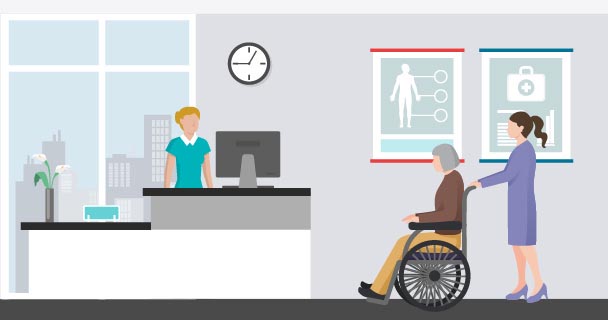
Skilled nursing facilities face financial pressure and industry change. Explore the biggest challenges for SNFs and best practices that help address them.
A number of situations and industry changes will continue to be big challenges for skilled nursing facilities (SNFs). Just a few of them include:
Solutions for SNFs Challenges
One study in particular found that nursing facilities can improve quality of care and reduce hospitalization of residents by increasing nurse staffing. They reported that nearly half of hospitalizations stem from social-structural issues at the nursing home, not clinical causes. They also found that if staff had been able to administer IV therapy, a whopping 70% of hospitalized patients could have been treated in the nursing home (The Henry J. Kaiser Family Foundation, October 2010). The bottom line is that nursing facilities cannot meet residents' more complex health care needs if they are struggling with insufficient and inadequately trained staff. The more they take in higher acuity patients, the greater the challenge.
Changing How and What Care is Provided
Nursing facilities can provide more short term care for patients of all ages, as well as a greater range of care. There is an increased need for short-term care and rehabilitation such as physical therapy, occupational therapy, and speech therapy. It is crucial for organizations to become equipped to provide this type of care to keep their facilities full, especially as certified bed occupancy rates are going down. This may mean adding more nurse practitioners and physician assistants, as well as geriatric nurse practitioners and physicians.
Improve the Care Experience
Facilities can provide more comfortable, home-like settings for residents as well as more activities and events. Many organizations are also increasing their focus on individualized, resident-centered care. This can mean having residents participate in their care plans, and even provide input into the operation of the home. Some are also transitioning to hiring all-purpose workers who cook, clean, and help with daily activities.
Embracing Accountability is Key
Because of value-based payment models, hospitals have more at stake and will be holding post-acute-care providers more and more accountable. Post-acute providers have an important role to play, but they must be aggressive. There are several approaches facilities can take to work proactively with hospitals to help improve quality of care and reduce costs. They can start small with just one of these ideas, and then work to build up their efforts. One of the easiest things nursing facilities can do is share quality and patient satisfaction data, as well as materials on services provided. This helps hospitals understand the type of care that residents are receiving. They can also arm hospitals with specific information about how they are working to help reduce readmissions.
Really Become a Care Partner
There are also bigger steps nursing facilities can take, which usually require partnering with hospitals to some degree. Together they can form care-transition teams that work to improve and standardize discharge instructions, forms, and other communications. They can develop other teams who review problem cases and explore ways to prevent recurrences. Another idea is to work with hospitals to build a joint action plan on how to provide care for the most at-risk patients. The biggest thing skilled nursing facilities can do is to not ignore this issue. It is important to begin brainstorming ideas within their own walls about what makes their particular facility stand out from others, and then focus on those differentiators.
Contact HealthStream to speak to a solutions expert learn more about our courses related to Nursing Training.

HR must know the business and step up as a strategic partner. Learn why HR analytics are essential for driving organizational performance in healthcare.
By Trisha Holbert, MA, SPHR, Performance Excellence Coach, HealthStream Engagement Institute
In today's healthcare market, it has never been more important for your Human Resources Department to know the business and to step up as an integral component to the success of any healthcare organization. To do so, HR leadership must be able to validate their value and be able to speak in quantitative, objective terms. If your HR department is only providing basic data; turnover reports, internal transfers, and exit interview data, you are missing a great opportunity to reduce costs, build engagement, and to prepare yourself for future needs.
HR Analytics Explained
What I am describing is the world of HR Analytics. Obviously, data can be pulled and reports can be run on a variety of aspects, but it is important to focus on the data that will best support your organizational strategies. Furthermore, reports are worthless if they are not actually used to drive business decisions. Your Human Resources department must establish a data-driven approach, leveraging analytics to improve business results and organizational effectiveness.
The reality is that HR analytics can translate raw data into actionable information for your organization. The Harvard Business Review defines analytics as the use of math and statistics to derive meaning from data to arrive at better business decisions. Analytics can be descriptive (use of dashboards), predictive (use past data to model future outcomes), or prescriptive (performance optimization). The use of HR analytics can provide a key competitive advantage for your organization.
Talent Management and Data
One of the most critical areas requiring in-depth HR data analysis is talent management. Talent management refers to the anticipation of required human capital and the planning required to meet those needs. Predictive analysis is one of the best methods for collecting data and forecasting outcomes based on historical data to arrive at better decisions. Human Resources maintains huge amounts of people data, and this data is critical to business operations. Some healthcare organizations are utilizing predictive analysis to increase their overall ability to predict attrition risks, to select high performance job applicants, analyze engagement, understand employee productivity and performance, determine leadership training needs and potential, and manage staffing needs based on leave of absence trends.
In the healthcare environment we are facing many talent management challenges including recruitment & retention of top talent, appealing to multiple generations, development of talent to meet future needs, succession planning, and engaging a diverse workforce, among other things. Although most organizations know that utilizing HR analytics will enhance their organizational success, very few believe that they are capable of developing strong predictive models or simply do not allocate the time or resources needed.
Measuring Human Capital
The reality is that HR analytics and measuring your human capital does make a difference. According to the book "HR Analytics," author Jac Fitz-Enz writes that it is important that you manage what you measure. In his book Fitz-Enz sites examples of major health-care insurers retaining 93% of its top talent after their development of a leadership initiative, and another company that returned 18.2% in productivity with new training technology resulting in $276,000 cost savings to the bottom line. In another article, from Forbes magazine, it is written that organizations that leverage their HR data see high returns in employee retention, accident claims, leadership pipeline, talent gaps, and candidate pipelines. These are only a few examples of the potential savings that could come from your HR analytics.
Most healthcare organizations have strategic goals around their people, patient experience, quality/safety, business outcomes and future growth strategies. We know that engaged employees create a better patient experience, actively seek to improve quality and patient outcomes, and help to improve the overall financial standing of the organization. We know that engaged employees stay with their employer longer, refer other top talent, and create a positive work culture. We also know that turnover, being short staffed, mandatory overtime and a lack of talent development or promotional opportunities work against the very things that engage employees the most. With all of that said, why aren't more healthcare organizations investing in HR analytics that will support their greatest resource…their people?
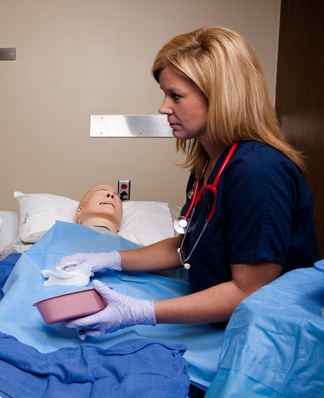
The Joint Commission links inadequate safety culture to adverse outcomes. Learn what leaders must do to create a culture of safety in healthcare.
The Joint Commission has found inadequate safety culture to be a significant contributing factor to adverse outcomes. To support this finding, The Joint Commission recently expanded on and re-emphasized the need for the leadership of healthcare organizations to create an effective culture of safety.
Safety culture is the sum of what an organization is and does in the pursuit of safety. Implementing an effective culture of safety requires a multi-layered approach that starts from the top down. Leaders must model appropriate behavior and back up their words with actions. Leadership also must allow staff the freedom to raise safety concerns and report errors without fear of retaliation and recognize these actions as a positive force for quality improvement within the organization. The Joint Commission supports using culture and system assessments regularly to measure progress and to support all efforts with training initiatives.
An effective safety culture save lives. In a 2016 study, Johns Hopkins researchers analyzed medical death rate data over an eight year period. The researchers calculated that more than 250,000 deaths per year are due to medical errors in the U.S. That figure would make medical errors the third leading cause of death in the U.S. behind heart disease and cancer.
The Joint Commission has found that inadequate leadership can contribute to adverse events in various ways, including:
Leaders can build safety cultures by readily and willingly participating with care team members in initiatives designed to develop and emulate safety culture characteristics. Open and honest communication between staff and management around quality and safety issues and a willingness to implement quality improvement initiatives to address the issues raised is critical to establish and improve safety outcomes and to reduce adverse events.
How do leaders create an effective culture of safety? The Joint Commission recommends that organizations:
The Joint Commission introduced patient safety culture concepts in 2008 and has continued to publish guidance and alerts regularly to encourage facilities to take action on this mission-critical initiative. This includes The Patient Safety Systems (PS) chapter of The Joint Commission's Comprehensive Accreditation Manual for Hospitals which emphasizes the importance of safety culture. As of Jan. 1, 2017, the chapter expanded to critical access hospitals, and to ambulatory care and office-based surgery settings.
The evidence shows that healthcare leaders can impact the culture of safety to reduce adverse events and improve safety outcomes.

Competencies equip the right people at every level to achieve optimal performance. Learn what competencies are and why they matter across healthcare.
By Melissa Wurm, MHA, LSW; Director, Performance Excellence; HealthStream Engagement Institute
What are Competencies?
Competencies ensure the right people at the right level of your organization are equipped to achieve optimal performance outcomes. Successful competencies align with the organizational goals and individual performance evaluations, and are used to build a coaching culture.
The American Hospital Association tells us that competencies are the combination of knowledge, skills, personal characteristics, and individual and social behaviors needed for an individual to perform a job. This is a change from healthcare's previous understanding of competencies as skill-based evaluations. The distinction is that a skills assessment can be validated in one or a few instances of the employee's performing the task (consider a checklist), while a competency assessment is validated over time and in a variety of situations and methods.
Let's examine the successful components of a competency assessment:
From the table above, you can see the true depth of assessing competency in your staff and the value of building an optimal competency program that supports the development of individuals and teams.
Competencies in Healthcare
Competencies are by no means new to healthcare. Our nursing colleagues have been using competencies to rate skill performance for many years. A growing trend in healthcare is to develop competencies across the organization, ensuring that each person, in every position, is competent in their role. Can you imagine it? Let's consider another industry to prove our point. Imagine in the airline industry, that only the pilot and co-pilot have competencies to ensure they are capable of successfully performing their roles. The others have job descriptions, but not competencies. That would include the flight attendants, maintenance personal, ticketing, security, etc. Did that make you nervous?
What would having an entire organization of competent employees (everyone who wears a name badge) do for you? Imagine every employee equipped with the knowledge, skills, attitudes, and judgments to help their departments achieve their goals. Now imagine them all working together to achieve the goals of the organization—patient experience, growth, patient safety, and quality of care. Competency builds confidence, and competent, confident employees are your keys to success.
Competencies and Employee Engagement
We know that engaged employees are happy employees, and happy employees provide the best patient care and services. One of the greatest aspects of employee engagement is feeling an attachment to the mission and goals of the organization. Do each of your employees know how the work they do every day contributes to organizational goals? When competency statements are directly aligned with those goals, every employee can know how they contribute and engagement is strong.
Competencies are used to develop a coaching culture in your organization. Assessing competencies allows you to identify your high performers for mentors and preceptors and also to identify development opportunities for each of your staff. It's not a one-time assessment that's put in a folder until the next year. Staff development through competency assessments happens all year long in order to build the coaching culture you desire.
Conclusion
Competencies are the exact levers you need to have engaged, confident employees and an aligned organization. It is the trend in healthcare to have competencies for everyone who wears a name badge. Are you ready?
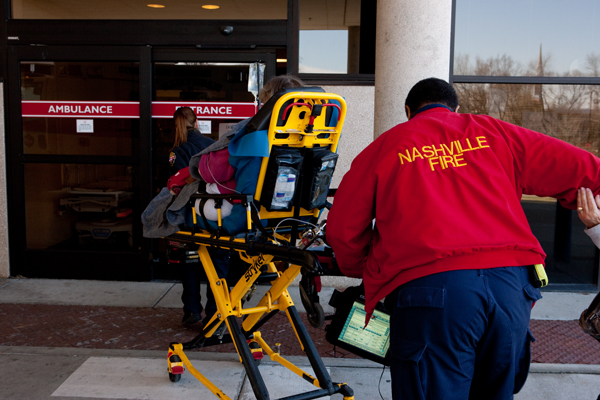
Get best practices for hospital active shooter training and proven approaches to improve staff preparedness and safety.
In 2013, the FBI released a study of active shooter incidents in the US between 2000 and 2013. The major findings are summarized below (from US Department of Justice Federal Bureau of Investigation, 2013):
Healthcare Facilities Are Among the Most Likely Places for a Shooting
During the period (2000-2013) of the FBI study, 4 shooter incidences occurred in healthcare facilities, which resulted in 10 being killed with 10 other injuries. The events occurred on different days of the week with shooters ranging in age from 38-51. Two incidences occurred on weekdays with two on weekends. Two of the shooters committed suicide at the scene, one was killed by police, and one was apprehended at the scene of the crime (US Department of Justice Federal Bureau of Investigation, 2013).
Expert Calls for Training
Katherine Schweit, Special Agent and director of the FBI's Active Shooter Initiative, said that the results of their study "demonstrate the need not only for enhanced preparation on the part of law enforcement and other first responders, but also for civilians to be engaged in discussions and training on decisions they'd have to make in an active shooter situation."
Kettering Health Network Responds
We talked to Bernadette M. Sacksteder, who is an HR Specialist on the Kettering Health Network (KHN) Legal & Regulatory Compliance team and who is a member of the panel that built the HealthStream active shooter courses. Bernadette wrote a report summarizing the active shooter program at Kettering and submitted it for consideration for the HealthStream Award of Excellence for Innovation.
KHN has two separate security departments—Kettering Security Department and Grandview Police Department. Both of these departments independently developed an active shooter program. From there, the departments collaborated with HealthStream to help develop a comprehensive active shooter program for KHN. This comprehensive program delivers essential content in several modes and at different levels to meet the varied needs of the entire health network.
The program comprised:
Outcomes of the Program
According to Sacksteder, the response to the program has been overwhelmingly positive. She writes "In 2015, we had 235 employees complete the Run Hide Fight online course, and 439 employees complete the Response to Active Shooter Training Two-Part course yielding a total of 674. As of the end of November 2016, we have more than doubled our numbers from 2015. Participation numbers from 2016 (through November) are:
Response To Active Shooter (Single Session): 836
Response To Active Shooter Part I (Lecture): 320
Response To Active Shooter Part II (Practical Application): 120
Run Hide Fight HealthStream video course: 365
Total: 1641
This is in addition to the 12,000 employees who will be exposed to this content through our annual mandatory compliance education. By the end of 2016, every employee of Kettering Health Network will have received at least basic Response to Active Shooter training."

Explore how transformational leadership can build stronger multidisciplinary teams and improve patient outcomes.
Merriam Webster defines teamwork as "work done by several associates with each doing a part but all subordinating personal prominence to the efficiency of the whole." There is a general consensus in the research literature that a team consists of two or more individuals, who have specific roles, perform interdependent tasks, are adaptable, and share a common goal, according to Health Service Research. So by these definitions, all healthcare is teamwork—a multidisciplinary effort in which health professionals from different specialties must work together to provide excellent patient care.
Healthcare is becoming more complex and specialized, with increased demand for complex health services and fast adoption of new methods. Also, patients are older, usually with more acute care needs when they arrive at the hospital and often have multiple diseases to manage. These trends have forced providers take a multidisciplinary approach to healthcare, including a greater need for effective, integrative teams.
This is a positive trend because it:
There is a very large contrast between leading and managing. When you think of some of the best leaders you know, probably many, if not all, of these traits are present.
These are the traits of great team leaders:
Leadership transforms the environment for all and stands in stark contrast to management. While there is some functional cross-over between leading and managing, the task of managing looks very different than leading.
Typically, you are managing when you:
More so than managers, leaders are energized not just by the goals of the team or organization but by transforming and leading individuals to be leaders themselves. These people don't just take responsibility for tasks that must be performed but for revitalizing an organization. They define the need for change, they create new visions and they ultimately do transform the organization.
When highly effective leaders can create equally effective teams, these are the hallmark habits of the teams, according to Bernard Bass in Transformational Leadership (2006).
When these items are missing, teams don't function and quality suffers:
Just like the qualities of good teams, anytime we reflect on the best leaders we have known, several trends emerge. First of all, transformational leaders behave in ways that result in their being role models for their followers. The leaders are admired, respected and trusted. It is difficult to be inspired by leaders that are untrustworthy, unethical or insincere.
Strong leadership habits encompass the following:
The best healthcare organizations will be the ones where leadership is valued, trained for and where the principles of strong teams and effective leaders will be disseminated widely at all levels. There are no shortcuts to great healthcare leadership, but the journey is worth it when your organization's teams experience quality gains and increased morale and job satisfaction.
There are several options for the kind of training that is helpful in developing nurse leaders. The approaches can be combined to create ongoing opportunities that grow with the individual.
Examples include:
Contact HealthStream about the Frontline Nurse Leader program or watch this full HealthStream webinar, "Transformation from the Inside Out," to learn more.
Learn what ADA and Section 508 compliance means for healthcare compliance courses and how HCCS responded to requests for accessible online training.
By Alison Weidner, Senior Manager, Quality Assurance, HCCS, A HealthStream Company
Several years ago, we started getting inquiries for our billing, security, and workforce compliance courses to be made compliant with ADA and 508 regulations. In particular, customers were expressing interest in the standards set forth by Section 508 of the Rehabilitation Act of 1973, as well as by the ADA.
What are these regulations? Why should I care? Why did it take us so long? What's involved in making all of this stuff work?
508 compliance means that all users, regardless of disability status, can access technology. It's a way to break down barriers and provide the same opportunities for all Internet users.
Compliance standards are set by Section 508 of the Rehabilitation Act of 1973 that requires federal agencies to provide software and website accessibility to people with disabilities. When websites are 508 Compliant, they are accessible to all users. This can mean that they are compatible with assistive technology, such as screen readers. ADA compliance for websites has a similar goal and stems from the same regulation. Government entities that receive federal funding are generally required to conform with accessibility standards, as are their sub-contractors. By working to meet the standards of Section 508, along with recommendations from the W3C Web Accessibility Initiative (WAI) and WebAIM organizations, we are now able to deliver our courseware to users in various categories and levels of vision, hearing, physical, and cognitive disabilities.
There's a lot that goes into complying with these standards. The website https://www.ada.gov/pcatoolkit/chap5toolkit.htm gives a great overview of the problems and challenges when building a website accessibility.
For starters, every graphic and image has to have a text equivalent—so that a screen reader can literally read the content aloud for someone with visual impairments. Next are issues with text sizes and font colors, video and other multimedia, and embedded documents that may not be compliant. For courseware websites like ours, there are additional challenges. Most of the navigation repeats on every page and the learner progresses through the courseware. A visually impaired learner does not want to hear a description of every button on the page each time he or she progresses to the next page. We needed to "teach" the screen reader to identify the important elements to read first and which to read last, so a learner can skip the repetitive ones that come at the end.
Below is a screen shot of one of our testing utilities—the Web Accessibility Evaluation Tool or "WAVE." Our course does not actually look like the screen I'm showing. There are various warnings and alerts to help our programmers identify what needs to be addressed so the courses are ADA and 508 compliant. On this screen, we might want to tell an accessibility screen reader to start reading "Welcome to the Nursing Facility Compliance Library Resident Care Risk Area course." After reading the text below that introduction, we want to tell the reader that the screen has a graphic of a compass with the word "Risk" written on it. Finally, we want the screen reader to list the navigation elements in a specific order.
One of the challenges encountered was the need to program for the wide range of assistive technologies that help users across the different categories of needs. Screen readers like JAWS, VoiceOver, and NVDA provide varying levels of support consistency. There was also the complexity of handling tabs and modal windows and also having to identify and add roles to the markup even though HTML5 is supposed to define those properties—that ended up being a lot of work just based on volume. We also included programming for users with cognitive disabilities like elements that provide attention focusing assistance.
Our QA strategy for the initial round of testing was to first utilize the Wave Tool to analyze error or warning messages, to review alternative texts, and to identify contrast issues. Next we used VoiceOver to test that we were able to navigate through the course, access the exercises, and successfully complete the course. The main reasons for choosing Apple's VoiceOver in our initial round was because it was readily available, because it was user friendly, and because it's one of the commonly used screen readers.
In Beta testing, we were fortunate enough to partner with the University of Washington's Accessibility Team. These specialists helped us to further refine the accessibility of our product. They identified and prioritized what was more important to accessibility users. One of the surprising recommendations from UW's team was the concept of "Don't be too helpful." For example, providing appropriate landmarks for assistive technologies is required, but if you provide too much information that could lead to annoying repetition in some screen readers. They also tested our courseware under the guidelines of WCAG 2.0 AA. This is important since the proposed new standard for Section 508 is expected to require conformance to the W3C Web Content Accessibility Guidelines (WCAG) 2.0 Level AA.
Since embarking on this journey, HCCS/HealthStream is now proud to provide accessibility options for all of our authored courseware.
Meet EBSCO Health, a HealthStream courseware partner, and learn how evidence-based clinical decision support covers 50+ nursing specialties to improve outcomes.
As an introduction to EBSCO Health, a HealthStream courseware partner since 2016, we asked them the following questions.
Can you tell us briefly about your organization and its expertise with healthcare and nursing-specific education?
EBSCO Health is the leading provider of evidence-based clinical decision support solutions, healthcare business intelligence, and peer-reviewed medical research information for the healthcare industry. Our mission is to provide the global healthcare community with the information they need to make informed decisions.
EBSCO Health's leadership is made up of clinicians committed to improving healthcare. Our editorial faculty includes hundreds of physicians, nurses, allied health professionals, and librarians who are experts in evidence-based medicine, nursing, and research. We strive to promote evidence-based medical practice, and because of this our editorial faculty adheres to a strict evidence-based methodology for content creation.
What are some of the big challenges you are helping care organizations address?
How are you helping them address these challenges?
EBSCO Health provides users with a wide array of content covering over 50 nursing specialties, leadership, management, culturally competent care, and more. With content that maps to the workflow of the clinician, nurses and allied health professionals are able to quickly and easily find the information they need at the patient's bedside. In addition, our nearly 1,500 skills and corresponding skill competency checklists allow nurses to master best practices and improve quality outcomes.
Why does a partnership with HealthStream make sense for your organization?
The partnership between HealthStream and EBSCO Health makes sense because HealthStream's mission of positively impacting healthcare by ensuring the best developed workforce aligns naturally with EBSCO Health's content and drive to help nurses master best practices and improve quality outcome. The two goals really go hand in hand.
Learn more about HealthStream clinical development solutions.

Any time service misses a customer's expectations, service recovery is in order. Learn when to do service recovery in healthcare and who is responsible.
This blog post continues our series of patient experience best practices from the HealthStream Engagement Institute. Every week we share information that demonstrates our expansive understanding of the challenges faced by healthcare organizations and the solutions we have identified for improving the patient experience and patient and business outcomes.
Any time your service fails to meet a customer's expectations, service recovery is in order. Remember, if the customer perceives that there is a problem, there is a problem.
The quicker the response after a customer has voiced a concern, the more effective the recovery effort will be. Studies show that customer satisfaction plummets when organizations take too long to correct mistakes. Any employee who identifies a customer concern should begin the service recovery process within 15 minutes. We want customers to know that we are serious about their satisfaction, and we show it by taking immediate action.
Who Is Responsible for Service Recovery?
The days of simply referring complaints to the customer service department are over.
To be effective, service recovery must become the responsibility of every member of your organization—from senior executives to part-time staff. It's about taking ownership.
When an employee discovers a problem, he or she becomes personally responsible for it. Phrases such as, "That's not my department," or "I can't help you with that" have no place in high performing organizations. If an employee does not know how to handle a situation, it is that person's job to find someone who does, and to then follow up to see that the problem is solved. An employee who discovers a problem owns it until it is resolved.
All employees should be trained in service recovery techniques and must have access to appropriate service recovery tools. This is especially important for those who regularly interact with customers. Frontline employees must be prepared and equipped to handle the tricky situations that they will inevitably face.

Physicians lead the team around every patient. Get five tips for managing employed physicians and integrating them into the patient experience and onboarding.
The Q1 2016 Provider Advisoris focused squarely on the onboarding process and how providers are affected by it. This post excerpts a Q&A with HealthStream's Nick Ferreira about some special considerations concerned with managing employed physicians.
We spoke to customers and experts concerning the management of physicians as employees and formulated these five key areas of focus:
Service recovery is the process of making things right after something goes wrong in healthcare. Learn what it is and why it matters for patient experience.
This blog post continues our series of patient experience best practices. Every week we will share information that demonstrates our expansive understanding of the challenges faced by healthcare organizations and the solutions we have identified for improving the patient experience and patient and business outcomes.
Service recovery is the process of making things right after something has gone wrong with the healthcare experience. It's doing all that we can—in a sincere way that satisfies the customer—when service has failed. Why do it? We practice service recovery because it is a good, fundamental business practice that can turn a negative situation into a positive statement about our organization. In addition, it helps curb bad public relations, as dissatisfied customers have a tendency to tell others about their negative experience.
Did you know that service recovery, when done right, is also a loyalty creator? When our customers' concerns or complaints are handled quickly and to the customer's satisfaction, they are more likely to recommend our organization to a friend. This recommendation is an indicator of their loyalty to us. Research shows that a "recovered" customer is actually more satisfied than one who did not experience any problems at all.
In the service industry, occasional mistakes are inevitable. Even the perception of a mistake is enough to cause customer dissatisfaction. If a patient believes that an employee's actions have created a negative situation—whether the employee is truly at fault or not—then that staff person needs to do service recovery. If your organization wants to turn potentially negative word-of-mouth advertising into glowing praise, it needs a working service recovery plan with which every employee in the organization is familiar.
What is the Value of Service Recovery?
Contact HealthStream to speak to a solutions expert learn more about our courses related to Service Recovery in Healthcare.





