Explore expert insights from HealthStream on healthcare compliance, credentialing, clinical education, scheduling, and leadership. Find practical guidance to help healthcare organizations train, retain, and support their workforce.
Practical insights on healthcare compliance, workforce development, and clinical education from the experts at HealthStream.

Watch a 10-minute conversation on building an inclusive culture that strengthens nurse retention and employer appeal.
With razor-thin margins and consistently asked to do more with less, the 2024 picture of staff retention continues to be a complex challenges for nurse leaders. As organizations struggle to fill positions, remaining employees are the ones left to carry the weight. With burnout on the rise as a symptom of retention, it's more pivotal than ever for organizations to find ways to mitigate these challenges.
This video features industry leaders from HealthStream's expert partner Chamberlain University. Dr. Lois Lopez is Chamberlain's DEI Council Chair, and Dr. Sally Carlisle is the Director of Nurse Faculty Fellowship for Chamberlain's Office of Social Mission and Academic Excellence.
In this special 10-minute conversation, we discuss how inclusive culture directly impacts nurse retention, as well as best practices to positively impact retention without drastically affecting budgets.
Speakers:
Dr. Sally Carlisle
Dr. Sally Carlisle serves as the Director of the Nurse Faculty Fellowship Program at Chamberlain University. As the founding Director of the Nurse Faculty Fellowship Dr. Carlisle collaborated with national nursing experts in diversity, equity, inclusion, and belonging in healthcare to create a curriculum that prepares nursing faculty to address these complex challenges within our educational and healthcare learning systems.
Dr. Carlisle's scholarship focuses on novice faculty development, implicit bias, and creating inclusive learning environments. She has presented her faculty development programming at national conferences sponsored by AACN, NLN, and the AONL.
Dr. Lois M. Lopez, DNP, MSN, RN
Dr. Lois Lopez is a faculty development specialist for Chamberlain University. Her professional experience includes curriculum development where she designed innovative and engaging learning experiences for undergraduate and graduate nursing programs threading social determinants of health, diversity, health equity, and inclusion throughout nursing curricula. Her continuing education course, "Addressing Implicit Bias: A Primer for Healthcare Providers," has impacted thousands of nurses all over the United States. She has received the Daisy Faculty Award twice in her teaching career and was awarded as one of the Great 100 Nurses of Northeast Florida in 2019. Dr. Lopez has presented locally, nationally, and internationally on a variety of nursing-related topics including incivility in the nursing profession, nursing's role in the human trafficking crisis, and implicit bias. Dr. Lopez is the co-chair of the Adtalem's Diversity, Equity, and Inclusion Counsel which aims to improve social justice and equity for all faculty, staff, and students. Her community involvement includes being an active member and subject matter expert for Nurses International which is a nonprofit organization focused entirely on eliminating barriers and helping nurses in over 150 underserved and underrepresented countries.
Conversation hosted by Caroline Acree - Director, Product Marketing, Quality & Compliance - HealthStream
Are you creating a culture of health equity and belonging? Contact HealthStream today and learn more about HealthStream's culture and leadership development programs.

HealthStream's first national survey of nursing and clinical students reveals rotation perceptions and recruitment preferences. Turn rotations into hires.
Recently HealthStream shared results and insights from their first national survey of nursing and clinical students. The research measured respondent perceptions regarding their clinical rotations, interest in employment, and examined ways for hospitals to enhance their recruitment efforts among first-time nurses and clinicians. Results and conclusions from that research were recently shared during a HealthStream webinar. The webinar featured presenters:
;
McQuigg began by sharing the survey background. This is likely the first ever national survey of this cohort which included student nurses and clinical students. The research objectives were focused on feedback about their clinical rotation experiences. myClinicalExchange, HealthStream's secure online workflow application is the nation's leading application used to connect students, academic institutions and healthcare organizations. myClinicalExchange enrolled 190,000 students into clinical rotations in 2023.
It was from that audience that HealthStream was able to recruit more than 5,100 respondents to complete the survey in December of 2023. 71% of the respondents were nursing students and 75% were graduating within the next 12 months. Respondents were beginning to develop their identities as nurses and clinicians and to develop interest in career opportunities.
As myClinicalExchange has created an efficient means of managing clinical rotations, healthcare leaders can now look to this same solution to help build a pipeline of nursing and other clinical talent. Gangadharan shared the key survey findings.
;
The survey identified some missed recruiting opportunities. 75% of respondents reported that they were not contacted by the organization at any time during or after their most recent rotation. Compounding those missed recruiting opportunities, the survey also found that 75% of the students report that they do not have jobs lined up after graduation which may indicate that they may be amenable to recruitment efforts. Gangadharan shared that additional qualitative research was done to amplify some of the survey results and that one-on-one interviews made it clear that students were open to being recruited. The qualitative research also found that some students are relying on peers for career information which may create additional recruitment pathways.
;
A majority (61.5%) of respondents said that they would be interested in working at their rotation site. In addition, more than half (57.2%) of respondents indicated that they would be very likely to accept a job in the department where they did their last rotation ;
Factor analysis allowed researchers to determine the factors that had the greatest impact on job interest. Respondents who rated staff willingness to provide useful learning experiences highly were more likely to have job interest. Perceptions about how welcoming staff were, how eager they were to support the student, how much they enjoyed the work environment and their likelihood to recommend an area or department were also impactful. ;
Respondents were also asked which factors were important in selecting a rotation. Topping the list were learning objectives, clinical specialty, travel distance and the organization's potential as a future employer.
;
Respondents also reported a significant increase in confidence and competence as a result of their rotations which they attributed to exposure to medical concepts, the opportunity to provide hands-on care while building and applying clinical judgement. Fully 97% of respondents report that their confidence in their abilities has either strongly or somewhat increased.
;
Not surprisingly, the majority of respondents (76.2%) would be very likely to recommend the department that hosted their most recent rotation. When asked about their likelihood to recommend their preceptor, the results were even more favorable with fully nine out ten respondents indicating that they would be very likely to recommend their preceptor.
Preceptors are providing an exceptional learning experience. When asked to rate criteria such as willingness to provide learning experiences, creating a welcoming environment, and their eagerness to support the student, students rated each very highly.
;
Based on the research and discussions with leaders from hospitals and schools, McQuigg and Gangadharan shared some recommendations on how to translate these findings into strategy. They shared the following recommendations:
;
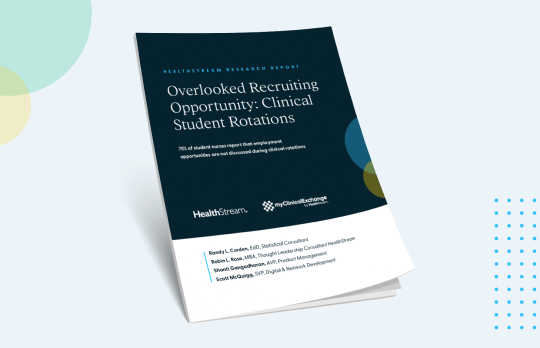
You can watch the on-demand webinar here.
;

Discover actionable solutions for healthcare leaders to effectively manage the complexities of a multigenerational workforce. Start exploring strategies today.
Being prepared to navigate a multigenerational workforce requires managing diverse communication styles, adapting to varying approaches to work, and understanding various values. Recruitment and retention challenges in healthcare make strategies for managing a multigenerational workforce increasingly critical.
A recent HealthStream webinar explored the issues and provided practical and effective solutions for healthcare leaders. The webinar featured presenters:
With four vastly different generations currently represented in the workplace, what challenges are leaders facing and the best strategies for addressing those challenges?
Rothmuller began by sharing some of each group's professional characteristics, communication styles and educational preferences.
Baby Boomers (1946-1964): This is primarily an optimistic group with a strong work ethic. While some have retired, many are and will remain, active in the workforce. They are unlikely to job hop and seek benefits and alternative work styles, such as part-time work and consulting opportunities. They value face-to-face interaction in learning, as well as regular communication and continuous learning.
Generation X (1965-1979): This generation was very much shaped by the evolution of technology and is very comfortable using it. They are generally independent workers and value work-life balance. While they are comfortable with face-to-face communication and learning, they are also comfortable using technology to communicate. They prefer minimal supervision and short, to-the-point communication.
Millennials (1980-1994): This generation grew up during the Internet revolution and expects technology-driven processes. They often focus on their next or future role and look for ways to grow in their careers. They are comfortable with all forms of digital communication and prefer digitally supported learning tools and self-paced online education programs.
Generation Z (1995-2012): This is the first generation of digital natives. They want and expect technology to support their work and are looking for stable work opportunities that support learning and growth. They appreciate collaborative learning in conjunction with mobile, video and social learning. They also appreciate constructive feedback and are willing to invest in their skills with development, mentoring, and coaching.
A recent survey published by LinkedIn Talent Solutions found that 9 out of 10 professionals believe that a multigenerational workforce contributes to the success of a business, so what are the challenges to navigating the resulting issues, and how should leaders be prepared to address those issues?
Milo-Slagle shared some of the top challenges leaders of multigenerational workforces face, along with some practical solutions.
Each generation may have a different comfort level with evolving technology. Still, they all embrace technology to support their work and free up time and resources that will allow them to focus on the most critical aspects of their jobs. Milo-Slagle also noted that all generations expect technology to continue to evolve, which means that leaders need to be intentional about using a variety of approaches when introducing new or changing technology and should consider a classroom setting, independent learning tools, and shared learning or team-based approaches to meet the needs of each generation.
During the webinar, participants were encouraged to consider tools that will allow them and their teams to focus on the most meaningful aspects of their jobs. Tools such as HealthStream's credentialing technology can better support credentialing and the onboarding experience. HealthStream's scheduling solutions can also help retention by providing self-scheduling options and streamlined communication that will work for all generations. The solution improves safety and also enhances satisfaction and retention.

Uncover how personalized training can optimize competency management and boost healthcare outcomes. Transform your approach to competency today.
The unprecedented staffing and financial pressures currently faced by the healthcare industry along with the presence of multiple generations in the healthcare workforce has intensified the need to reevaluate traditional means of competency management. In a recent HealthStream webinar, Jill Benns, RN, MSN, MBA,/HCM,NPD, BC, Alumnus, PCCN, HealthStream's Managing Editor, jane AI™, and Hailey Fisher, HealthStream's Senior Solutions Executive shared how a personalized approach to training can improve quality outcomes, and reduce seat time while also reducing the gap between knowledge and clinical judgement.
Benns began by clarifying the role of educators in competency management and acknowledged that it is a dynamic process. The process needs to support the ongoing assessment of performance which means that educators need to accept responsibility for measuring, documenting, and supporting competency while also addressing any deficiencies that are identified. In order to do that, educators need to have expertise in competency in order to manage and evaluate competency programs.
Benns acknowledged that, for many educators, competency management has devolved into an obligatory process for managing checklists. Both nurses and leaders report that competency management feels tedious, is not reflective of nursing practice, and fails to help nurses grow in their practice. A one-size-fits-all approach which fails to meet the needs of many learners likely contributes to these perceptions.
Benns also shared that multiple organizations have expressed concerns about current competency management practices. A 2021 article from the American Nurses Association (ANA) described the need for change and called for restructuring the processes to leverage artificial intelligence (AI) infused clinical practice methodologies to better support competency development. Additionally, the National Council of State Boards of Nursing (NCSBN) has developed the next generation blueprint for the NCLEX RN exam which includes an increased focus on clinical judgement. The Journal of Nursing Education has also advocated for the infusion of low and high fidelity simulation to help nurses synthesize information and apply it in medically complex situations.
Benns reported that in 2017, 23% of nurses believed that they had a strong foundation for competency preparedness. By 2021, that number had dropped to just 9%.
Benns believes that the message is clear. "As the landscape of healthcare and nursing education continues to change, competency management must evolve. It needs to be customized to the unique needs of learners and the answers will lie in how leaders are able to leverage technology to accomplish this," said Benns.
While AI may have negative connotations for some, it has actually been in use in healthcare for quite some time. AI has been useful in providing decision support for charting, predicting patterns in morbidity and mortality, supporting tools that support sound documentation, and other tools such as acuity models and medication guardrails that have been supporting decision making and patient safety. It has been shown to provide informatics and automation support and has created opportunities for portability, standardization, and transformation for many aspects of healthcare. It also has some meaningful applications for learning and competency management.
Benns shared that HealthStream's jane AI can process what nurses know and do not know along with the associated learning level and is then able to provide individual learning recommendations. This helps educators to right-size the learning process for each nurse as they move from novice to intermediate to expert skill levels. "When used correctly and supported by clinical educators, AI can provide a succinct assessment of clinical care and patient management topics for a specific individual," said Benns.
With 40 clinical pathways across 10 disciplines, jane AI can provide unbiased, customized competency pathways to help:
Because competency encompasses both knowledge and judgement, jane AI can also assess clinical judgement through the use of interactive, open-ended chat and a series of scenario-based videos that help assess a nurse's ability to identify problems, process clinical observations, determine urgency, and take appropriate action. Micro-learning courses, in a mobile-friendly format, support nurses with an active learning approach and an ability to do self-assessments at a time and place that is convenient for the nurse.
This customized approach to competency management can result in higher nurse retention and satisfaction as nurses appreciate the personalized development plans. It is also a useful tool for leaders as it provides reporting that includes national benchmarks and can track performance at the organization, facility, department, and individual levels.

Learn how AI is revolutionizing competency training and compliance in the healthcare sector. Expand your understanding of AI's impact today.
Artificial intelligence (AI) is revolutionizing industries worldwide, including the rapidly evolving healthcare field. The integration of AI continues to emerge as a transformative force in healthcare training. Healthcare providers are learning to safely and ethically integrate AI technologies into their clinical practice in patient data, lab results, prescription management, patient care, and diagnosis. The intersection of AI and healthcare training and development helps professionals maintain credentials and enhance competency in an ever-changing regulatory environment.
Healthcare organizations need help keeping up with stringent compliance requirements. Regulations are ever-evolving, and ensuring healthcare professionals are trained to the expected standards is a huge responsibility. Lack of compliance impacts the quality of patient care and leaves organizations at risk of legal consequences.
The use of artificial intelligence is a powerful tool in addressing these healthcare compliance challenges, providing innovative solutions that adapt to the evolving landscape in several key ways:
Artificial intelligence is a powerful ally for healthcare organizations. AI addresses the enormous task of staying current with healthcare compliance requirements, mitigating risks, and enhancing patient care through innovative, adaptive solutions.
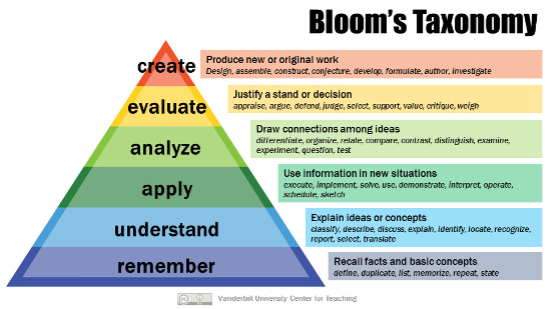
Bloom's taxonomy is a helpful guide in designing and structuring training processes for healthcare compliance using AI models. A well-established framework in education, Bloom's Taxonomy categorizes basic cognitive learning skills like knowledge and comprehension through more advanced skills like synthesis, analysis, and evaluation into a hierarchy. AI learning platforms like jane AI(™) leverage this structure to personalize training experiences for individual healthcare professionals, ensuring that education aligns with competency levels and thereby enhancing the effectiveness of compliance measures.
The categories of the hierarchy are in the pyramid model below:
jane is a competency development system mobilizing the power of AI to create a system that tailors programs to the unique needs of healthcare professionals. jane removes bias by measuring competency through knowledge and clinical judgment assessments aligning with evidence-based practice.
What can jane do?
Data-driven insights help healthcare organizations understand competency levels within their workforce. Insights into AI underscore its capacity to provide granular data and analytics. Information sourced from AI-powered assessment tools empowers organizations to make informed decisions, address specific areas of concern, and implement targeted interventions to improve compliance.
Harnessing the power of AI for competency training by utilizing platforms like jane is changing the paradigm and creating personalized learning journeys. AI-driven platforms identify those at risk, ensuring focused training efforts are in areas where individuals need growth. This system improves the efficiency of training programs and provides a more relevant, engaging experience.
The integration of AI training promises to revolutionize how we educate and evaluate healthcare professionals for competency. By leveraging Bloom's Taxonomy, AI platforms like jane personalize healthcare education to address compliance challenges directly. Data and insights from AI assessments enable healthcare organizations to make critical decisions and positively impact patient care and provider compliance.
As we embrace these benefits and the growth potential of AI in competency development, it's essential to prioritize responsible technology use. Developing trust among healthcare providers is necessary to integrate AI successfully. The evolution of AI and healthcare compliance training promises to provide a new era where compliance seamlessly integrates into personal learning, enhancing the quality of healthcare delivery. This progress will ensure a workforce well-equipped to meet and manage tomorrow's challenges.

Understand the advantages of personalized training in healthcare competency development and how it benefits both staff and patient care. Take the next step.
The current state of the healthcare system is placing immense stress on healthcare professionals, prompting many to leave the workforce prematurely. Healthcare staffing shortages have a serious trickle-down effect. They lead to heavier workloads, increased anxiety, and burnout for the remaining staff, which can negatively impact patient care and outcomes.
Traditionally, the onboarding process within healthcare organizations is comprehensive and standardized. This onboarding method teaches skills once and as part of a comprehensive training session, but employees may only retain some information. Personalized competency-based training is a valuable solution to address any skill gaps. Competency-based training ensures healthcare professionals accurately apply knowledge and skills at the bedside and consistently display competency in their practice. Not only does personalized healthcare training support each worker in building competence, confidence, and perfecting their abilities, but patients also receive optimal care.
Although healthcare professionals are essential members of society, high-stress levels and long working hours have led to healthcare burnout. A recent survey revealed that 56% of nurses reported experiencing burnout. The associated mental health challenges and the tendency for professionals to leave the workforce early create healthcare staffing shortages. Healthcare workers are subjected to significant strain on their physical, emotional, and psychological well-being, risking inadequate patient care and poor outcomes.
There is a growing demand for skilled healthcare practitioners across multiple specializations. Hospitals, clinics, and other medical facilities require proficient professionals to fill the gap. The healthcare industry workforce is expected to undergo major changes in 2024. Job resignation rates are predicted to rise by 20% above pre-pandemic levels. The pandemic's long-term effects are primarily responsible for this significant increase. According to recent surveys, 35% of healthcare professionals prioritize flexible schedules, while 40% seek careers with financial advancement opportunities. These changing employee preferences are causing healthcare staffing shortages, with 30% of facilities operating below optimal staffing levels, making it challenging to maintain high standards of patient care.
Organizations cannot overlook integrating their mission and philosophy with fostering independence to create a genuinely engaging training environment. In addition to boosting staff morale, these factors are crucial when motivating workers to learn, grow, and achieve their full potential. So, why not make it a top priority to thrive with efficient learning solutions?
HealthStream's Competency Suite+ allows organizations to facilitate personalized development and engagement in training. Organizations can make a solid first impression, address knowledge, skill, or clinical judgment gaps, and reduce turnover rates.
HealthStream Competency Suite+ provides a customized training solution that assesses an individual's knowledge and clinical judgment. It offers a personalized competency development experience:
Employer training programs that do not account for different learning styles can lead to poor outcomes. Personalized healthcare training should match each individual's unique learning needs to ensure worthwhile investments and reduce healthcare burnout. Competency Suite can maximize the potential within every organization.
Competency Suite's features include quickly identifying individual gaps and assigning personalized development plans. For example, new nurses are excited to use the clinical skills they learned in school but will face challenges they may not yet have encountered, requiring clinical judgment. If they're not ready for their new role, they might become overwhelmed or experience "reality shock." Competency Suite's personalized healthcare training may suggest focusing on case studies and simulation training instead of basic skills such asIV insertions or wound dressings. This approach helps new nurses develop necessary skills efficiently, reducing time wasted on skills they are already proficient in and increasing productivity.
Competency Suite validates skills, measures competency-based performance and caters to various competencies across healthcare roles. Restricting access to skills and setting boundaries can increase costs and create staffing challenges. Therefore, researchers are developing new models of care to enhance workforce flexibility and enable staff to perform to their full scope of practice. This method ensures that healthcare professionals possess the necessary competencies to perform their roles successfully. For instance, a nurse may require competencies specific to patient care and medication administration, while a surgical technologist requires competencies related to sterilization and other OR safety protocols. Competency Suite can accommodate these varied needs and provide the framework to support a diverse healthcare team.
By offering personalized healthcare training, professional development opportunities, and educational resources, leaders can reduce burnout in healthcare. Research recommends onboarding programs and mentoring to impact staff retention. Implementing measures to support healthcare workers ensures they can provide high-quality care. As some companies transition to remote work and flexible schedules, personalized learning can bridge the gap between in-person and online training. It impacts employees by increasing their knowledge, skills, and confidence in performing tasks and solving problems. Clinicians may attend medical school to heal the sick, but they should also know how to handle and cope with death. Quality training and experience can foster a culture of continuous improvement, innovation, and efficient learning solutions.
Each person has unique strengths and weaknesses, making the traditional training design ineffective and discouraging. HealthStream Competency Suite's personalized, competency-based training is tailored to meet individual needs by offering various learning resources. With Competency Suite, leaders get to know their employees and understand their goals. Organizations can provide learning opportunities, ongoing feedback, and valuable insights. Rather than a one-size-fits-all approach, the bottom line is finding the right fit.
Learn the basics of credentialing vs. privileging and how to build a fair process that supports patient safety, compliance, risk management and quality.
In today's healthcare landscape, ensuring that your medical professionals are properly qualified and authorized to provide specific patient care services is a critical responsibility. This process involves two primary components: credentialing and privileging. Understanding the distinction between the two and how to execute each function will empower your organization to ensure competent providers deliver next-level patient care.
Credentialing is evaluating and confirming various qualifications of healthcare practitioners, such as licensure, education, training, and certifications. It is the foundation for assessing a practitioner's eligibility to provide medical services within a healthcare organization.
Privileging, however, involves authorizing a healthcare practitioner to perform specific clinical activities or procedures within their scope of practice. Unlike credentialing, which focuses on qualifications, privileging determines the specific patient care services a practitioner can deliver.
Implementing a fair credentialing and privileging process promotes patient safety, regulatory compliance, risk management, quality standards, and good institutional governance. A thorough process includes the following seven steps:
Both credentialing and privileging are painstaking processes that require diligence and attention to detail to be executed properly. If your organization relies on manual processes and disjointed point solutions, you may encounter inefficiencies, errors, and delays that jeopardize patient safety and your bottom line.
CredentialStream®, by HealthStream® provides a comprehensive and easy-to-engage platform for accessing provider qualifications. It delivers everything needed to request, gather, and validate provider information.
Enroll: Automate the provider enrollment process and speed up the revenue cycle
Onboard: Streamline and automate onboarding tasks
Privilege: Automate the clinical competency lifecycle
Evaluate: Comprehensive assessment of a provider's clinical performance
Network: Consolidate your provider data management activities within a health plan
Addressing the challenges associated with credentialing and privileging requires healthcare organizations to adopt innovative solutions that facilitate processes, enhance communication, and ensure compliance. With its array of features, including paperless applications, automated data validation, content libraries and more, CredentialStream empowers organizations to enhance patient safety, streamline operations, and meet regulatory requirements effectively.
Learn more about CredentialStream and how it can help your team thrive.

Learn how supporting women in the workplace boosts inclusivity and improves patient care. Find out how to create real change.
It's important to recognize and honor the power of women who make a difference in their team's lives, their family's lives, their friends' lives, and when in healthcare, their patients' and residents' lives. Empowering women in the workplace and in the healthcare workplace requires organizations and their leadership to consider representation
This video is presented by HealthStream's Health Equity & Belonging and the 2024 Champion's Guide, featuring HealthStream's VP, General Counsel Sneha Oakley and VP of Product Portfolio and Content Development Koma Grady from our expert partner Skillsoft.
In this special 10-minute conversation, we discuss the impact of mentorship, role modeling, and advocacy for women in the workplace, as well as what organizations can do to increase representation and create a more inclusive environment.
Speakers:
Koma Gandy - VP of Product Portfolio and Content Development - Skillsoft
Koma Gandy is Vice President, Leadership and Business Solutions at Skillsoft, where she leads a team that focuses on developing products and solutions that create and sustain leaders, improve team performance, and enhance the overall productivity of organizations.
Learn more about Skillsoft at www.skillsoft.com
Sneha Oakley - VP, General Counsel - HealthStream
Sneha Oakley joined HealthStream in 2013 as Assistant General Counsel and now serves as its General Counsel and Vice President, Partner Development, providing leadership over the company's legal, governance, and compliance matters, as well as overseeing the Company's Partner Program. Ms. Oakley acts as the primary liaison to the Company's Board of Directors, and also serves as the Company's Compliance Officer. Prior to joining HealthStream, Ms. Oakley was a litigation attorney with Waller Lansden Dortch & Davis (now Holland & Knight) and in house counsel for Healthways, Inc. Ms. Oakley received her undergraduate degree from Tufts University and her law degree from the University of Tennessee College of Law.
Conversation hosted by Caroline Acree - Director, Product Marketing, Quality & Compliance - HealthStream
Are you fostering a culture of inclusivity and belonging that improves care outcomes? Contact HealthStream today and learn more about HealthStream's Health Equity & Belonging Education offering.

Stay updated on the newest enhancements to the S.T.A.B.L.E. program that improve neonatal care education. Get informed today.
This blog is taken from a recent HealthStream webinar entitled "Introducing S.T.A.B.L.E. Foundations and What's New in the 7th Edition." The webinar was moderated by Dan Pawlus, HealthStream's Senior Manager of Digital Events and featured subject matter experts:
During the webinar, Dr. Karlsen and McElvogue introduced the new S.T.A.B.L.E. Foundations module and the changes to the 7th edition curriculum.
Dr. Karlsen began by sharing the vision and mission of S.T.A.B.L.E. - that every member of the perinatal healthcare team will participate in the S.T.A.B.L.E. education program. She also shared that more than 780,000 students have already completed the S.T.A.B.L.E. course.
The mission of the course is to provide evidence-based, effective education to:
Dr. Karlsen described the program. The mnemonic S.T.A.B.L.E. stands for the six assessment and care modules in the Program: Sugar, Temperature, Airway, Blood Pressure, Lab Work, and Emotional Support. The program targets the first month of life with its strongest emphasis on the first few weeks after birth. S.T.A.B.L.E. is an evidence-based approach to the assessment and evaluation of all infants - both well and sick - as well as the immediate management of sick infants. The curriculum targets the majority of problems that may be encountered and includes a focus on the underlying pathophysiology of neonates.
Dr. Karlsen further stressed that the course is useful for all healthcare staff caring for both sick and well infants. The curriculum can help preserve health in well babies, thus avoiding NICU stays, and can help prepare caregivers to recognize the signs and symptoms that might indicate an infant is becoming ill and to also provide a foundation for organizing the initial stabilization care.
Providers who might benefit from S.T.A.B.L.E. include:
There are two methodologies used to teach the program:
It is recommended that the course be renewed every two years for both educational methodologies.
For classroom courses, the 7th edition will utilize a single slide deck for all learners, replacing the NICU/non-NICU selection required in the 6th edition. Slides will only be available to registered instructors through the online instructor portal. Instructors will have access to a resource center that contains additional teaching materials that can be incorporated into the classroom presentation. Learners will find that some of the module content has been moved to the new S.T.A.B.L.E. Foundations module to help ensure that the class presentation does not exceed 8 hours allowing for breaks and end of module testing. Students will also enjoy the many new illustrations, videos, and animations.
This new module is a pre-requisite to the S.T.A.B.L.E. learner course. Dr. Karlsen shared that it was created to provide foundational maternity and neonatal information for a broad range of students, and will be particularly helpful to new staff who are onboarding to perinatal services. S.T.A.B.L.E. Foundations will help build a solid base of knowledge before staff with limited exposure to perinatal care proceed to the rest of the program.

If credentialing is slowing you down, learn five signs it's time to upgrade and how CredentialMyDoc can help to improve your credentialing processes.
The healthcare landscape is undergoing a transformative shift, accelerated by technological advancements. To ensure your organization remains at the forefront, it's essential to recognize when your credentialing software may need an upgrade. Here are five unmistakable signs indicating that it's time to make a change:
If your existing credentialing process acts as a bottleneck, slowing down administrative productivity, it's a clear signal that an upgrade is overdue. A modern credentialing solution should empower, not hinder, your administrative team, enhancing efficiency and reducing the time required for critical tasks.
An outdated system with a lack of user-friendly interfaces and tools can significantly impede daily operations. In the fast-paced healthcare environment, ease of use is paramount. If your current software fails to provide an intuitive and accessible platform, it's a compelling reason to explore more advanced solutions that align with contemporary standards.
In the complex realm of healthcare credentialing, prompt and effective customer support is non-negotiable. If your current software provider is unresponsive when addressing critical errors, it poses a significant risk to the efficiency and reliability of your credentialing processes. Upgrading to a system with responsive and knowledgeable support is essential for seamless operations.
Cost-effectiveness is a crucial aspect of any software solution. If you find that the cost of your current credentialing system does not align with its operational value, it's time to explore alternatives that offer a more balanced and cost-effective solution. Investing in a system that provides robust features and aligns with your budgetary considerations is paramount.
Manual paperwork, time-consuming processes, and disorganized data can introduce inefficiencies and costly errors into your credentialing and provider enrollment procedures. Modern credentialing software should offer automation and streamlined workflows to eliminate manual tasks, reducing the likelihood of errors and enhancing overall efficiency.
If your organization resonates with any of the signs mentioned, don't wait - explore the benefits of CredentialMyDoc today.
CredentialMyDoc is a web-based solution designed to streamline credentialing and provider enrollment processes. It's tailored for small to medium-sized medical and dental groups with 250 providers or less to ensure you get the needed features without breaking the bank. Our platform increases efficiency and reduces manual labor through features like auto-populated forms and best-practice workflows.
Consolidate & Communicate
Automate & Accelerate
Simplify & Save
Best of all, like you, CredentialMyDoc is committed to continuous improvement. Upcoming additions include an Electronic Checklist and CAQH import options, emphasizing the platform's dedication to staying ahead of the curve and providing users with the cutting-edge tools they need.
Ready to learn more?

Learn how delegated credentialing helps healthcare organizations speed provider credentialing and enrollment while benefiting providers and health plans.
One of the things most people look for today, regardless of industry, is how to perform a task accurately and quickly. The need to be efficient is paramount, and when it comes to provider enrollment and credentialing, it's essential. When done poorly, the process can be time-consuming and inefficient, resulting in revenue loss for busy healthcare providers. However, an approach to gaining success is delegated credentialing. In this blog post, we'll delve into what delegated credentialing is, its benefits for both the organization delegating and the organization being delegated to and how the process works.
Delegated credentialing is a process where a healthcare entity grants another healthcare entity the authority to credential its providers. For example, a preferred provider organization (PPO) may delegate credentialing responsibilities to a hospital or medical group. This goes beyond credentials verification, as the delegated entity is responsible for evaluating qualifications and making credentialing and appointment decisions on behalf of the delegating entity.
When organizations step into a delegated credentialing agreement, there must be a mutually agreed upon arrangement that outlines all the necessary obligations as they pertain to different regulatory bodies, like the National Committee for Quality Assurance (NCQA), Utilization Review Accreditation Commission (URAC), Centers for Medicare & Medicaid Services ( (CMS), and federal and state laws. Delegation agreements can be a separate agreement or an amendment to an existing parent contract/agreement.
When done properly, delegated credentialing can save organizations significant time, enabling patients to access care more quickly. The benefits vary based on the organization.
From a Health Plan's Perspective
From a Healthcare Organization's Perspective
A healthcare organization must have a robust 'in-house' credentialing process to participate in delegated credentialing. Ensuring this involves a comprehensive evaluation of the process.
The first step lies in ensuring the organization meets accreditation standards, which means the organization has a process in place that:
Now, every delegated contract will have organization-specific requirements, but standard contracts should include:
Once this has been done, the delegate will be authorized to complete credentialing for the delegating organization. As part of this agreement, the delegate will be required to share a provider roster with the delegating entity about once per month. This roster will then be used to either associate or disassociate a provider with an organization and provide high-level information on a provider, including their change of status, address, and billing information. When the delegating party receives an updated provider roster, any new provider listed can be considered "Participating" and, therefore, eligible for reimbursement.
Organizations should think carefully about what organization they partner with as a delegated credentialing entity. When considering this partnership, consider these criteria:
The NCQA permits delegating several activities, including credentialing, re-credentialing, case management, utilization management, disease management, and health promotion. However, certain activities, such as those involving member experience, privacy and confidentiality, and marketing information, cannot be delegated.
By embracing delegated credentialing, healthcare organizations can unlock a win-win solution for providers, plans, and ultimately, patients. Streamlined processes, quicker enrollment, and enhanced provider satisfaction make delegated credentialing the future of efficient and effective healthcare administration. Partnering with the right NCQA-accredited delegate empowers medical organizations to focus on what they do best - delivering high-quality care - while leaving credentialing in the hands of experienced experts.
Take the first step towards a faster, more efficient future for healthcare - find out how CredentialStream® can help with all your credentialing needs, including delegated credentialing. Arrange a demonstration with one of our experts today.

Explore novel strategies for tailored competency development using AI to improve clinical skills and decision-making. Get valuable insights now.
Developing, assessing, and validating clinical staff competency is complex. Further complicating the issue is the fact that many of the clinical skills, interpersonal skills, clinical judgement skills, and decision-making abilities are difficult to quantify. Creating a comprehensive competency development program can seem daunting, but a recent HealthStream webinar provided clear recommendations on how to do just that while leveraging artificial intelligence (AI) to individualize and maximize competency development.
The webinar was moderated by Dan Pawlus, HealthStream's Senior Manager of Digital Events and featured Trisha Coady, Senior Vice President, Workforce Development Solutions for HealthStream.
In addition to her passion for being a lifelong learner and healthcare educator, Coady also shared her experience as a mother of a child on the spectrum that had a complex diagnoses bundle. As Coady worked with her child to overcome these issues, she came to understand the importance of focusing on the foundational ability to receive information, categorize that information, and then respond to that information. It was then that she began to see progress as her child began to feel safe in the learning environment and then moved on to building confidence in certain skills. This journey led Coady to reflect on how to apply this learning to the development of confident nurses.
Coady's journey led her to question traditional education and competency programs. Typically, these programs had focused on the delivery of information whether it be in school or in practice. Instead, Coady encourages leaders to focus on how learners receive information versus how it is delivered. She reminded leaders to ask questions about what each learner needs in that moment and whether or not we are really teaching nurses how to process information and connect the dots in a meaningful way. She also shared that learners need context, which is developed when a learner receives information, makes use of the information, and repeats it within the appropriate context.
An abundance of research suggests that there is a substantial variance between knowledge and judgement, but the size of that gap might surprise you. The national benchmark shows that knowledge scores are 20 points higher than clinical judgement scores with some meaningful variations by specialty and setting. Coady pointed out that this means that a significant number of nurses are struggling to consistently make safe decisions. The good news is that the data also demonstrated improvement when nurses were reassessed after development. While knowledge improvements did peak with an improvement of 5.9 points at the 2-3-month mark, it was most notable that the clinical judgement improvement at the 6-7-month mark was 7.5 points further making the case for a solid foundation in the development of clinical reasoning skills.
Traditionally structured educational programs that assume that learners arrive with little to no knowledge and rely on a handful of educators to educate thousands of nurses make it impossible to personalize instruction. These programs can be particularly problematic for younger learners and digital natives that have little tolerance for meaningless repetition, particularly relating to material that has already been mastered. Current financial and staffing issues in healthcare have created an urgent need for education that helps nurses practice at the top of their licenses and cross-trains them in an efficient means without compromising on personal confidence or quality outcomes. However, assessments that lead to personalized development plans for individual learners are simply not feasible without a solution that is supported by technology.
Coady believes that the solution to these challenges lies in our ability to leverage technology and HealthStream has developed a tech-enabled system that is able to assess and personalize competency development for each learner, and perhaps even more importantly, to do that at scale. HealthStream's jane AI™ uses the power of artificial intelligence to focus on developing a solution that is progressive and personalized:
Clinical judgement assessments combined with virtual simulations are able to assess a number of competencies within each specialty and setting that cover knowledge and clinical judgement. Using objective, unbiased measurement, jane is then able to provide a recommended path for development that may also include bedside preceptor engagement. "Our system is not focused on competency assessment or meant to associate a nurse with a score. It's a competency development system; so, our goal is to identify individual strengths versus gaps and provide an individualized plan to close those gaps," said Coady.
Coady addressed the improvement seen in both knowledge and clinical judgement skills while reducing seat time and the associated costs, but she also shared some results that point to broader gains. This kind of personalized education can also impact outcomes. Interestingly, for every 1-point increase in the average knowledge score, there is a corresponding 0.1202 increase in the organization's CMS star rating. Also, for every 1-point increase in the jane AI clinical judgement MI scenario, there is a 3.6% decrease in mortality rate. The data indicates that creating real clinical competency can result in better outcomes and improved financial performance as quality and outcomes measures are tied to reimbursement.





